




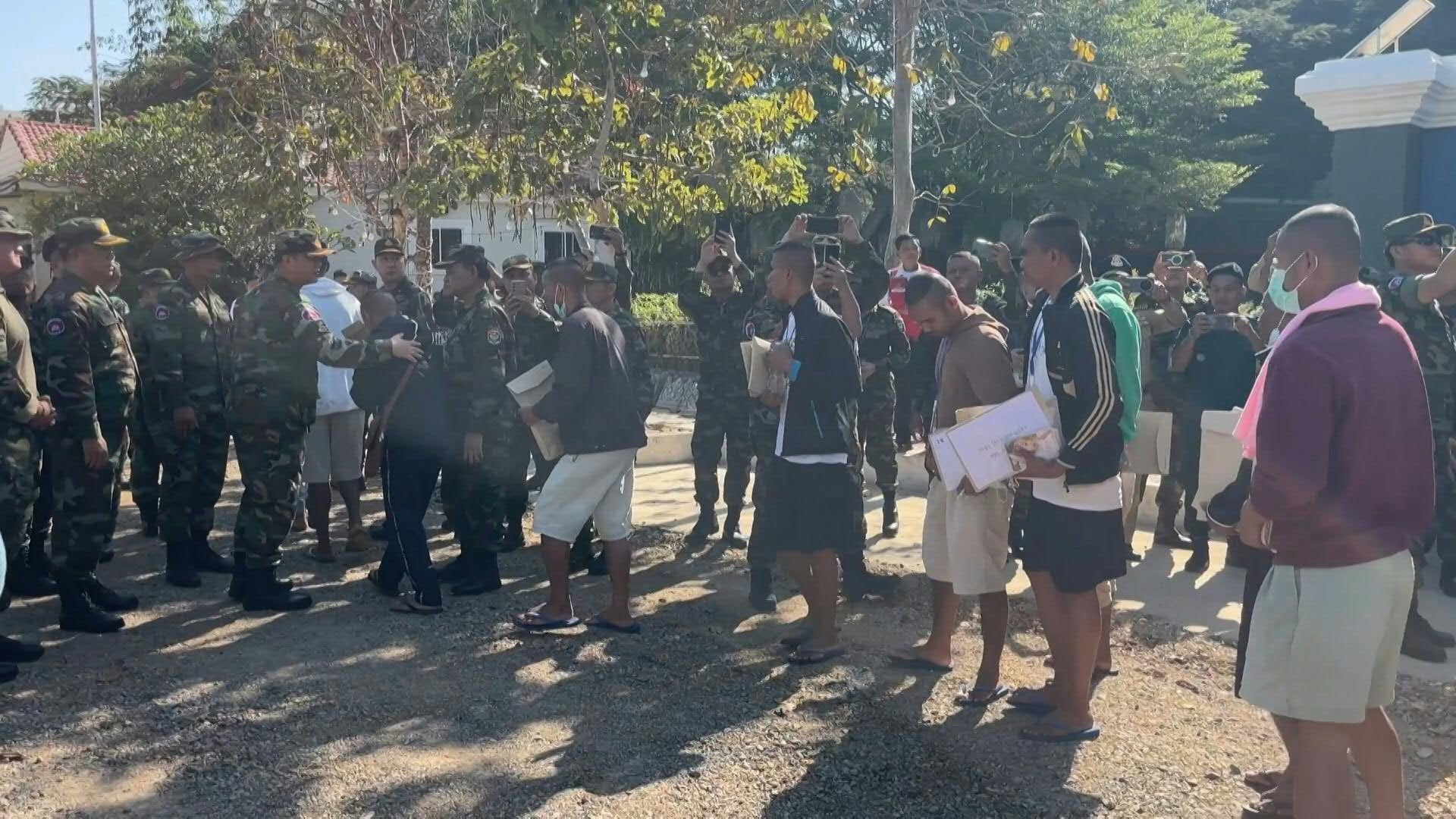
More than 20,000 Cambodians remain displaced along the border with Thailand due to violent clashes that erupted over a long-standing border dispute. The conflict, which escalated in July and December of the previous year, resulted in numerous fatalities and significant humanitarian issues. Despite a ceasefire agreement reached in December, both nations have continued to accuse each other of violating the truce.
Tom Andrews, the newly appointed UN special rapporteur on human rights in Cambodia, emphasized the urgent need for resolution in this crisis, highlighting that international law affirms displaced individuals have the right to return to their homes. He reported that by the end of 2025, as many as 650,000 Cambodian civilians could face displacement, with 20,000 still unable to return safely.
During his recent visit to the border region, Andrews observed that some towns and villages appear to be occupied by Thai military personnel. He noted physical barriers, such as barbed wire, preventing many residents from returning. His observations included damaged homes, with some still bearing the scars of gunfire and explosives.
In addition to the border crisis, Andrews’s visit focused on other pressing human rights concerns in Cambodia, including the issue of human trafficking linked to scam operations. Cambodia has seen a surge in crime syndicates orchestrating fraudulent schemes, particularly online scams involving fake romantic relationships and cryptocurrency investments. Despite authorities raiding over 600 scam centers and making numerous arrests, Andrews reported that the scamming activities have persisted, now spreading to rural areas and operating out of private homes and vehicles.
He expressed concern for the individuals trafficked into these scam operations, noting many face uncertain fates and may find themselves living on the streets without identification. Although the Cambodian government claims a process is in place to identify victims and distinguish them from criminals, Andrews pointed out the challenges regarding capacity and resources.
In discussions with Cambodian leadership, Andrews underscored the need for accountability at all levels, stressing that justice should not only target lower-ranking individuals involved in these scams but also those higher up in the hierarchy who may bear responsibility.
Furthermore, Andrews touched on the broader political rights landscape in Cambodia, where discussions about civil liberties have been ongoing under the long-standing rule of former Prime Minister Hun Sen and his son, current Prime Minister Hun Manet. He raised concerns about political intimidation and the erosion of rights, especially in light of the recently pardoned opposition leader Kem Sokha, who continues to face restrictions on his political activities despite his release.
Andrews pointed out that while Kem Sokha has regained his physical freedom, his political rights remain curtailed. He underscored the necessity of monitoring how fundamental rights, including freedom of expression and association, are upheld as Cambodia prepares for upcoming local elections and a general election in 2028.
In closing, Andrews sent a message of solidarity to rights activists in Cambodia, reminding them that although they may feel isolated, their struggles are being recognized and are garnering attention on the international stage.


