




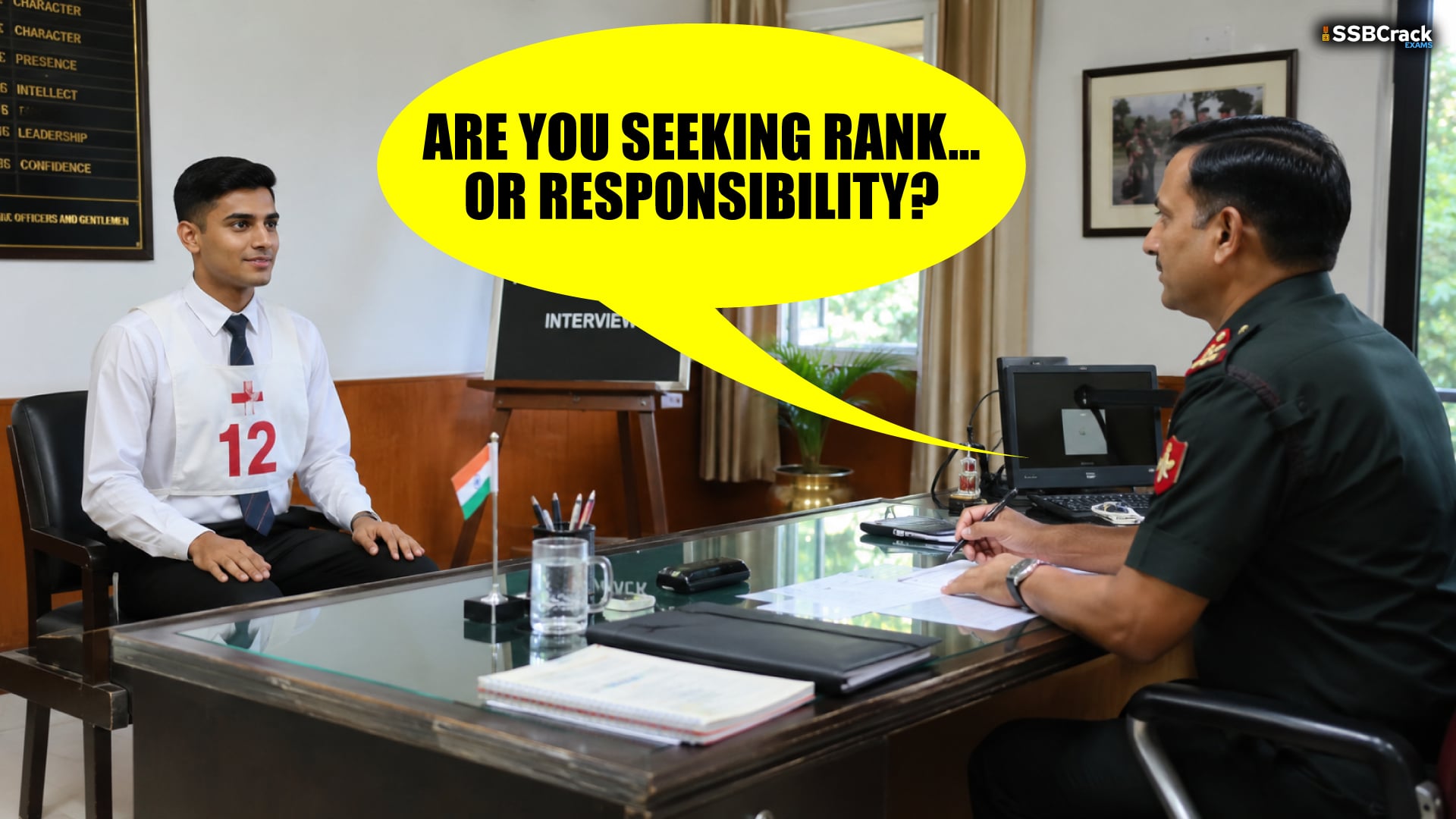
This session is specially designed for Serving Personnel who are aspiring to become Commissioned Officers through entries such as ACC, SCO, PC(SL), Special Commissioning Entry, or other internal selection routes. As a serving soldier, sailor, or airman, you already possess valuable military experience, discipline, and an understanding of life in the Armed Forces. However, the SSB Interview for Serving Personnel is different from that of civilian candidates.
The Interviewing Officer is not only interested in your military background but also wants to assess whether you possess the potential to transition from being an effective subordinate to becoming an effective leader. Questions are often designed to evaluate your leadership potential, understanding of responsibility, maturity, decision-making ability, military awareness, and vision as a future officer.
In this session, we will discuss 20 unique and interesting SSB Interview questions specifically for Serving Personnel. Along with each question, we will understand why it is asked, how to answer it effectively, and review a sample answer.
Question 1: What is one responsibility you currently perform that you believe has prepared you for becoming an officer?
Why is it asked?
To assess leadership potential and understanding of responsibilities.
How to answer:
Discuss a responsibility that required initiative, coordination, or supervision.
Sample Answer:
“As a section second-in-command, I regularly coordinate tasks, guide junior personnel, and ensure work is completed efficiently. This responsibility has improved my leadership and organizational abilities.”
Question 2: What is the biggest difference between a good JCO/NCO and a good officer?
Why is it asked?
To assess understanding of military leadership.
How to answer:
Focus on differences in responsibility, decision-making, and strategic perspective.
Sample Answer:
“A good JCO/NCO ensures effective execution of tasks, while a good officer is responsible for planning, decision-making, and the overall welfare and performance of the team.”
Question 3: Have you ever disagreed with a superior’s decision? How did you handle it?
Why is it asked?
To assess maturity, discipline, and communication.
How to answer:
Explain respectfully and professionally.
Sample Answer:
“I once felt an alternative approach could improve efficiency. I respectfully conveyed my suggestion through the proper channel and fully supported the final decision.”
Question 4: What is one mistake you made during service that taught you an important lesson?
Why is it asked?
To assess honesty and self-improvement.
How to answer:
Accept responsibility and focus on learning.
Sample Answer:
“Early in my service, I overlooked a minor procedural detail during equipment preparation. Although the issue was corrected quickly, it taught me the importance of attention to detail.”
Question 5: Why do you want to become an officer when you are already serving in the Armed Forces?
Why is it asked?
To understand motivation and ambition.
How to answer:
Focus on greater responsibility and contribution.
Sample Answer:
“I wish to contribute at a higher level by taking on greater leadership responsibilities and playing a larger role in planning, decision-making, and mentoring personnel.”
Question 6: What quality do you admire most in your commanding officer?
Why is it asked?
To understand your leadership values.
How to answer:
Choose a genuine quality and provide an example.
Sample Answer:
“I admire his ability to remain calm during difficult situations while making fair and timely decisions.”
Question 7: If selected as an officer, how would your relationship with your current peers change?
Why is it asked?
To assess understanding of leadership transition.
How to answer:
Emphasize professionalism and mutual respect.
Sample Answer:
“My responsibilities would increase, but I would continue treating everyone with respect while maintaining the professional standards expected of an officer.”
Question 8: What is one welfare issue affecting soldiers today that deserves more attention?
Why is it asked?
To assess awareness and empathy.
How to answer:
Provide balanced observations and practical suggestions.
Sample Answer:
“Mental well-being and stress management deserve continued attention. Awareness programs and counseling support can further strengthen personnel welfare.”
Question 9: Describe a situation where you had to make a quick decision without direct supervision.
Why is it asked?
To assess initiative and judgment.
How to answer:
Explain the situation, action, and outcome.
Sample Answer:
“During a training activity, a logistical issue threatened to delay operations. I coordinated available resources and implemented an alternate arrangement, allowing the activity to continue smoothly.”
Question 10: Which military value do you consider most important and why?
Why is it asked?
To understand personal principles.
How to answer:
Choose a value that genuinely resonates with you.
Sample Answer:
“I consider integrity the most important value because trust is the foundation of military leadership and teamwork.”
Question 11: If one of your subordinates repeatedly underperformed, how would you handle it?
Why is it asked?
To assess leadership and human management skills.
How to answer:
Focus on understanding, guidance, and accountability.
Sample Answer:
“I would first identify the cause of the issue, provide guidance and support, and monitor progress while maintaining accountability.”
Question 12: What is the toughest field condition you have experienced?
Why is it asked?
To assess resilience and adaptability.
How to answer:
Describe the challenge and your response.
Sample Answer:
“Operating in extreme weather conditions was physically demanding, but proper preparation, teamwork, and discipline helped us accomplish the mission successfully.”
Question 13: What have you learned from serving under different commanders?
Why is it asked?
To assess observation and learning ability.
How to answer:
Discuss different leadership styles and lessons learned.
Sample Answer:
“I learned that effective leaders have different personalities, but they share common qualities such as integrity, decisiveness, and concern for their troops.”
Question 14: If you were given command of your current unit for a day, what would be your priority?
Why is it asked?
To assess leadership vision.
How to answer:
Focus on operational effectiveness and welfare.
Sample Answer:
“My priority would be ensuring operational readiness while also encouraging open communication regarding welfare and professional development.”
Question 15: What is one misconception civilians have about military life?
Why is it asked?
To assess communication skills and perspective.
How to answer:
Provide a balanced explanation.
Sample Answer:
“Many civilians think military life is only about physical toughness, whereas it also requires leadership, technical competence, teamwork, and emotional resilience.”
Question 16: How do you maintain motivation during routine or repetitive duties?
Why is it asked?
To assess work ethic and discipline.
How to answer:
Emphasize professionalism and commitment.
Sample Answer:
“I remind myself that every task contributes to the larger mission. Maintaining high standards in routine duties builds operational effectiveness.”
Question 17: What is the most difficult leadership situation you have witnessed in service?
Why is it asked?
To assess observation and leadership understanding.
How to answer:
Discuss the situation and lessons learned.
Sample Answer:
“I observed a situation involving conflicting priorities during an exercise. It highlighted the importance of clear communication and timely decision-making.”
Question 18: What qualities should a young officer possess to earn the respect of experienced soldiers?
Why is it asked?
To assess your understanding of officer-subordinate dynamics.
How to answer:
Focus on competence and character.
Sample Answer:
“A young officer should be knowledgeable, approachable, fair, physically fit, and willing to lead from the front.”
Question 19: How has military service changed your personality?
Why is it asked?
To understand personal growth.
How to answer:
Discuss specific improvements.
Sample Answer:
“Military service has made me more disciplined, confident, responsible, and capable of handling pressure effectively.”
Question 20: If you are not selected this time, what will you do?
Why is it asked?
To assess determination and emotional stability.
How to answer:
Show resilience and commitment.
Sample Answer:
“If I am not selected, I will analyze my performance, identify areas for improvement, and prepare more effectively for future opportunities while continuing to serve with dedication.”
Serving Personnel possess a unique advantage in the SSB Interview because they can draw upon real military experiences to demonstrate leadership, responsibility, teamwork, discipline, and courage. However, remember that the board is not selecting the best soldier, sailor, or airman—it is assessing your potential to become an effective officer. Your answers should reflect maturity, initiative, sound judgment, concern for others, and the ability to think beyond immediate tasks toward larger organizational objectives.
We hope these questions help you prepare confidently for your upcoming SSB Interview. Reflect on your service experiences, identify the lessons they have taught you, and be ready to present them honestly and effectively. Continue strengthening your Officer Like Qualities, maintain your professional excellence, and approach the selection process with confidence and determination.
We wish you all the very best for your SSB journey and future leadership role in the Armed Forces.
Jai Hind!


