




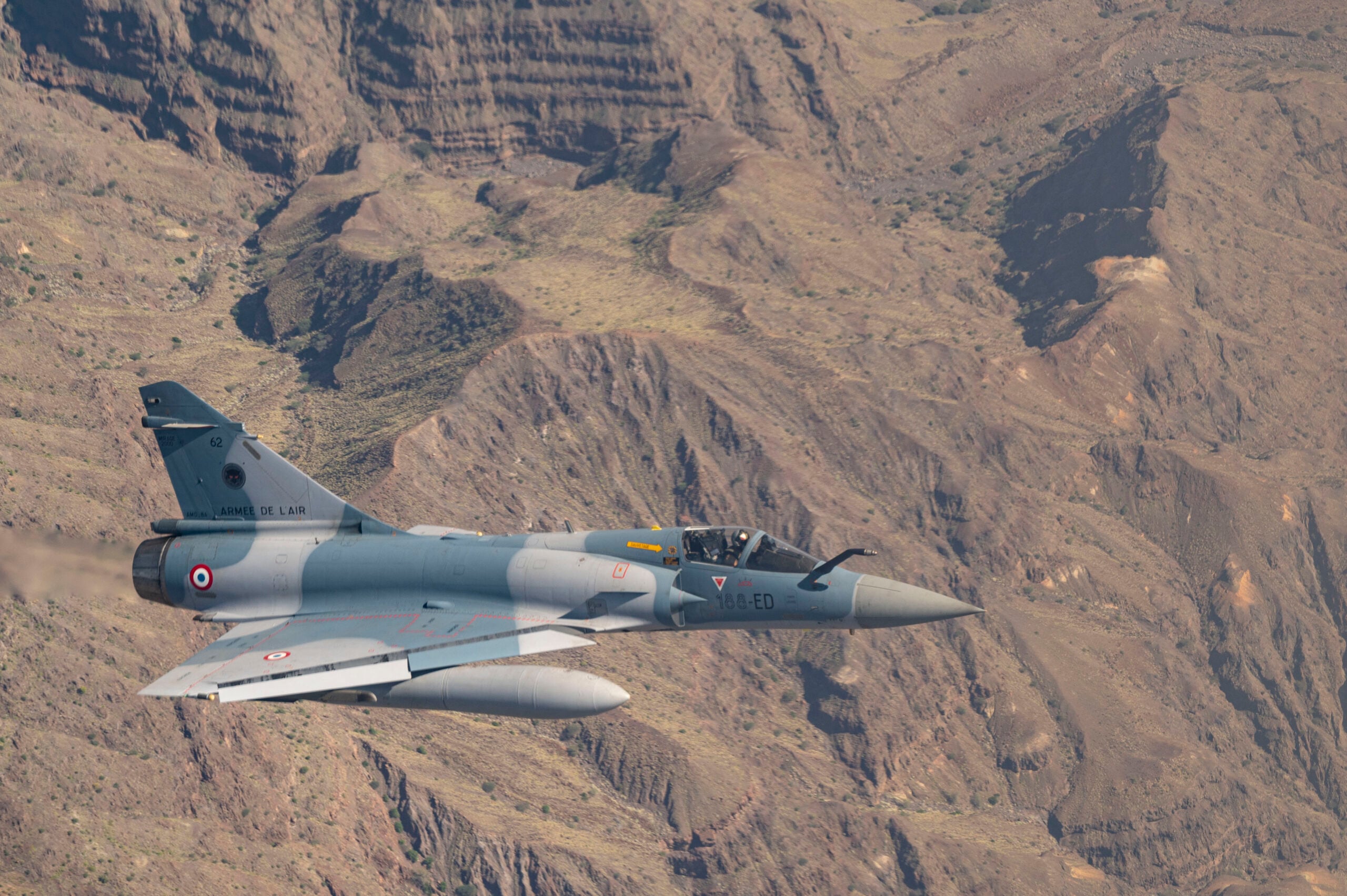
As the Cold War progressed into its technologically advanced phase, air forces around the globe intensified their efforts to develop faster, more agile, and smarter fighter jets. France rose to the challenge by introducing a groundbreaking aircraft that, at first glance, appeared familiar but was significantly different at its core—the Dassault Mirage 2000. This fourth-generation multirole fighter successfully combined speed, maneuverability, and sophisticated electronics, cementing its status as one of the most iconic aircraft in military aviation history.
Development and Design
The Dassault Mirage 2000, a single-engine fighter developed by Dassault Aviation, was designed primarily for air superiority and strike missions. First taking to the skies in 1978, it entered service with the French Air Force in 1984, effectively replacing older Mirage III and Mirage F1 aircraft. In a departure from the complex twin-engine designs of its competitors, France sought a lightweight yet capable fighter to match adversaries such as the F-16 Fighting Falcon and MiG-29.
Its design featured a tailless delta-wing layout that not only enhanced high-speed performance but also facilitated exceptional maneuverability and a large internal fuel capacity. The incorporation of digital fly-by-wire flight control systems revolutionized its aerodynamics, allowing the aircraft to maintain stability despite its inherently unstable configuration.
Key Specifications and Variants
Over the years, the Mirage 2000 evolved into several specialized variants tailored for specific roles, including:
- Mirage 2000C: Primarily an air superiority fighter, serving as a single-seat interceptor.
- Mirage 2000B: A two-seat conversion trainer designed to train future pilots.
- Mirage 2000N: Designed for nuclear strike missions, equipped to carry France’s ASMP nuclear missile.
- Mirage 2000D: Focused on precision strike capabilities, tailored as a dedicated ground-attack platform.
- Mirage 2000-5: An advanced multirole variant with enhanced radar and next-gen weaponry.
More than 600 Mirage 2000 units were produced before the production line closed in 2007.
Operational Performance and Global Usage
The Mirage 2000 has played critical roles in various military operations across the globe, including air superiority, precision strikes, reconnaissance missions, and as a nuclear deterrent. The aircraft gained particular recognition during NATO operations in Kosovo, where it achieved notable operational availability, demonstrating a 100 percent wartime readiness rate.
Notably, during the 1999 Kargil War, Indian Mirage 2000s executed precision strikes against enemy positions in challenging mountainous terrain. The aircraft continues to serve in numerous air forces, including those of Brazil, Egypt, Greece, and the United Arab Emirates. Recently, upgraded Mirage 2000-5 models were supplied to Ukraine, enhancing the nation’s air defense capabilities amid ongoing conflict.
Strengths and Limitations
The Mirage 2000’s design has endowed it with several advantages, including proven combat reliability and remarkable air-to-air performance characterized by rapid climb rates and effective beyond-visual-range capabilities. Its adaptability allowed it to transform from a dedicated interceptor into a versatile multirole platform over the decades.
However, aging airframes pose challenges for the aircraft as modern stealth fighters enter the arena, offering superior survivability features. Moreover, while upgraded variants have seen improvements in avionics and weapon systems, concerns about maintenance and spare parts availability have emerged as fleets age.
Future Prospects
While the Mirage 2000 is gradually being phased out in favor of newer aircraft such as the Dassault Rafale, it still possesses operational potential in several air forces. Upgraded variants benefit from continued avionics improvements and modernization efforts, including France’s Mirage 2000D RMV program aimed at extending service life well into the next decade.
Ultimately, even as advancements in stealth technology capture the spotlight, the Mirage 2000 remains a testament to effective engineering, adaptability, and combat reliability, proving that a fighter can remain relevant long after its initial introduction into service.


