




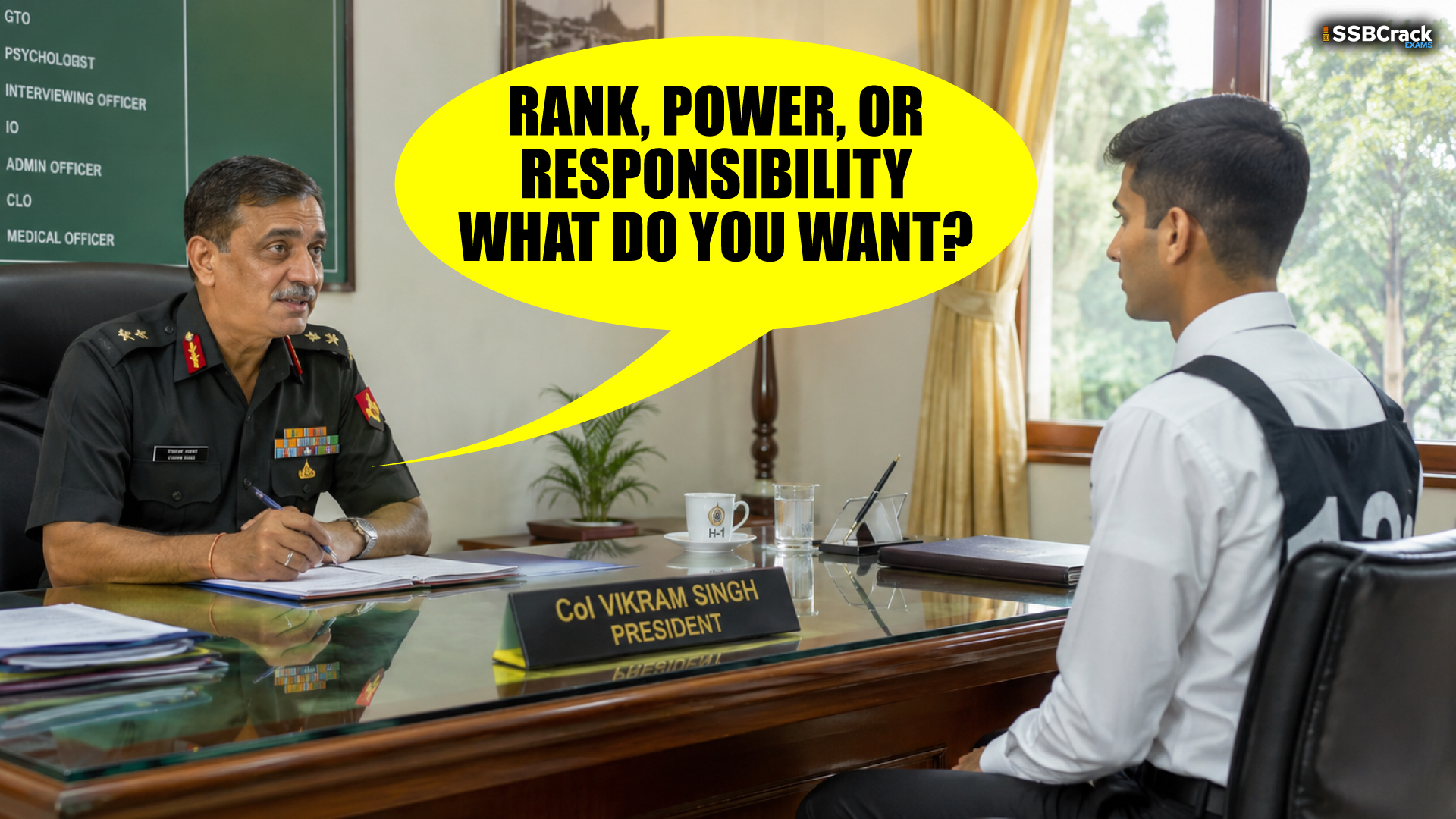
This session is specially designed for candidates appearing for the Permanent Commission (Special List) – PC(SL) Entry. PC(SL) is a prestigious opportunity for serving personnel of the Indian Army who have demonstrated exceptional professional competence, discipline, leadership, and dedication throughout their military careers. It offers experienced Junior Commissioned Officers and Other Ranks the opportunity to become Permanent Commissioned Officers and shoulder greater responsibilities in the Indian Army.
Unlike direct entry candidates, PC(SL) aspirants bring years of practical military experience, operational exposure, administrative responsibilities, and a deep understanding of military ethos. Therefore, the SSB Interview Board expects a higher level of maturity, strategic thinking, leadership vision, emotional intelligence, and professional awareness. The board is not evaluating whether you have been a good soldier alone—it is assessing whether you have the potential to become an outstanding officer capable of leading troops, making critical decisions, and upholding the highest traditions of the Indian Army.
In this session, we will discuss 20 unique and thought-provoking SSB Interview questions specifically for PC(SL) Entry. Along with each question, we will understand why it is asked, how to answer it effectively, and review a sample answer.
Question 1: Looking back at your service, what decision are you most proud of?
Why is it asked?
To assess judgment, accountability, and decision-making under real military conditions.
How to answer:
Choose a decision that reflects responsibility, initiative, and concern for the mission or personnel.
Sample Answer:
“During a field deployment, I reorganised our work schedule after noticing signs of fatigue among the team. This ensured operational efficiency while maintaining the well-being of the personnel. The experience reinforced the importance of balancing mission requirements with troop welfare.”
Question 2: What responsibility are you ready to accept today that you were not ready for five years ago?
Why is it asked?
To assess maturity and personal growth.
How to answer:
Explain how experience has prepared you for larger responsibilities.
Sample Answer:
“I am now confident in taking responsibility for planning, mentoring junior leaders, and making decisions that affect larger teams. Experience has taught me to evaluate situations calmly before acting.”
Question 3: What is the biggest misconception young soldiers have about becoming an officer?
Why is it asked?
To understand your perception of officership.
How to answer:
Discuss responsibility instead of privileges.
Sample Answer:
“Many believe becoming an officer mainly means gaining authority. In reality, it means accepting greater accountability for operational success, discipline, and the welfare of every individual under your command.”
Question 4: Which Army value has become a part of your personal life?
Why is it asked?
To assess whether military values influence your character beyond the workplace.
How to answer:
Relate one military value to everyday life.
Sample Answer:
“Integrity has become an inseparable part of my personality. Whether in service or personal life, I believe trust is built through honesty and consistency.”
Question 5: Tell us about a junior who taught you something important.
Why is it asked?
To assess humility and openness to learning.
How to answer:
Show that leadership includes learning from everyone.
Sample Answer:
“A young soldier suggested a more efficient method of organising equipment before inspection. His idea saved time, and it reminded me that valuable ideas can come from anyone.”
Question 6: If promoted as an officer, what habit from your present role would you never change?
Why is it asked?
To evaluate continuity in leadership values.
How to answer:
Mention a positive habit that reflects humility or professionalism.
Sample Answer:
“I would continue interacting regularly with soldiers at the ground level because understanding their concerns helps build trust and improve teamwork.”
Question 7: Have you ever changed your opinion after listening to someone else?
Why is it asked?
To assess flexibility and intellectual honesty.
How to answer:
Describe how new information improved your decision.
Sample Answer:
“During a training discussion, a colleague suggested an alternative deployment sequence. After considering his reasoning, I realised it was more effective and adopted the idea.”
Question 8: What would disappoint you more—a failed mission or losing the trust of your men?
Why is it asked?
To evaluate priorities and leadership philosophy.
How to answer:
Balance mission accomplishment with trust.
Sample Answer:
“Mission success is essential, but trust is what enables a team to accomplish missions repeatedly. An officer must protect both through competence and integrity.”
Question 9: What is one quality you still want to improve before becoming an officer?
Why is it asked?
To assess self-awareness and willingness to grow.
How to answer:
Mention a genuine area of improvement along with your efforts.
Sample Answer:
“I want to further strengthen my strategic planning abilities by studying operational case studies and learning from experienced officers.”
Question 10: What has military life taught you about people?
Why is it asked?
To assess emotional intelligence.
How to answer:
Reflect on teamwork and diversity.
Sample Answer:
“Military life has taught me that people from different backgrounds can achieve extraordinary results when united by discipline, trust, and a common purpose.”
Question 11: If two equally capable soldiers disagreed strongly, how would you resolve the issue?
Why is it asked?
To assess conflict management.
How to answer:
Focus on listening, fairness, and mission objectives.
Sample Answer:
“I would hear both viewpoints individually, identify the root cause, encourage professional discussion, and take a decision based on operational requirements rather than personal preferences.”
Question 12: Which officer left the strongest impression on you and why?
Why is it asked?
To understand the leadership qualities you admire.
How to answer:
Highlight character and leadership rather than personality.
Sample Answer:
“One commanding officer impressed me through his calmness during difficult situations. His balanced decisions and concern for every soldier earned widespread respect.”
Question 13: What would your unit lose if you left today?
Why is it asked?
To evaluate confidence without arrogance.
How to answer:
Discuss contributions objectively.
Sample Answer:
“My experience in coordinating training activities and mentoring younger soldiers would certainly be missed, but I have always ensured that knowledge is shared within the team.”
Question 14: What do you think cannot be taught in military academies but is learned only through service?
Why is it asked?
To assess practical understanding.
How to answer:
Discuss real-life leadership experience.
Sample Answer:
“Understanding the emotions, expectations, and motivations of soldiers develops only through working closely with them over time.”
Question 15: If your decision proved wrong during an operation, what would you do first?
Why is it asked?
To assess accountability under pressure.
How to answer:
Prioritise corrective action before self-defence.
Sample Answer:
“My first priority would be correcting the situation to minimise operational impact. Afterwards, I would analyse the mistake honestly and learn from it.”
Question 16: What motivates experienced soldiers to continue performing at their best?
Why is it asked?
To assess understanding of troop motivation.
How to answer:
Discuss purpose, recognition, leadership, and professionalism.
Sample Answer:
“Professional pride, strong leadership, unit cohesion, and the satisfaction of serving the nation motivate experienced soldiers to maintain high standards.”
Question 17: What would success as a Commissioned Officer mean to you?
Why is it asked?
To understand your definition of success.
How to answer:
Avoid talking about status or promotion.
Sample Answer:
“Success would mean leading my troops effectively, earning their trust, accomplishing assigned missions, and developing future leaders.”
Question 18: How would you prepare young officers joining your unit?
Why is it asked?
To assess mentoring ability.
How to answer:
Emphasise guidance without undermining authority.
Sample Answer:
“I would share practical experiences, help them understand ground realities, and encourage them to interact closely with their soldiers while respecting their authority.”
Question 19: If given one opportunity to improve your unit’s efficiency, where would you focus?
Why is it asked?
To evaluate organisational thinking.
How to answer:
Suggest realistic improvements.
Sample Answer:
“I would focus on improving knowledge-sharing during training by conducting regular after-action reviews so that every exercise contributes to continuous learning.”
Question 20: When your military career ends decades from now, how would you like your juniors to describe you?
Why is it asked?
To understand your leadership vision and long-term values.
How to answer:
Describe the legacy you hope to leave.
Sample Answer:
“I would like them to remember me as a leader who was fair, professionally competent, approachable, and always willing to guide others while upholding the highest standards of military ethics.”
As a PC(SL) Entry candidate, remember that your years of service are your greatest strength. Every posting, operational responsibility, leadership challenge, and interaction with soldiers has shaped your personality. During the SSB Interview, the board wants to see whether those experiences have developed the qualities expected of a Commissioned Officer—integrity, sound judgment, empathy, courage, initiative, adaptability, and the ability to inspire others.
Avoid trying to give textbook answers. Instead, reflect on your own service experiences and answer with honesty, clarity, and confidence. Real-life examples always leave a stronger impression than memorised responses. Show the board that you are prepared not only to wear the stars on your shoulders but also to carry the responsibility that comes with them.
We hope these PC(SL)-specific SSB Interview questions help you prepare more confidently for your upcoming selection process. Continue strengthening your Officer Like Qualities, keep learning from every experience, and remain committed to the values of discipline, integrity, and selfless service. Your journey from an experienced soldier to a Commissioned Officer is built on years of dedication—now let your personality, leadership, and vision speak for themselves.
We wish you all the very best for your PC(SL) SSB Interview and your future career as a leader in the Indian Army.
Jai Hind!


