





In Defence Current Affairs for 22 August 2026, we will see the latest national and international current affairs news. These important current affairs will be beneficial for your upcoming NDA, CDS, CDS OTA, AFCAT, TA, Agniveer Army, Agniveer Navy, Agniveer Air Force, Women Military Police, INET, MNS, ACC exams, SCO, PCSL, CAPF, and SSB interviews, and direct entries for Army, Navy, and Air Force like SSC Tech, TGC, JAG, NCC, TES, 10+2 Cadet. Download a PDF file about current events at the end of this article. Let us now see the Current Affairs.
Defence Current Affairs 22 August 2026
India and UK Conduct 25th Defence Consultative Group Meeting
- Defence Secretary Shri Rajesh Kumar Singh co-chaired the 25th India – UK Defence Consultative Group (DCG) Meeting with the Permanent Under Secretary (PUS) for Defence of UK Mr Jeremy Pocklington, at New Delhi on Aug 21, 2026.
- Both countries reviewed the ongoing defence industrial cooperation with emphasis on Research & Development through the India – UK vision 2035 and the Ten year Defence Industrial Roadmap.
- Both sides agreed to expand bilateral exchanges between the armed forces of India and UK through joint exercises, training and capacity building.
- They acknowledged the robust maritime security collaboration in the Indo-Pacific, including establishment of the Regional Maritime Security Centre of Excellence (RMSCE) under the Indo-Pacific Oceans Initiative (IPOI).
- The Secretaries exchanged views on issues of regional peace and security and reaffirmed their commitment to mutual security and strategic autonomy. Both sides reiterated that the India-UK Strategic Partnership is based on shared values of peace, stability, freedom, and mutual respect.
- India–UK Vision 2035
- The India–UK Vision 2035 is a long-term framework designed to deepen and modernise the relationship between India and the United Kingdom. The two countries endorsed the Vision on 24 July 2025 in London, with the aim of creating a stronger partnership focused on economic growth, technology, education, climate action, defence and security.
- The Vision builds on the Comprehensive Strategic Partnership established between India and the UK in 2021 and seeks to provide a long-term direction for bilateral cooperation up to 2035.
- What is India–UK Vision 2035?
- Vision 2035 represents a shared ambition to make the India–UK relationship broader, deeper and more future-oriented.
- It focuses on creating opportunities for:
- Economic growth and employment
- Trade and investment
- Education and skills
- Technology and innovation
- Climate and clean energy
- Defence and security
- Research and advanced technologies
- Stronger people-to-people connections
- The framework is intended to produce practical outcomes rather than remain only a political statement.
- 1. Trade, Investment and Economic Growth
- Economic cooperation is one of the major pillars of Vision 2035.
- The two countries seek to increase bilateral trade and investment, open new markets and create employment opportunities.
- The Vision builds on the India–UK Free Trade Agreement (FTA) signed in 2025. The agreement subsequently came into force on 15 July 2026, marking an important development in the economic relationship between the two countries.
- The partnership aims to make trade easier while encouraging businesses and investors from both countries to expand their presence in each other’s markets.
- Key focus areas
- Trade expansion
- Investment
- Job creation
- Business partnerships
- Market access
- Financial cooperation
- Innovation-driven growth
- 2. Education and Skills Partnership
- Education is another major component of Vision 2035.
- India and the UK aim to expand cooperation between universities and educational institutions, including transnational education, joint programmes and research collaboration.
- An important development has been the establishment of UK university campuses in India. The University of Southampton has opened an international branch campus in the Delhi National Capital Region, while Queen’s University Belfast has established a campus in Gujarat’s GIFT City.
- Additional UK universities have also received approval to establish campuses in India.
- Areas of cooperation include:
- Higher education
- Joint and dual degrees
- Research partnerships
- Skill development
- University campuses
- Student mobility
- Innovation and talent development
- The objective is to help create a highly skilled workforce capable of meeting the demands of the future economy.
- 3. Technology and Innovation
- Technology cooperation is a central feature of the Vision.
- The two countries intend to work together on emerging and strategically important technologies through the Technology Security Initiative (TSI).
- The initiative focuses on areas such as:
- Artificial Intelligence
- Future telecommunications
- Critical minerals
- Semiconductors
- Quantum technology
- Biotechnology
- Advanced materials
- The partnership is designed not only to promote innovation but also to strengthen technological resilience and supply chains.
- Why is this important?
- Technologies such as AI, quantum computing, semiconductors and biotechnology are increasingly connected with national security and economic competitiveness.
- Therefore, India–UK technological cooperation can contribute to both economic development and strategic security.
- 4. Climate and Clean Energy Partnership
- Climate change and energy security form another important pillar of Vision 2035.
- India and the UK aim to accelerate cooperation in:
- Clean energy
- Renewable energy
- Climate finance
- Energy transition
- Climate resilience
- Sustainable development
- The objective is to support the transition towards cleaner energy while mobilising investment and finance for climate-related projects.
- The partnership also recognises the importance of strengthening resilience against the effects of climate change.
- 5. Defence and Security Cooperation
- Defence and security are major strategic components of the India–UK relationship.
- Vision 2035 envisages deeper cooperation in:
- Defence technology
- Defence industrial collaboration
- Military engagement
- Maritime security
- Counterterrorism
- Emerging security threats
- Indo-Pacific security
- India and the UK have also developed a 10-year Defence Industrial Partnership, aimed at strengthening cooperation between their defence industries.
- The two countries share an interest in maintaining peace, stability and prosperity in the Indo-Pacific region.
- 6. Focus on the Indo-Pacific
- The Indo-Pacific has acquired growing strategic importance because of its economic, maritime and geopolitical significance.
- India and the UK intend to cooperate more closely on:
- Maritime security
- Freedom of navigation
- Regional stability
- Defence cooperation
- Emerging security challenges
- International law
- The UK’s 2026 review of Vision 2035 specifically highlighted cooperation on freedom of navigation and regional stability.
- 7. Research and Innovation
- Research cooperation is expected to connect universities, scientists, businesses and technology organisations in both countries.
- The emphasis is shifting towards areas that can have long-term strategic and economic significance, including:
- AI
- Biotechnology
- Quantum technology
- Semiconductors
- Advanced materials
- Telecommunications
- Clean technologies
- This can help both countries develop new technologies while strengthening their research ecosystems.
- 8. People-to-People Connections
- India and the UK have strong historical, educational, cultural and diaspora connections.
- Vision 2035 seeks to further strengthen these links through:
- Education
- Student exchanges
- Research collaboration
- Professional connections
- Cultural interaction
- Business links
- Diaspora relationships
- These people-to-people connections provide an important foundation for the broader strategic partnership.
- 9. Why Is Vision 2035 Important for India?
- The partnership can provide India with opportunities in several strategically important areas.
- Economic benefits
- Greater trade and investment can support businesses, employment and economic growth.
- Technological benefits
- Cooperation with the UK’s advanced research and technology ecosystem can support India’s development in emerging technologies.
- Defence benefits
- Greater defence-industrial cooperation can contribute to India’s capabilities and technological self-reliance.
- Educational benefits
- More university partnerships and research collaboration can strengthen India’s higher-education ecosystem.
- Climate benefits
- Cooperation in clean energy and climate finance can support India’s energy transition.
- 10. India–UK Vision 2035 and Current Developments
- Vision 2035 is already being translated into practical cooperation.
- In June 2026, UK Foreign Secretary Yvette Cooper visited India and held discussions with External Affairs Minister Dr. S. Jaishankar on the implementation of Vision 2035. The review covered areas including economic growth, technology and innovation, defence and security, climate and education.
- This demonstrates that Vision 2035 is intended to be an active and evolving framework, with regular reviews to assess progress and identify new areas of cooperation.

Terrier Cyber Quest 2026: Strengthening India’s Cybersecurity Capabilities
The Territorial Army, in partnership with CyberPeace, has launched Terrier Cyber Quest 2026 (TCQ 3.0), a national-level hackathon designed to encourage innovative solutions to emerging challenges in defence, cybersecurity and the information domain.
The initiative brings together technical experts and young innovators from academia, industry, research institutions, government organisations and the Armed Forces. Its broader objective is to encourage indigenous technological solutions that can contribute to India’s national-security requirements.
Key Focus Areas
Terrier Cyber Quest 2026 focuses on emerging technologies and cybersecurity challenges, particularly:
- Artificial Intelligence
- Cybersecurity
- Threat detection and mitigation
- Digital awareness
- Information-domain challenges
- Indigenous technology solutions
- National-security applications
The competition has been structured around three major challenges.
1. Bug Hunting
The Bug Hunting challenge is designed to test participants’ ability to identify cybersecurity vulnerabilities.
The competition begins with an online Capture-the-Flag (CTF) qualifying round and progresses to an in-person live sandbox finale.
Participants will work with simulated critical-infrastructure environments and will be expected to identify, analyse and document vulnerabilities.
2. AI Kavach
AI Kavach focuses on the application of artificial intelligence and machine learning to cybersecurity.
Participants are encouraged to develop solutions related to:
- Predictive threat intelligence
- Automated cyber-defence mechanisms
- Anomaly detection
- Early identification of potential threats
The challenge reflects the growing importance of AI in detecting and responding to sophisticated cyber threats.
3. Creators Challenge
The Creators Challenge brings the digital-media community into the cybersecurity awareness ecosystem.
Content creators, communicators and influencers are encouraged to develop effective awareness campaigns addressing threats such as:
- Deepfakes
- Phishing
- Online scams
- Misinformation
- Digital deception
The objective is to use digital communication and storytelling to improve public awareness of cyber risks.
Important Dates
According to the information provided:
- Registration deadline: 31 August 2026
- Online shortlisting: 1–10 September 2026
- Grand Finale: 6–8 October 2026
- Venue: New Delhi
- Award ceremony: 9 October 2026
Why Is Terrier Cyber Quest Important?
Modern warfare increasingly involves cyberspace, artificial intelligence, information operations and digital infrastructure. Initiatives such as Terrier Cyber Quest can help connect India’s technical talent with defence requirements.
The participation of students, researchers, technology professionals and industry experts can also contribute to the development of home-grown cybersecurity capabilities.
Exam-Oriented Facts
Terrier Cyber Quest 2026 → TCQ 3.0 → Territorial Army + CyberPeace → Cybersecurity + AI + Information Domain

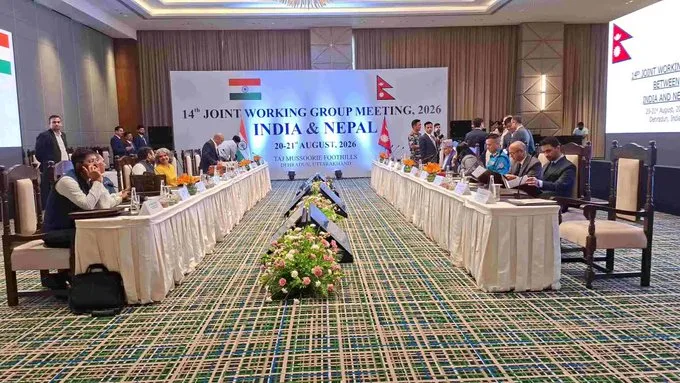
14th India–Nepal Joint Working Group Meeting
The 14th meeting of the India–Nepal Joint Working Group (JWG) was held on 20–21 August 2026 in Dehradun.
The meeting reviewed various aspects of bilateral cooperation between India and Nepal, with particular attention to border management and security.
Both sides reaffirmed their commitment to strengthening cooperation and improving coordination on matters affecting the shared border.
Major Issues Discussed
The discussions covered several important areas, including:
Border Security
India and Nepal discussed ways to strengthen cooperation against:
- Trans-border crime
- Criminal activities
- Other security challenges along the border
Border Infrastructure
The two sides also examined the development and effective use of border infrastructure.
Particular attention was given to:
- Integrated Check Posts (ICPs)
- Roads
- Railway networks
Better infrastructure can facilitate legitimate movement while strengthening border-management mechanisms.
Boundary Management
The meeting also discussed:
- Removal of encroachments
- Maintenance of boundary pillars
- Better institutional coordination
- Capacity building
Both sides agreed to continue engagement and cooperation in these areas.
Why Is This Important?
India and Nepal share a close relationship and a long, open border. Effective cooperation between the two countries is therefore important for:
- Border security
- Trade and connectivity
- Prevention of trans-border crime
- Infrastructure development
- People-to-people movement
Exam-Oriented Facts
Meeting: 14th India–Nepal Joint Working Group
Date: 20–21 August 2026
Venue: Dehradun
Main focus: Border management and security
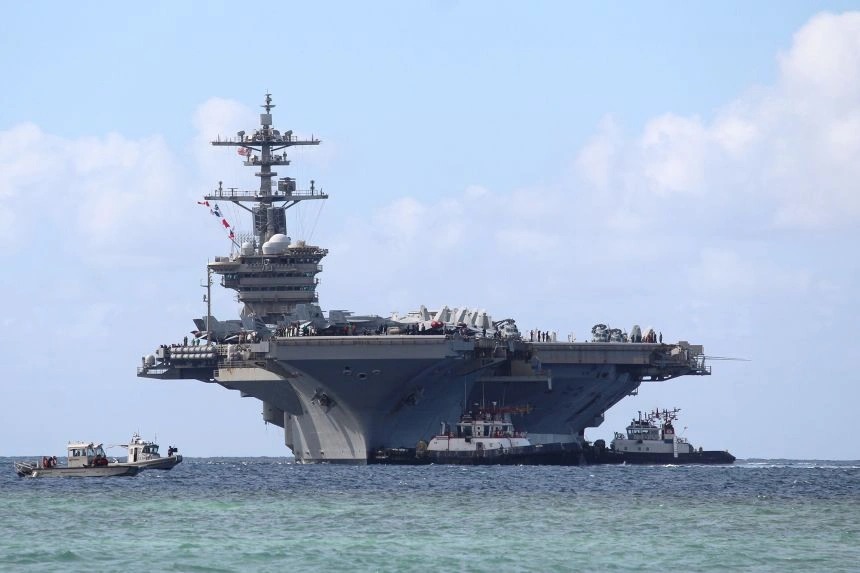
USS Abraham Lincoln Departs the Middle East After Extended Deployment
The USS Abraham Lincoln, a Nimitz-class aircraft carrier of the United States Navy, has begun its return journey to San Diego after an extended deployment in the Middle East.
According to the information provided, the carrier spent more than 260 days at sea, making the deployment particularly demanding for its crew.
The deployment reportedly involved operational pressures, extended periods away from home and challenges related to personnel welfare and supplies.
Why Was the Deployment Extended?
The carrier’s deployment was extended amid the United States’ military operations involving Iran in 2026.
The USS Abraham Lincoln served as an important platform for conducting air operations, with thousands of sorties reportedly launched during the deployment.
Its crew consisted of approximately 5,000 sailors and Marines, placing considerable operational demands on personnel and equipment.
Deployment Timeline
The USS Abraham Lincoln:
- Departed San Diego on 21 November 2025
- Was redirected towards the Middle East in January 2026
- Remained in the region for an extended deployment
- Began its return voyage to San Diego after more than 260 days at sea
The extended deployment also generated concerns regarding crew fatigue, mental well-being and the broader strain on US naval resources.
USS George Washington Takes Over Operational Duties
The USS George Washington, a US aircraft carrier normally based in Japan, was deployed to the Middle East to assume operational responsibilities following the departure of the USS Abraham Lincoln.
The carrier travelled from Da Nang, Vietnam, passing through the Singapore Strait and Strait of Malacca before entering the Indian Ocean.
Its movement demonstrates the strategic mobility of US naval forces and the importance of maritime routes connecting the Indo-Pacific with the Middle East.
Strategic Significance
The redeployment of the USS George Washington also has implications for the US naval presence in the Indo-Pacific.
With a carrier temporarily moved from its normal area of operations, questions have been raised about the distribution of US naval forces and deterrence requirements in the Pacific region, particularly in the context of China’s growing military capabilities.
Why These Developments Matter
The three developments highlight different dimensions of modern security:
Cybersecurity
Terrier Cyber Quest 2026 demonstrates the growing importance of artificial intelligence, cyber defence and information security in national security.
Border Security
The India–Nepal JWG highlights India’s focus on border management, infrastructure and cooperation with neighbouring countries.
Maritime Security
The movement of USS Abraham Lincoln and USS George Washington demonstrates the global reach and strategic mobility of major naval forces.
Together, these developments show how modern national security increasingly involves cyberspace, technology, borders and maritime power.
Quick Revision for NDA, CDS and Defence Exams
| Topic | Important Fact |
|---|---|
| Terrier Cyber Quest 2026 | TCQ 3.0 |
| Organiser | Territorial Army |
| Partner | CyberPeace |
| Main themes | Cybersecurity, AI, threat mitigation and digital awareness |
| Bug Hunting | CTF qualifier + live sandbox finale |
| AI Kavach | AI/ML-based cybersecurity challenge |
| Creators Challenge | Cyber-awareness through digital content |
| Registration deadline | 31 August 2026 |
| 14th India–Nepal JWG | Held on 20–21 August 2026 |
| JWG venue | Dehradun |
| Main JWG focus | Border management and security |
| USS Abraham Lincoln | US aircraft carrier |
| Return destination | San Diego |
| USS George Washington | Deployed to relieve the Lincoln in the Middle East |
| Strategic region | Middle East and Indo-Pacific |
Conclusion
The Terrier Cyber Quest 2026, the 14th India–Nepal Joint Working Group meeting, and the deployment changes involving the USS Abraham Lincoln and USS George Washington highlight three important dimensions of contemporary security: cyber power, border cooperation and naval power.
For NDA, CDS, AFCAT and other defence examinations, these developments should be studied not only as current events but also in connection with broader concepts such as cybersecurity, artificial intelligence, border management, military exercises, aircraft carriers, maritime strategy and Indo-Pacific geopolitics.
One-Line Revision
Terrier Cyber Quest → Cybersecurity & AI | India–Nepal JWG → Border Security | USS Abraham Lincoln → Extended Middle East Deployment | USS George Washington → Carrier Replacement
Review Questions
- India and the United Kingdom endorsed the India–UK Vision 2035 during a
meeting held in:
A. New Delhi
B. Mumbai
C. London
D. Birmingham
Answer: C. London - Which of the following is a major focus of the Technology Security Initiative (TSI)
under India–UK Vision 2035?
A. Tourism and sports
B. AI, future telecommunications and critical minerals
C. Agriculture and fisheries
D. Railway modernisation
Answer: B. AI, future telecommunications and critical minerals - Implementation of the India–UK Vision 2035 is to be reviewed annually by:
A. Defence Ministers of India and the UK
B. Prime Ministers of India and the UK
C. External Affairs Minister of India and Foreign Secretary of the UK
D. Finance Ministers of India and the UK
Answer: C. External Affairs Minister of India and Foreign Secretary of the UK - Terrier Cyber Quest 2026 (TCQ 3.0) has been launched by the Territorial Army in
collaboration with:
A. DRDO
B. CyberPeace
C. CERT-In
D. ISRO
Answer: B. CyberPeace - Which challenge under Terrier Cyber Quest 2026 focuses on predictive threat
intelligence, automated defence and anomaly detection?
A. Bug Hunting
B. Creators Challenge
C. AI Kavach
D. Cyber Shield
Answer: C. AI Kavach - The 14th India–Nepal Joint Working Group meeting held in August 2026 primarily
focused on:
A. Defence exports and aircraft production
B. Border management and security
C. Nuclear energy cooperation
D. Space exploration
Answer: B. Border management and security - Which US aircraft carrier was deployed to the Middle East to assume operational
duties following the departure of USS Abraham Lincoln?
A. USS Nimitz
B. USS Ronald Reagan
C. USS George Washington
D. USS Carl Vinson
Answer: C. USS George Washington - Ex EASTERN BRIDGE Conducted B/W India &
A. UK
B. Oman
C. Sri Lanka
D. USA
ANSWER: B - Duty, Honour, Courage Is The Motto Of
A. Maratha Light Infantry
B. The Grenadiers
C. Rajput Regiment
D. Jat Regiment
ANSWER: A - Indian Ocean Rim Association for Regional Cooperation Hq Is In
A. Mauritius
B. Qatar
C. Sri Lanka
D. Maldives
ANSWER: A - Surface Mine Clearing System on Sarath manufactured by
A. Ordnance Factory Medak
B. HAL
C. DRDO
D. MDL
ANSWER: A - College of Defence Management Is In
A. Secunderabad
B. Chennai
C. Noida
D. New Delhi
ANSWER: A - GAGAN Stands For
A. GPS Aided Geo Augmented Navigate
B. GPS Aided Geography Augmented Navigation
C. GPS Aided Geo Augmented Navigation
D. None of the above
ANSWER: C - Regimental Centre of GARHWAL RIFLES Is In
A. Happy Valley, Shillong, Meghalaya
B. Ranikhet, Uttarakhand
C. Lansdowne, Uttarakhand
D. None of the above
ANSWER: C - Harare Is The Capital Of
A. Uzbekistan
B. Qatar
C. Zambia
D. Zimbabwe
ANSWER: D - “Forging Mettle : Nrupender Rao and the Pennar Story” Book Written By
A. Vijay Sharma
B. Manish Kumar
C. Sumit Nayar
D. Pavan C Lall
ANSWER: D - The Eurocopter Tiger Is A
A. Helicopter
B. Machine Gun
C. UAV
D. Fighter Jet
ANSWER: A - INS Jalashwa Is A
A. Destroyer
B. OPV
C. Submarine
D. Amphibious transport dock
ANSWER: D - CDAC Stands For
A. Centre for Development of Advanced Concept
B. Centre for Development of Adert Computing
C. Centre for Development of Advanced Computing
D. None
ANSWER: C - Heckler & Koch PSG1 Is A
A. Tank
B. Missile
C. Sniper Rifle
D. Submarine
ANSWER: C
ALSO READ:
- Latest Daily Current Affairs and Defence Updates
- Latest Daily Current Affairs July 2026[DOWNLOAD PDF]
- Latest Daily Current Affairs June 2026[DOWNLOAD PDF]
- Latest Daily Current Affairs May 2026[DOWNLOAD PDF]
- Latest Daily Current Affairs April 2026[DOWNLOAD PDF]
- Latest Daily Current Affairs March 2026[DOWNLOAD PDF]
- Latest Daily Current Affairs February 2026[DOWNLOAD PDF]
- Latest Daily Current Affairs January 2026[DOWNLOAD PDF]
- Latest Daily Current Affairs November 2025[DOWNLOAD PDF]
- Latest Daily Current Affairs October 2025[DOWNLOAD PDF]
- Latest Daily Current Affairs August 2025[DOWNLOAD PDF]
- Latest Daily Current Affairs July 2025[DOWNLOAD PDF]


