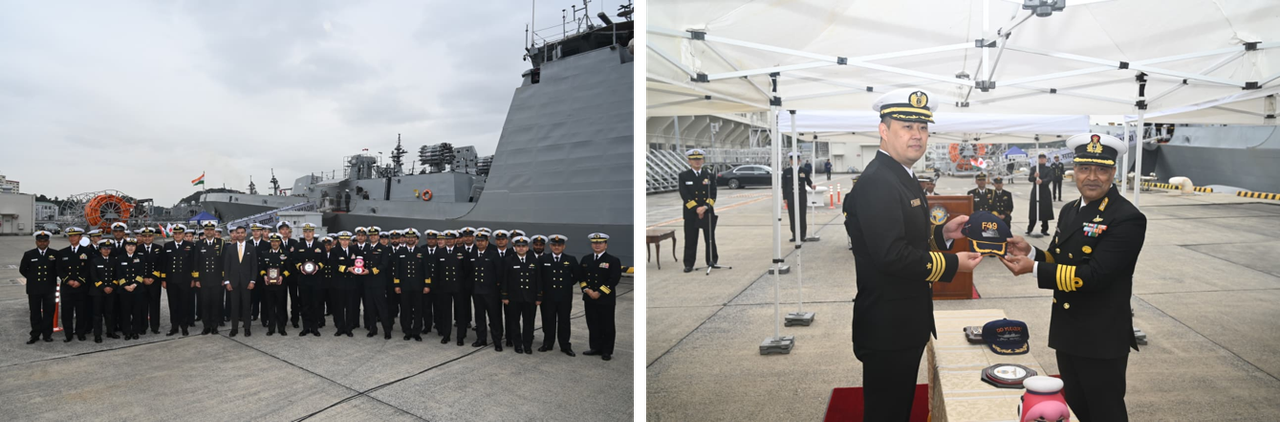
The Indian Navy’s indigenous Guided Missile Stealth Frigate INS Sahyadri arrived at Yokosuka Naval Base, Japan, on 4 November 2026 to participate in the multilateral naval exercise MALABAR 2026.
Exercise Malabar 2026
The Indian Navy’s indigenous Guided Missile Stealth Frigate INS Sahyadri arrived at Yokosuka Naval Base, Japan, on 4 November 2026 to participate in the multilateral naval exercise MALABAR 2026.
INS Sahyadri belongs to the Indian Navy’s Eastern Fleet. The ship received a warm reception from the Japan Maritime Self-Defense Force (JMSDF), reflecting the strong strategic partnership and expanding maritime cooperation between India and Japan.
Participating Countries
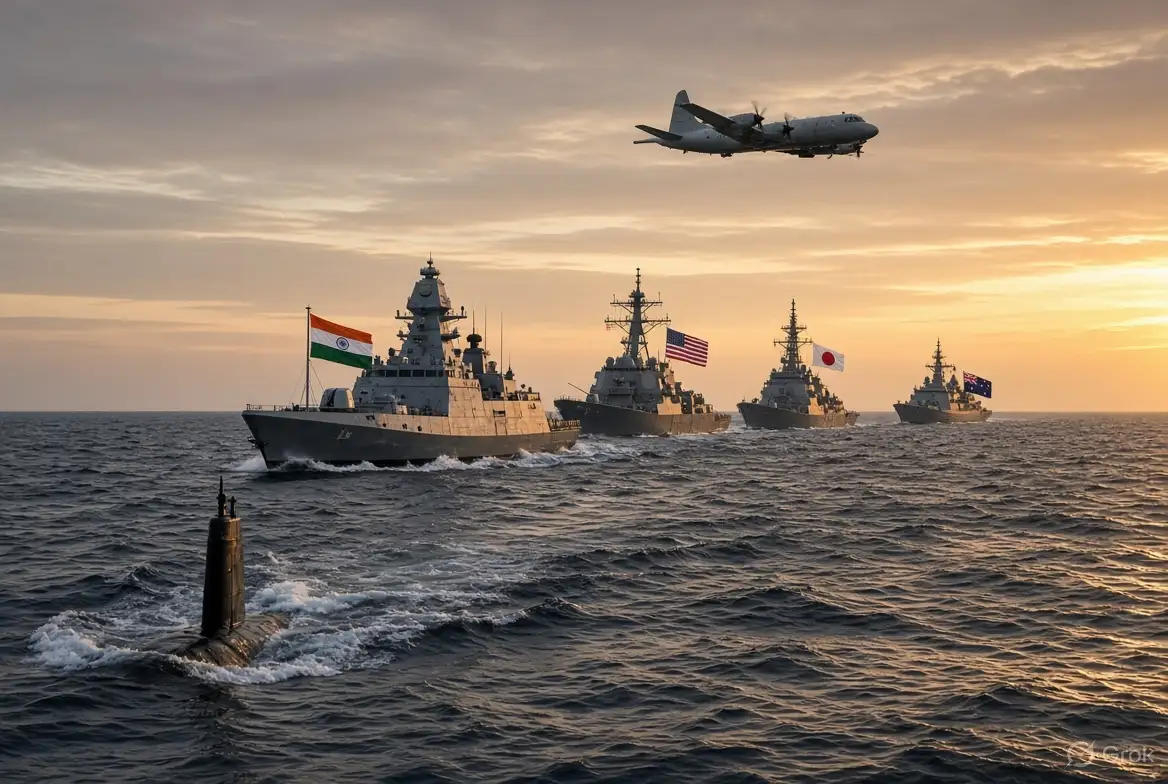
MALABAR 2026 brings together the naval forces of four countries:
- India
- Japan
- United States
- Australia
The exercise provides a common platform for participating navies to improve operational coordination, strengthen interoperability and share professional knowledge.
Phases of the Exercise
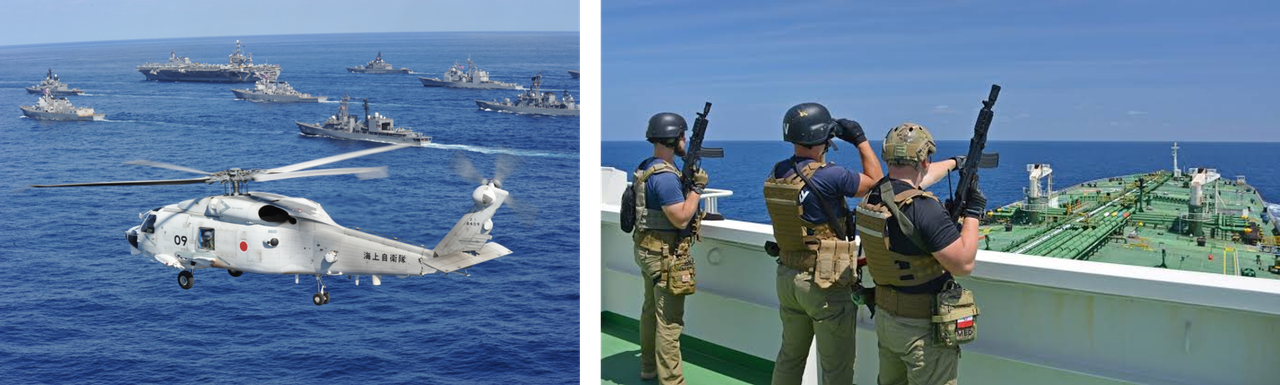
The exercise will be conducted in two phases:
- Harbour Phase: Includes professional interactions, discussions and coordinated operational planning among participating naval personnel.
- Sea Phase: Involves maritime operations between INS Sahyadri and naval units from the United States, Australia and Japan.
Significance
INS Sahyadri’s participation demonstrates India’s commitment to strengthening maritime partnerships and promoting cooperation with like-minded countries in the Indo-Pacific region.
The exercise also supports India’s vision of MAHASAGAR – Mutual and Holistic Advancement for Security and Growth Across Regions.
Overview & History
Origin: Started in 1992 as a bilateral maritime exercise between the United States and India.
Expansion: Japan became a permanent partner in 2015, and Australia rejoined on a permanent basis in 2020, unifying all four Quad countries.
Objective: To improve operational interoperability, build mutual trust, and promote a free, open, and rules-based Indo-Pacific order.
Quad Core Purpose and Vision
The fundamental objective of the Quad is to ensure and support a free, open, and inclusive Indo-Pacific region. It is not a formal military alliance (like NATO) and lacks a permanent headquarters or secretariat. Instead, it serves as a flexible diplomatic partnership aimed at countering unilateral shifts in the regional status quo and managing economic and maritime security challenges.
Key Areas of Cooperation
Maritime Security: Enhancing domain awareness, countering piracy, and conducting joint operations like the annual Malabar Exercise.
Critical Technologies & Supply Chains: Securing telecommunications (like 5G), sharing emerging tech, and strengthening critical mineral pipelines to lower economic dependence on China.
Climate Change & Infrastructure: Coordinating green energy transitions and allocating billions in infrastructure funding to developing nations in the Indo-Pacific.