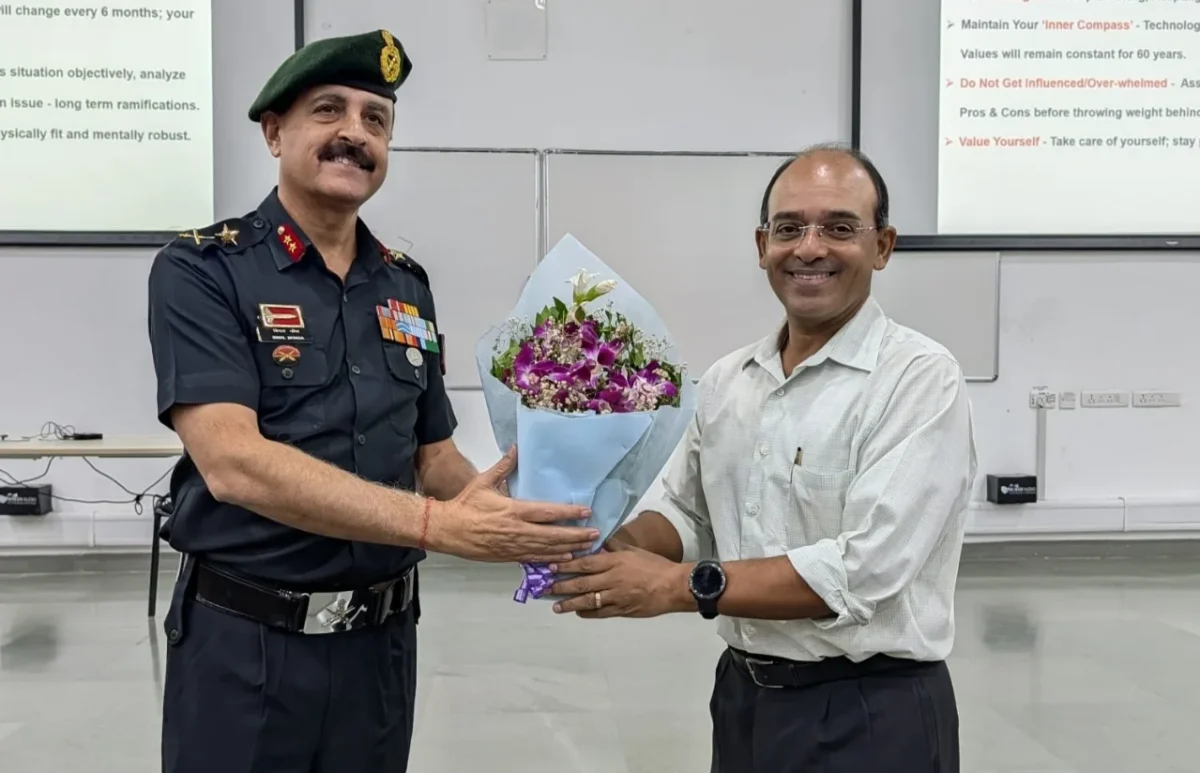
Rapid technological change and the need for professionals to keep learning were central themes when Major General Bimal Monga, SM, VSM, spoke to students and faculty at the Indian Institute of Technology (IIT) Gandhinagar on November 11, 2026.
The Additional Director General (ADG) of the National Cadet Corps (NCC) Directorate Gujarat delivered a lecture titled “Engineering the Future of Defence” for B.Tech and postgraduate students. His address covered changing defence requirements, advances in technology and the demands of working in a fast-evolving professional environment.
Technology and changing defence needs
Maj Gen Bimal Monga discussed the shrinking “half-life” of technology—the period in which a technology remains relevant and effective. He said the rapid pace of innovation has implications for equipment, engineering practices and defence systems.
He also highlighted how technological change is altering modern warfare and presenting new challenges for defence organisations and engineering professionals. In this setting, he said, anticipating change and adapting to new developments are important to professional competence and operational effectiveness.
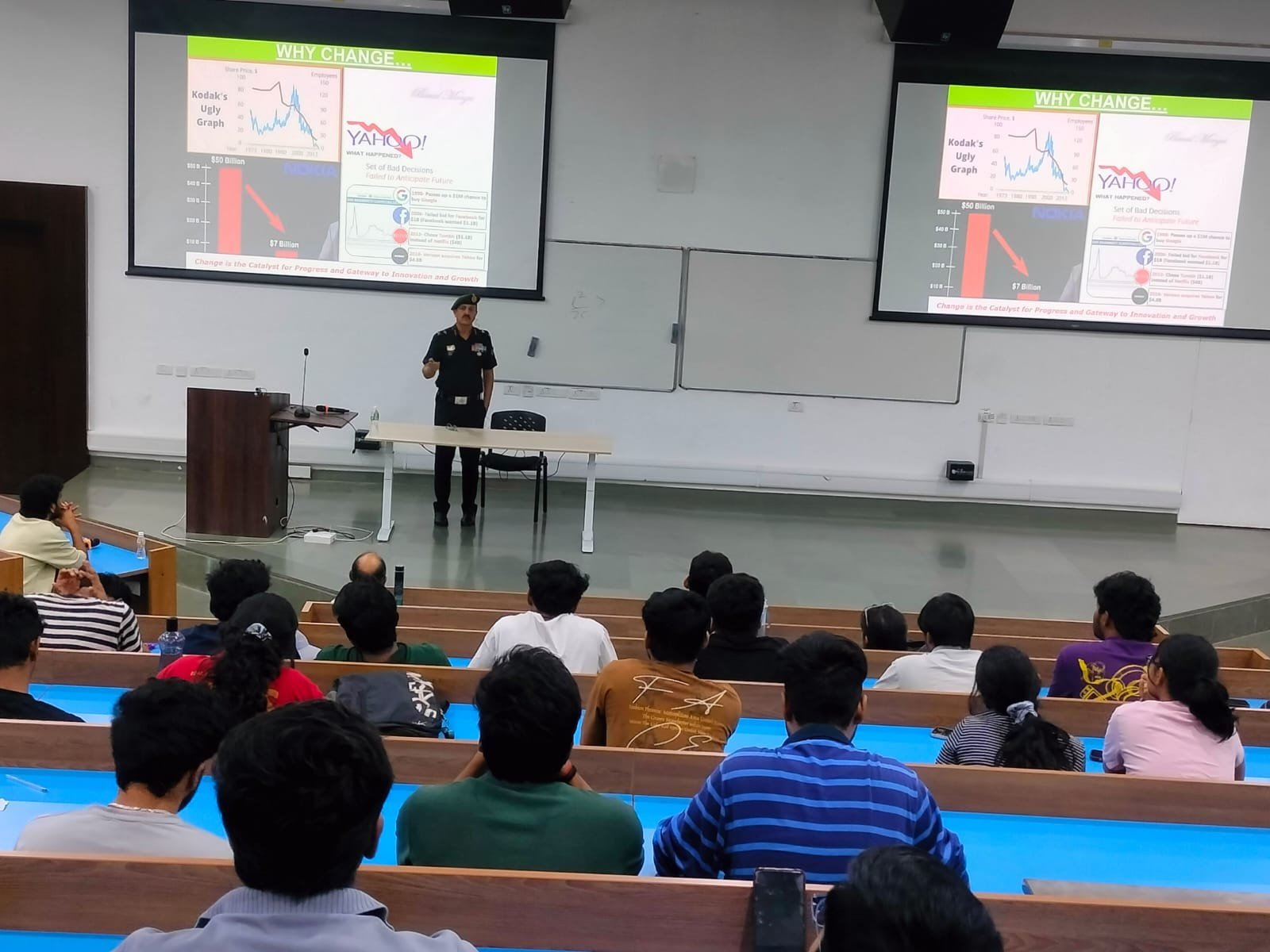
Maj Gen Monga urged students and faculty to respond to change rather than resist it, and stressed the need to keep updating their knowledge. He encouraged aspiring engineers and researchers to build new technical capabilities and follow developments that could shape future defence systems and industrial applications.
Technical and interpersonal skills
The ADG NCC Gujarat also said technical expertise alone does not ensure professional excellence. He highlighted critical thinking, problem-solving, teamwork and effective communication as important abilities for working through complex challenges, making informed decisions and contributing in multidisciplinary settings.
The lecture connected these themes to areas of technological change in the defence sector, including artificial intelligence, autonomous systems, robotics, cybersecurity, advanced materials, aerospace engineering and next-generation communication technologies. The source account noted that these fields offer opportunities for engineers and researchers to contribute to indigenous defence innovation and technological self-reliance.
The idea of a shorter technological half-life also has implications for military equipment and defence planning: capabilities that are effective today may need upgrades or replacement as new technologies emerge. The address stressed the importance of ongoing research, development, modernisation and adaptability in keeping defence systems effective.
Academic learning and defence engagement
Maj Gen Monga encouraged students to look beyond conventional academic learning by developing practical skills, analytical abilities and innovative approaches to problem-solving. The interaction also highlighted the role of institutions such as IIT Gandhinagar in engineering education, scientific research and innovation that can support national technological capabilities.
Engagements between military leaders and students offer a forum to discuss emerging challenges and the application of academic knowledge to defence technology and national security. As ADG of NCC Directorate Gujarat, Maj Gen Monga’s interaction also emphasised leadership development, discipline, adaptability and professional excellence among young people.
His message was that preparing for an evolving technological landscape requires both technical knowledge and a willingness to keep learning, alongside skills such as communication, teamwork and critical thinking. The lecture brought these capabilities together as part of the broader challenge of engineering the future of defence.