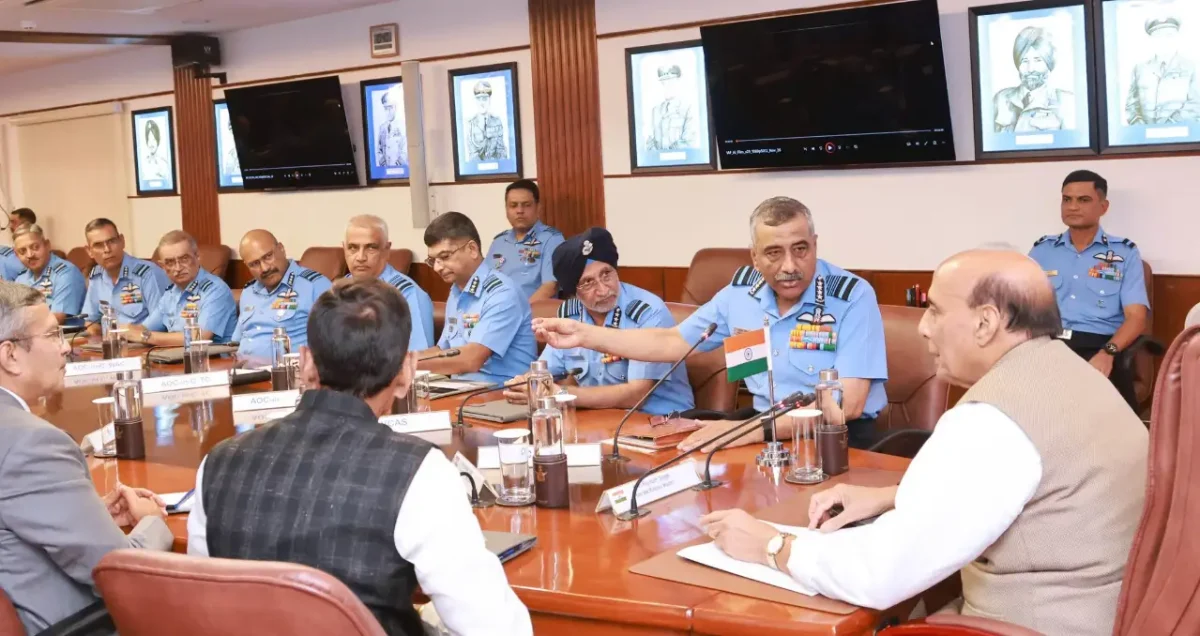
At the IAF Commanders’ Conference in New Delhi, Defence Minister Rajnath Singh urged senior commanders to keep the Indian Air Force prepared for conventional and emerging threats, with particular attention to surprise, intelligence and surveillance.
Readiness and the element of surprise
Singh said the Armed Forces should sustain offensive and defensive aspects of the “element of surprise” to preserve an operational advantage. He also called for military strategies to keep pace with fast-moving technology and changes in the character of warfare.
He highlighted electronic warfare, cyber capabilities, unmanned systems and advanced intelligence networks among the features of modern conflict. Continuous attention to preparedness, he said, is needed to ensure the Armed Forces can respond to new challenges.
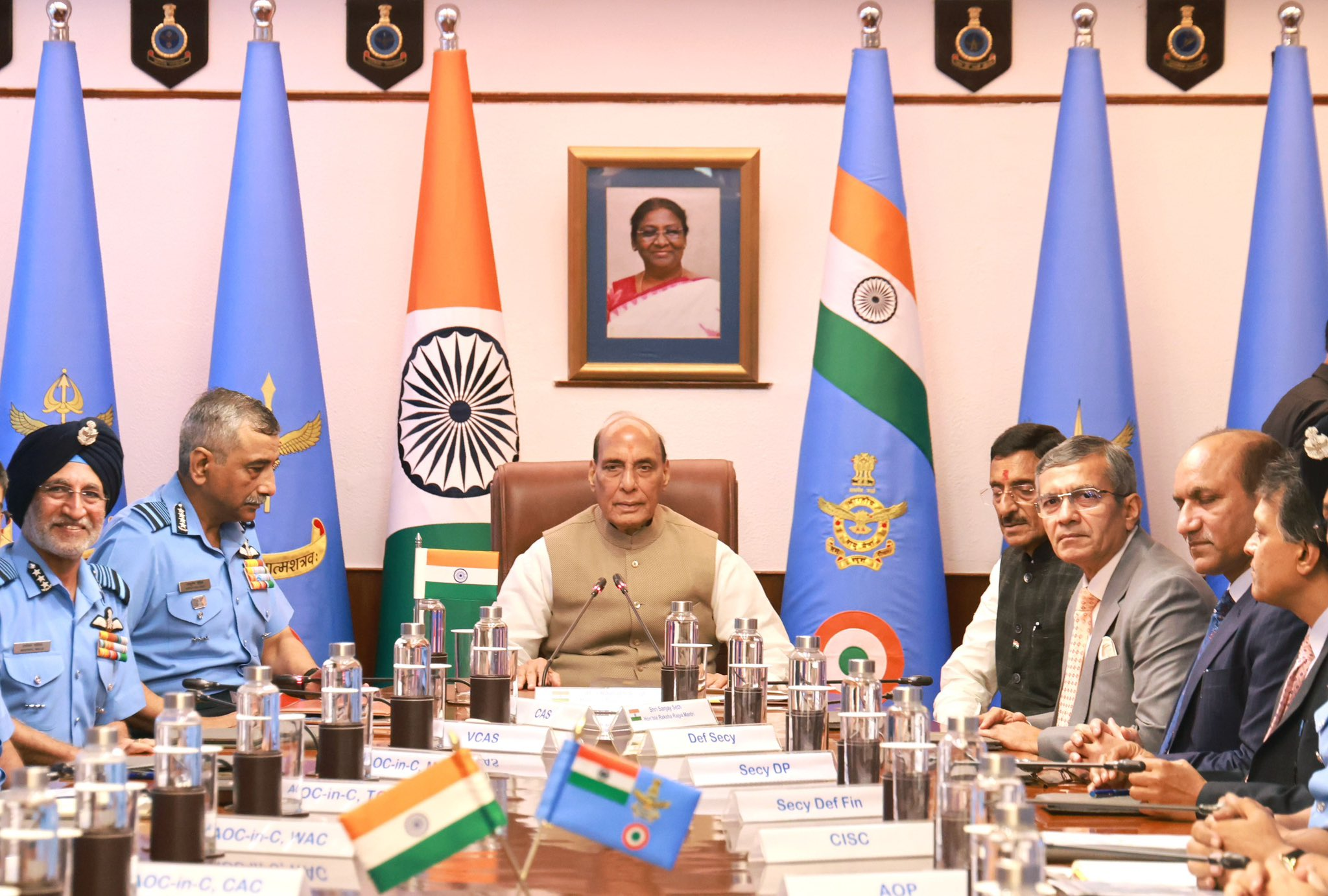
The Defence Minister also stressed identifying potential threats before they materialise. He called for stronger intelligence and surveillance, proactive threat assessment, better situational awareness and effective use of technological resources.
System integration and indigenous AI applications
Singh urged greater integration of military systems to improve coordination and decision-making. He emphasised that surveillance platforms, intelligence networks and operational systems need to work together to address complex security challenges.
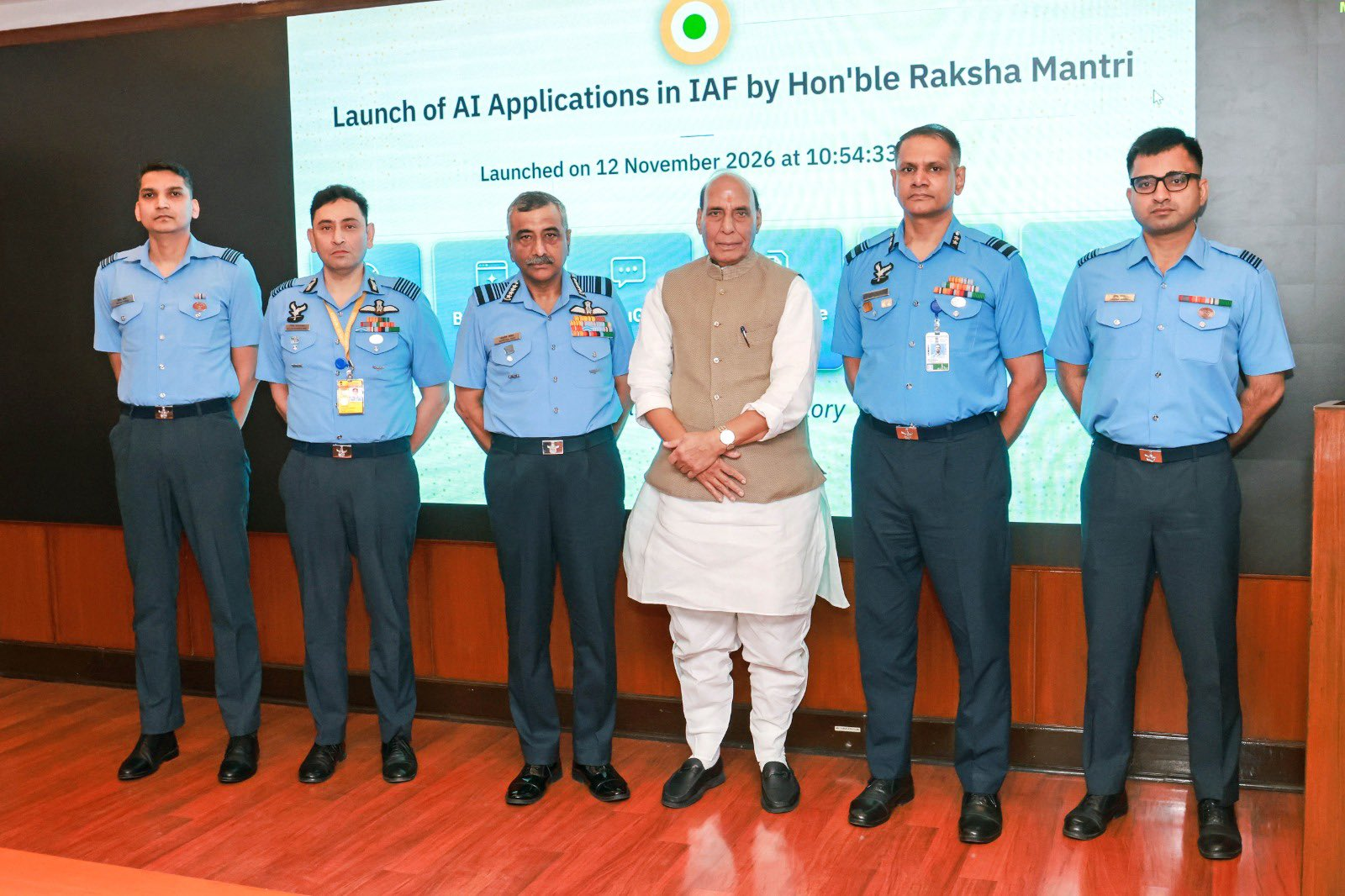
The conference also saw the launch of in-house artificial intelligence applications developed by UDAAN for operations, administration and aerospace safety. The applications are intended to support these areas of Air Force functioning and reflect the IAF’s effort to incorporate advanced technology into its processes.
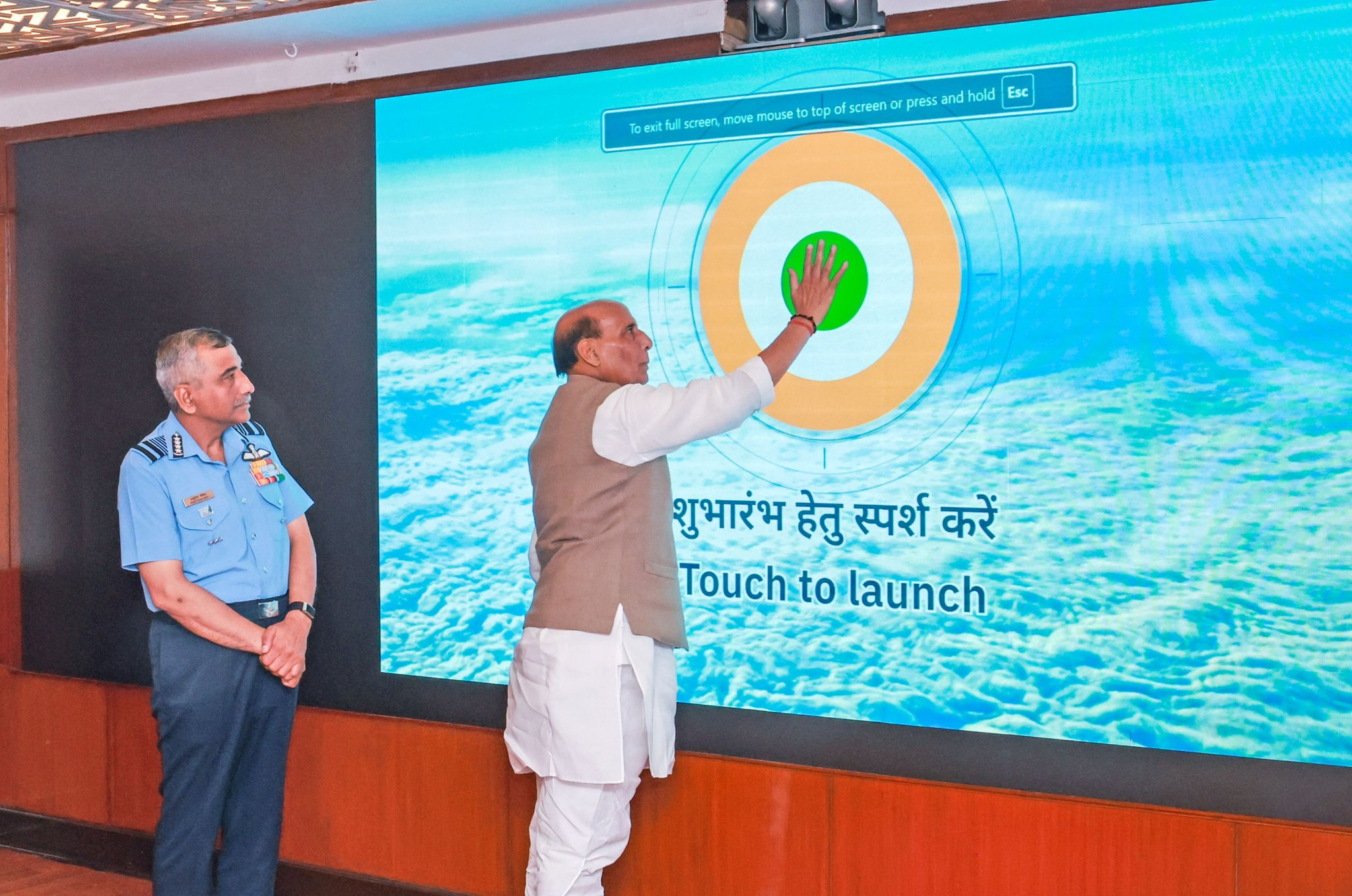
Their development in-house also points to the role of indigenous solutions in India’s defence modernisation efforts. Such applications are intended to serve military requirements while contributing to expertise in emerging technologies.
Artificial intelligence has potential uses in data analysis, predictive assessment, information processing and decision support. In military organisations, these applications may support efficiency, situational awareness and faster decision-making in complex operational settings.
Role of the Commanders’ Conference
The IAF Commanders’ Conference provides a forum for senior Air Force leadership to review operational preparedness, consider emerging security challenges and discuss ways to strengthen the service’s capabilities. It also enables discussion of how technological development, training priorities and operational planning relate to changing national security requirements.
Singh’s remarks underscored the importance of maintaining offensive and defensive preparedness as warfare evolves. His emphasis on anticipating threats, intelligence and surveillance reflects the role these capabilities play in supporting an effective response.
The conference highlighted the IAF’s focus on operational excellence, innovation and modernisation. The launch of the UDAAN-developed applications and the calls for stronger intelligence, surveillance and integration formed part of that focus as the service adapts to conventional and emerging security challenges.