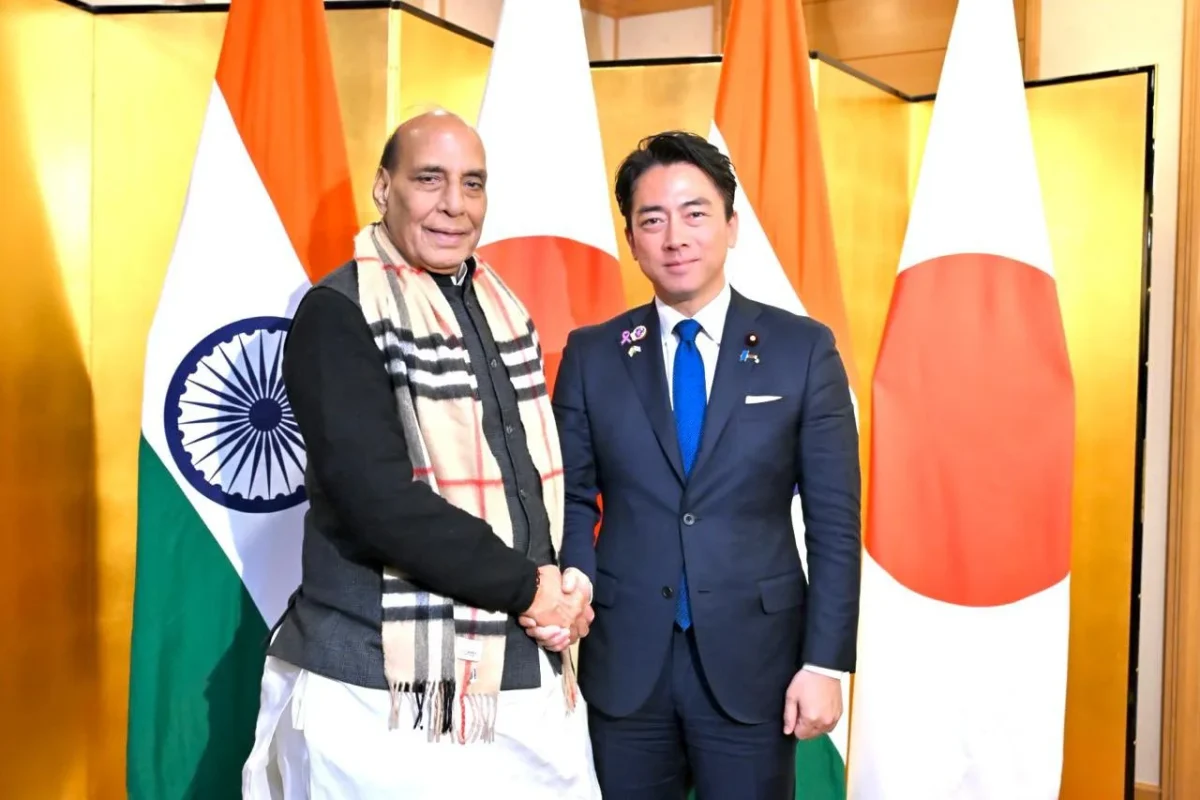
Indian test ranges could soon host trials of selected Japanese weapons, as New Delhi and Tokyo pursue a proposed arrangement during Defence Minister Rajnath Singh’s visit to Japan. The understanding is expected to be taken forward in the wake of the India–Japan 2+2 Foreign and Defence Ministers’ Dialogue, but has not been described as finalised.
Proposed trials and site assessment
The proposed access would cover suitable Indian facilities for trials of Japanese long-range weapons, including the Type 25 surface-to-ship missile, reported to have a range of approximately 1,000 kilometres, and smaller attack drones.
Japanese officials visited India in October to assess possible locations. General Masayoshi Arai, Chief of Staff of the Japan Ground Self-Defence Force, confirmed towards the end of that month that officials had been sent to inspect potential sites. Japanese media reports said the assessment focused on facilities suitable for the Type 25 missile and smaller attack drones.
Japan’s interest in using Indian ranges is linked to its expanding standoff-strike capabilities and its need for suitable places to test weapons. India’s coastal ranges, particularly those facing the Bay of Bengal, have extensive safety zones and tracking infrastructure and are used for India’s own missile testing programmes.
Talks during Singh’s Tokyo visit
Rajnath Singh arrived in Tokyo on November 18, 2026, for an official visit. External Affairs Minister S. Jaishankar joined him from Manila, and the two Indian ministers co-chaired the 2+2 dialogue on November 19 with Japan’s Defence Minister Shinjiro Koizumi and Foreign Minister Toshimitsu Motegi.
On the first day of the visit, Singh and Koizumi went to the Japan Maritime Self-Defence Force base at Yokosuka and inspected the Mogami-class frigate JS Natori.
The Tokyo meetings marked the third meeting between the two defence ministers in four months. They had previously met in New Delhi in August and on the sidelines of the ASEAN Defence Ministers’ Meeting-Plus in Cebu in October.
Broader defence cooperation
The discussions include defence equipment and technology collaboration, maritime security, joint military exercises involving all three services, and defence industrial partnerships. India and Japan have also reaffirmed their commitment to a free, open and rules-based Indo-Pacific.
The two countries already take part in regular military engagements and exercises, including the Malabar naval exercise, and continue discussions on maritime security, defence technology and industrial collaboration. If agreed, access to Indian ranges would add a practical area of cooperation, allowing closer interaction between their defence establishments on selected weapons trials and military technology.