
In Current Affairs for 19 November 2026, we will see the latest national and international current affairs news. These important current affairs will be beneficial for your upcoming NDA, CDS, CDS OTA, AFCAT, TA, Agniveer Army, Agniveer Navy, Agniveer Air Force, Women Military Police, INET, MNS, ACC exams, SCO, PCSL, CAPF, and SSB interviews, and direct entries for Army, Navy, and Air Force like SSC Tech, TGC, JAG, NCC, TES, 10+2 Cadet. Download a PDF file about current events at the end of this article. Let us now see the Current Affairs.
Current Affairs 19 November 2026
International Men’s Day 2026
International Men’s Day is observed annually on 19 November to recognise the contributions of men and boys to society, families and communities. The occasion also provides an opportunity to discuss men’s health, emotional well-being, positive role models and gender equality.
The theme for International Men’s Day 2026 is ‘The Future Is Everyone’, which promotes inclusivity, equal opportunities and shared responsibility in building a better society.
Origin and History
The modern observance of International Men’s Day was initiated in 1999 by Dr Jerome Teelucksingh, a history lecturer at the University of the West Indies in Trinidad and Tobago.
The idea behind the 2026 theme, ‘The Future Is Everyone’, is attributed to Lisa Britton of the United States, who developed it around 2020. It emphasises the importance of recognising the contributions and experiences of men and boys.
International Men’s Day in India
International Men’s Day started gaining wider recognition in India in 2007. Uma Challa, associated with the Save Indian Family Foundation, played an important role in promoting awareness of the occasion in the country.
Relationship with International Women’s Day
International Men’s Day is not intended to compete with or oppose International Women’s Day, observed on 8 March. Both occasions provide platforms to discuss gender-related issues and promote mutual respect, well-being and equality.
Quick Revision Facts
| Particulars | Details |
|---|---|
| Observed on | 19 November |
| 2026 Theme | The Future Is Everyone |
| Initiated by | Dr Jerome Teelucksingh |
| Year of Origin | 1999 |
| Country of Origin | Trinidad and Tobago |
| Theme associated with | Lisa Britton |
| Gained popularity in India | 2007 |
| International Women’s Day | 8 March |

World Toilet Day 2026
World Toilet Day is observed every year on 19 November to highlight the importance of safe sanitation and access to proper toilet facilities. The day draws attention to the health, social and environmental consequences of inadequate sanitation, particularly for women and girls.
The 2026 theme is ‘Safe Toilets. Equal Futures.’ It highlights the connection between sanitation facilities and gender equality, emphasising how unsafe or inadequate toilets can affect women’s safety, dignity, menstrual hygiene and opportunities.
Origin and Establishment
World Toilet Day was first celebrated in 2001 by the World Toilet Organisation (WTO), established by Singaporean philanthropist Jack Sim.
In 2013, the United Nations officially recognised World Toilet Day as an international observance. Its global activities are coordinated by UN-Water.
Connection with Sustainable Development Goals
Access to sanitation is closely connected with several Sustainable Development Goals (SDGs) established by the United Nations.
| SDG | Goal | Connection with Sanitation |
|---|---|---|
| SDG 3 | Good Health and Well-being | Prevents diseases associated with poor sanitation |
| SDG 5 | Gender Equality | Promotes safety, dignity and menstrual hygiene |
| SDG 6 | Clean Water and Sanitation | Ensures safe and inclusive sanitation facilities |
| SDG 10 | Reduced Inequalities | Improves sanitation access for vulnerable communities |
Importance of World Toilet Day
Poor sanitation can lead to the spread of diseases, environmental pollution and unsafe living conditions. Women and girls are particularly affected when toilet facilities are unavailable, inaccessible or unsafe.
The observance encourages governments, institutions and communities to improve sanitation infrastructure and ensure that everyone has access to hygienic and dignified facilities.
Quick Revision Facts
| Particulars | Details |
|---|---|
| Observed on | 19 November |
| 2026 Theme | Safe Toilets. Equal Futures. |
| First Celebrated | 2001 |
| UN Recognition | 2013 |
| Established by | World Toilet Organisation |
| Founder | Jack Sim |
| Coordinating Organisation | UN-Water |
| Important SDGs | 3, 5, 6 and 10 |

Rani Lakshmibai Birth Anniversary 2026
The birth anniversary of Rani Lakshmibai, one of the most prominent personalities of the Revolt of 1857, is observed on 19 November. She is remembered for her courage, leadership and resistance against British colonial rule.
Born as Manikarnika Tambe in Varanasi on 19 November 1828, she became popularly known as Manu during her childhood. Her father was Moropant Tambe, while her mother was Bhagirathi Bai.
Early Life and Marriage
Manikarnika married Maharaja Gangadhar Rao Newalkar, the ruler of Jhansi, in 1842. Following her marriage, she came to be known as Lakshmibai.
The couple had a son who died at an early age. In 1853, shortly before Maharaja Gangadhar Rao’s death, they adopted a boy from the royal family, named Damodar Rao.
Doctrine of Lapse and Annexation of Jhansi
The British East India Company, under Governor-General Lord Dalhousie, followed the Doctrine of Lapse to annex princely states where the ruler died without a recognised natural male heir.
Jhansi was annexed by the British in 1854 under this policy. Rani Lakshmibai strongly opposed the annexation and refused to accept British control over her kingdom.
Role in the Revolt of 1857
Rani Lakshmibai emerged as a major leader during the Revolt of 1857. She organised resistance against British forces and became a symbol of bravery and patriotism.
Her military leadership and determination made her one of the most celebrated figures in India’s struggle against colonial rule.
Historical Significance
Rani Lakshmibai’s contribution to the Revolt of 1857 continues to inspire generations. Her life represents courage, sacrifice, determination and resistance against injustice.
Quick Revision Facts
| Particulars | Details |
|---|---|
| Original Name | Manikarnika Tambe |
| Popular Childhood Name | Manu |
| Date of Birth | 19 November 1828 |
| Birthplace | Varanasi |
| Father | Moropant Tambe |
| Mother | Bhagirathi Bai |
| Husband | Maharaja Gangadhar Rao Newalkar |
| Marriage Year | 1842 |
| Adopted Son | Damodar Rao |
| Jhansi Annexation | 1854 |
| Governor-General | Lord Dalhousie |
| Associated Revolt | Revolt of 1857 |

AI Kavach
India has taken an important step towards strengthening the security of artificial intelligence systems with the launch of AI Kavach, a cybersecurity and assurance laboratory developed through collaboration between IIT Kanpur and Bharat1.ai in November 2026.
The initiative is designed to identify vulnerabilities in AI-based systems and develop security solutions against cyberattacks, unauthorised activities and potential misuse of autonomous AI agents.
It is described in the supplied material as India’s first AI cybersecurity and assurance laboratory dedicated to the financial sector.
Objectives of AI Kavach
The growing use of artificial intelligence in financial services has created new cybersecurity challenges. AI systems are increasingly being used by banks, insurance companies and FinTech organisations for various operations.
AI Kavach aims to:
- Identify security weaknesses in artificial intelligence systems.
- Develop tools to protect AI applications from cyberattacks.
- Improve the security and reliability of autonomous AI agents.
- Address malicious activities and unintended behaviour within AI systems.
- Strengthen cybersecurity research in the financial sector.
Growing Role of AI in Financial Services
Artificial intelligence is now widely used in the financial industry for:
- Detecting fraudulent transactions.
- Assessing customers’ creditworthiness.
- Providing automated customer support.
- Verifying customer identities.
- Processing financial transactions.
However, autonomous AI agents may gain access to sensitive financial information and interact directly with digital platforms with limited human intervention. This increases the risk of data breaches, cyberattacks and unauthorised activities.
Training and Research Initiatives
AI Kavach also aims to develop skilled professionals in AI security and cybersecurity.
Its capacity-building programme is expected to support more than 300 students and professionals through:
- Specialised research fellowships.
- Cybersecurity challenges.
- Industry-oriented training.
- Research collaborations.
- Partnerships between academic institutions and industry.
Significance
The establishment of AI Kavach reflects India’s efforts to strengthen cybersecurity infrastructure alongside the expansion of artificial intelligence.
By bringing together academic research and industry expertise, the initiative aims to develop a more secure environment for AI-based financial services.
Quick Revision Facts
| Particulars | Details |
|---|---|
| Initiative | AI Kavach |
| Launched | November 2026 |
| Institutions | IIT Kanpur and Bharat1.ai |
| Type | AI Cybersecurity and Assurance Laboratory |
| Focus Sector | Financial Sector |
| Main Objective | Securing AI systems and AI agents |
| Training Capacity | More than 300 students and professionals |
| Key Areas | AI security, cyberattacks and financial technology |

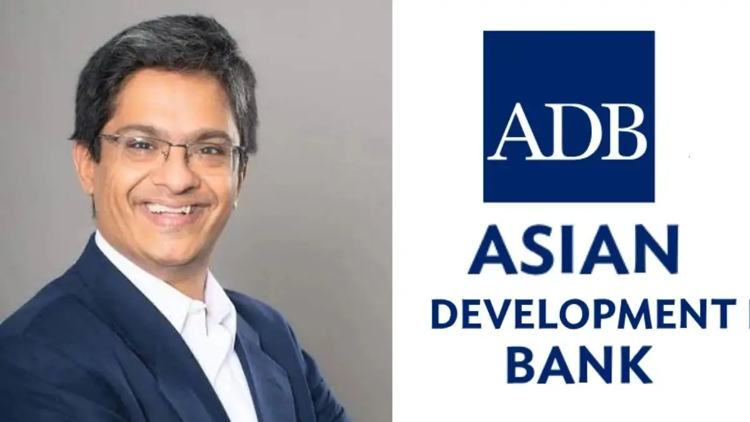
Karthik Muralidharan Appointed ADB Chief Economist
The Asian Development Bank (ADB) has appointed Indian-origin economist Karthik Muralidharan as its Chief Economist and Director General of the Economic Research and Development Impact Department.
He is scheduled to assume the position on 1 July 2027.
His appointment is significant for the bank’s economic research and policy-related activities across the Asia-Pacific region.
Professional Background
Karthik Muralidharan is currently serving as the Tata Chancellor’s Professor of Economics at the University of California, San Diego (UC San Diego).
In his new role, he will be responsible for providing economic research, policy analysis and forecasting to support the development priorities of economies across Asia and the Pacific.
About the Asian Development Bank
The Asian Development Bank is a multilateral development institution established in 1966.
Its primary objective is to promote sustainable and inclusive economic development across the Asia-Pacific region by working with member countries and development partners.
The institution supports various development activities, including infrastructure, education, healthcare, poverty reduction and regional cooperation.
Important Details About ADB
| Particulars | Details |
|---|---|
| Organisation | Asian Development Bank |
| Abbreviation | ADB |
| Established | 1966 |
| Headquarters | Manila, Philippines |
| Current President (as stated in PPT) | Masato Kanda |
| Appointed Chief Economist | Karthik Muralidharan |
| Assumption of Office | 1 July 2027 |
| Current Institution | University of California, San Diego |
Significance of the Appointment
The appointment will bring academic and economic research expertise to ADB’s policy and development work.
The Chief Economist’s role is particularly important in examining regional economic trends, preparing forecasts and supporting evidence-based policymaking across the Asia-Pacific region.
Quick Revision Facts
- ADB was established in 1966.
- Its headquarters is located in Manila, Philippines.
- Masato Kanda is identified in the supplied material as its president.
- Karthik Muralidharan has been appointed Chief Economist.
- He will assume office on 1 July 2027.
National Book Awards 2026
The 2026 National Book Awards recognised several literary contributions, with Palestinian-Jewish writer Hannah Lillith Assadi winning the Fiction category for her novel Paradiso 17.
The award-winning novel explores the emotional and psychological consequences of displacement through the story of a Palestinian individual forced to leave his homeland during the Nakba of 1948.
Winner of the Fiction Category
Hannah Lillith Assadi received the National Book Award for Fiction for Paradiso 17, her third book.
The novel focuses on the experiences of displacement, loss of home and the long-lasting emotional impact of forced migration.
The winner will receive prize money of $10,000.
Salman Rushdie Receives Special Literary Honour
Indian-born British author Salman Rushdie was honoured with the Medal for Distinguished Contribution to American Letters in 2026.
Born in Bombay (now Mumbai) in 1947, Rushdie is internationally recognised for his contribution to modern literature and his influential novels.
Some of his well-known literary works include:
| Book | Publication Year |
|---|---|
| Midnight’s Children | 1981 |
| The Satanic Verses | 1988 |
| The Moor’s Last Sigh | 1995 |
| The Golden House | 2017 |
| Victory City | 2023 |
His novel Midnight’s Children won the Booker Prize in 1981.
Significance
The 2026 awards recognise literary excellence across different categories and highlight the role of literature in addressing historical experiences, identity, migration and social realities.
Quick Revision Facts
| Particulars | Details |
|---|---|
| Award | National Book Awards 2026 |
| Fiction Winner | Hannah Lillith Assadi |
| Winning Book | Paradiso 17 |
| Prize Money | $10,000 |
| Subject of Novel | Palestinian displacement during Nakba (1948) |
| Special Honour | Medal for Distinguished Contribution to American Letters |
| Recipient | Salman Rushdie |
| Salman Rushdie’s Birthplace | Bombay (Mumbai) |
| Year of Birth | 1947 |
| Famous Novel | Midnight’s Children |
| Booker Prize Year | 1981 |

Cyclone Akvan 2026
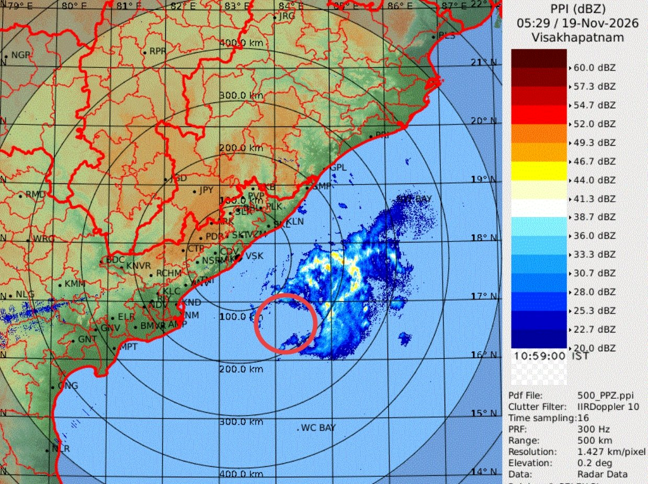
Cyclone Akvan developed into a Severe Cyclonic Storm over the west-central Bay of Bengal in November 2026. The India Meteorological Department (IMD), in its morning bulletin issued on 19 November 2026, forecast that the system would move towards the eastern coastline of India.
According to the forecast, the cyclone was expected to make landfall around midday on 20 November 2026, along the coast of North Andhra Pradesh and Yanam and South Odisha, between Narsapur and Puri, slightly east of Gopalpur.
What Are Tropical Cyclones?
Tropical cyclones are powerful weather systems that develop over warm tropical ocean waters. They are characterised by rotating winds around a low-pressure centre and can cause widespread destruction.
Major hazards associated with tropical cyclones include:
- Extremely strong winds.
- Heavy rainfall.
- Rough sea conditions.
- Storm surges.
- Coastal flooding.
- Damage to infrastructure and agriculture.
Origin of the Name Akvan
The name Akvan was contributed by Iran under the regional tropical cyclone naming system managed by the WMO/UNESCAP Panel on Tropical Cyclones.
The current naming system came into operation in April 2020 and contains 169 names, with each of the 13 participating countries contributing 13 names.
The participating countries are:
- Bangladesh
- India
- Iran
- Maldives
- Myanmar
- Oman
- Pakistan
- Qatar
- Saudi Arabia
- Sri Lanka
- Thailand
- United Arab Emirates
- Yemen
How Are Cyclones Named in the North Indian Ocean?
In the North Indian Ocean region, which includes the Bay of Bengal and Arabian Sea, cyclone names are assigned by the Regional Specialized Meteorological Centre (RSMC), New Delhi, India.
The India Meteorological Department serves as the designated RSMC for this region.
Quick Revision Facts
| Particulars | Details |
|---|---|
| Cyclone Name | Akvan |
| Intensity | Severe Cyclonic Storm |
| Region | West-central Bay of Bengal |
| Name Contributed By | Iran |
| Naming System | WMO/UNESCAP Panel on Tropical Cyclones |
| Current Naming List | 169 names |
| Participating Countries | 13 |
| Names per Country | 13 |
| Naming System Effective From | April 2020 |
| Regional Centre | RSMC, New Delhi |
| Forecast Landfall | 20 November 2026 |
| Expected Landfall Region | North Andhra Pradesh, Yanam and South Odisha |
Climate Risk Index 2027
India has been ranked the 10th most affected country globally by extreme weather events during the period 1996–2025, according to the Climate Risk Index 2027, released by Germanwatch on 17 November 2026.
The report highlights the serious consequences of climate-related disasters, including floods, storms, heatwaves and other extreme weather events.
India’s Climate Impact (1996–2025)
The report presents significant figures concerning the impact of extreme weather events on India over the 30-year period.
According to the index:
- More than 78,000 people lost their lives due to extreme weather events.
- Over 1.2 billion people were affected.
- Economic losses exceeded US$170 billion.
- India ranked 12th for the year 2025 alone.
These figures demonstrate the substantial human and economic consequences of extreme weather events in the country.
Top 10 Countries Most Affected by Extreme Weather Events
According to the supplied Climate Risk Index 2027 material, the rankings are:
| Rank | Country |
|---|---|
| 1 | Dominica |
| 2 | Myanmar |
| 3 | Honduras |
| 4 | Libya |
| 5 | Haiti |
| 6 | Grenada |
| 7 | Philippines |
| 8 | Nicaragua |
| 9 | Bahamas |
| 10 | India |
What Is the Climate Risk Index?
The Climate Risk Index is published by Germanwatch, a German environmental and development organisation.
It examines the impact of extreme weather events on different countries by considering factors such as:
- Human fatalities.
- Number of people affected.
- Economic losses.
- Economic losses relative to the country’s economic capacity.
The index helps assess the vulnerability of countries to extreme weather events and highlights the importance of climate adaptation and disaster preparedness.
Significance for India
India faces multiple climate-related challenges due to its geographical diversity, large population and dependence on climate-sensitive sectors such as agriculture.
Floods, cyclones, heatwaves and extreme rainfall events can affect infrastructure, livelihoods, food security and economic development.
The findings underline the importance of strengthening early warning systems, disaster management mechanisms, climate-resilient infrastructure and environmental protection.

Review Questions
Q1. International Men’s Day is observed every year on which date?
A) 10 November
B) 14 November
C) 19 November
D) 25 November
Answer: C) 19 November
Q2. Who founded International Men’s Day in 1999?
A) Jack Sim
B) Dr Jerome Teelucksingh
C) Uma Challa
D) Lisa Britton
Answer: B) Dr Jerome Teelucksingh
Q3. What is the theme of World Toilet Day 2026?
A) Sanitation for All
B) Clean Water, Healthy Life
C) Safe Toilets. Equal Futures.
D) Toilets and Climate Change
Answer: C) Safe Toilets. Equal Futures.
Q4. World Toilet Day was officially recognised by the United Nations in which year?
A) 2001
B) 2005
C) 2010
D) 2013
Answer: D) 2013
Q5. Rani Lakshmibai was born with which name?
A) Ahilyabai Holkar
B) Manikarnika Tambe
C) Bhagirathi Bai
D) Rani Durgavati
Answer: B) Manikarnika Tambe
Q6. The Doctrine of Lapse, under which Jhansi was annexed in 1854, was introduced and implemented by whom?
A) Lord Canning
B) Lord Wellesley
C) Lord Dalhousie
D) Lord Curzon
Answer: C) Lord Dalhousie
Q7. AI Kavach was developed through collaboration between IIT Kanpur and which organisation?
A) Bharat1.ai
B) DRDO
C) NITI Aayog
D) CERT-In
Answer: A) Bharat1.ai
Q8. Karthik Muralidharan has been appointed Chief Economist of which organisation?
A) World Bank
B) International Monetary Fund
C) Asian Development Bank
D) World Trade Organization
Answer: C) Asian Development Bank
Q9. Which book won the Fiction category at the National Book Awards 2026, according to the supplied material?
A) Midnight’s Children
B) Paradiso 17
C) The Satanic Verses
D) Victory City
Answer: B) Paradiso 17
Q10. According to the Climate Risk Index 2027, what was India’s rank among the countries most affected by extreme weather events during 1996–2025?
A) 5th
B) 8th
C) 10th
D) 12th
Answer: C) 10th