Ask a group of NDA or CDS aspirants which commandos they admire most, and two names come up almost every time: PARA SF and MARCOS. One belongs to the Indian Army’s Parachute Regiment; the other is the Indian Navy’s marine commando force.
Because both are elite special forces, many candidates assume they are more or less the same. They are not. They belong to different services, are selected from different pools, train in different places and are built for different battlefields. If you mention either unit in your Personal Interview at the Services Selection Board (SSB), the Interviewing Officer may well ask you how the two differ, and a vague answer does not create a good impression.
Below are 10 clear differences between PARA SF and MARCOS, with key facts, a quick comparison table and FAQs. Where details such as unit strength or selection rates are classified or disputed, we say so instead of guessing.
1. Parent Service and Chain of Command
PARA SF: Indian Army; special forces battalions of the Parachute Regiment
MARCOS: Indian Navy; the Marine Commando Force (MCF)
The most basic difference is the service each unit belongs to. PARA SF, short for Parachute (Special Forces), is part of the Indian Army. Its battalions belong to the Parachute Regiment, so every operator is an Army soldier or officer.
MARCOS is the special forces unit of the Indian Navy. Its personnel are naval officers and sailors, and the force functions under the Navy’s command structure. Since 2019, selected elements of all three services’ special forces, including PARA SF, MARCOS and the Indian Air Force’s Garud Commando Force, have also been drawn together under the tri-service Armed Forces Special Operations Division (AFSOD) for joint missions.
2. Origin and Year of Raising
PARA SF: Roots in the Meghdoot Force of 1965; 9th Battalion (Commando) raised on 1 July 1966
MARCOS: Raised in February 1987 as the Indian Marine Special Force (IMSF); renamed Marine Commando Force in 1991
PARA SF is the older of the two by about two decades. During the 1965 war with Pakistan, an ad hoc force of volunteers called the Meghdoot Force, led by Megh Singh, carried out daring raids behind enemy lines. Its success convinced the Army to raise a permanent commando unit, and on 1 July 1966 it was raised as the 9th Battalion of the Parachute Regiment (Commando). A second commando battalion, 10 Para, followed in 1967.
MARCOS came much later. The Navy began planning a maritime special forces unit in 1986, and a small group of volunteer officers from its diving branch trained with American and British special forces. The Indian Marine Special Force formally came into being in February 1987. In 1991 it was renamed the Marine Commando Force, and the short form MARCOS stuck.
3. Primary Operating Environment
PARA SF: Land warfare in mountains, deserts, jungles and high-altitude areas
MARCOS: Maritime warfare at sea, under water, along coasts and in riverine areas
PARA SF is essentially a land force. Its battalions are trained for operations in the high mountains of Jammu and Kashmir and Ladakh, the deserts of Rajasthan, and the jungles of the North-East.
MARCOS is built around the sea. Its home ground is the ocean, the coastline, harbours, oil platforms, islands and lakes. That said, MARCOS are fully capable of fighting on land as well. Teams have been deployed for counter-terrorism operations in Jammu and Kashmir, most famously around the Wular Lake area, where they operate in both water and land.
4. Core Roles and Mission Types
PARA SF: Direct action, special reconnaissance, deep strikes, counter-insurgency, counter-terrorism, hostage rescue
MARCOS: Visit, board, search and seizure (VBSS), combat diving, amphibious raids, anti-piracy, protection of offshore assets, maritime counter-terrorism
PARA SF teams typically operate in small groups and focus on tasks such as raids behind enemy lines, reconnaissance and surveillance of enemy positions, target designation, counter-insurgency and counter-terrorism operations, and hostage rescue.
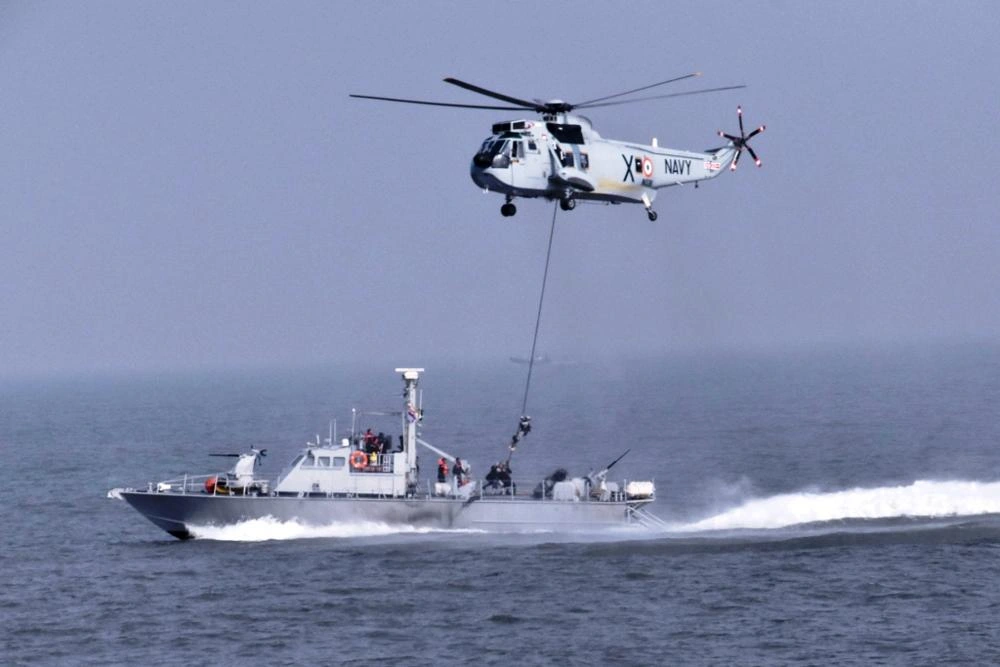
MARCOS missions are shaped by the maritime domain. Boarding and taking control of hostile or hijacked ships, clandestine underwater swims to plant charges on enemy targets, reconnaissance of beaches before amphibious landings, protection of offshore oil and gas installations, and anti-piracy operations are their speciality.
5. Who Can Volunteer and Selection Pool
PARA SF: Volunteers from across the Indian Army, irrespective of rank or arm
MARCOS: Volunteers from serving Indian Navy officers and sailors only, generally in their early twenties
Every PARA SF operator is a volunteer. Some soldiers join the Parachute Regiment directly after recruitment, while others volunteer from other regiments and corps. Being a trained paratrooper is a basic requirement, which is why all candidates must complete the parachute qualification.
For MARCOS, the pool is limited to the Indian Navy. Only serving naval personnel, whether commissioned officers or sailors, can apply. For a civilian aspirant, the lesson is simple: to wear the PARA SF beret, you must first join the Army; to become a MARCOS, you must first join the Navy.
6. Selection and Probation Process
PARA SF: A demanding probation in which candidates of every rank are treated simply as probationers; length is commonly given as about three months, though some accounts describe longer periods
MARCOS: A pre-selection screening of about three days, followed by a multi-week selection phase that includes a ‘Hell Week’
PARA SF selection is famous for its probation. During this period, every candidate, whether a sepoy or an officer, is treated simply as a ‘probationer’. A probationer can opt out on any day and return to his parent unit. Sources differ on how many candidates succeed, but all agree it is a small fraction.
MARCOS selection follows a different structure. Naval volunteers first go through a short pre-selection test of physical fitness and aptitude, which screens out a large share of applicants. Those who pass move on to a tougher selection phase, including a ‘Hell Week’ of almost non-stop physical activity with very little sleep, broadly similar in spirit to the selection used by the United States Navy SEALs. The failure rate is reported to be very high, but figures vary from source to source.
7. Training Centres and Specialised Courses
PARA SF: Parachute Regiment Training Centre in Bengaluru; Special Forces Training School at Nahan, Himachal Pradesh; Paratroopers Training School (PTS), Agra
MARCOS: INS Abhimanyu in Mumbai as the main training base; Naval Diving School in Kochi; PTS, Agra for parachuting
PARA SF personnel train at the Parachute Regiment’s centre in Bengaluru and at the Special Forces Training School in Nahan, Himachal Pradesh.
MARCOS training is centred on INS Abhimanyu in Mumbai, which is also the original home of the force. Combat diving is a core skill and is taught at the Naval Diving School in Kochi. Interestingly, the two units share one training venue: both PARA SF and MARCOS candidates complete their basic parachute course at the Paratroopers Training School in Agra, run by the Indian Air Force. Training lengths for MARCOS are reported differently, from several months for the initial course to two years or more before an operator is considered fully qualified.
8. Insignia, Beret and Identity
PARA SF: Maroon beret with the Parachute Regiment cap badge, parachute wings and the Balidan badge; regimental motto ‘Shatrujeet’ (Conqueror of the Enemy)
MARCOS: Distinctive MARCOS insignia; motto ‘The Few The Fearless’; nicknamed ‘Dadhiwala Fauj’ (Bearded Army) by militants in Kashmir
For PARA SF, identity is closely linked with the maroon beret and the Balidan (sacrifice) badge, which is worn only by special forces personnel who have completed probation and further training. The Parachute Regiment’s motto, ‘Shatrujeet’, is shared by all its battalions.
MARCOS operators have their own distinctive insignia. The force’s motto, ‘The Few The Fearless’, sums up its small size and fearless reputation. Their nickname, ‘Dadhiwala Fauj’ or ‘Bearded Army’, is said to have come from militants in Jammu and Kashmir who saw bearded MARCOS operators in action around the Wular Lake region.
9. Famous Operations
PARA SF: Operation Pawan (1987), Kargil (1999), the 2015 cross-border strike along the India–Myanmar border and the 2016 surgical strikes across the Line of Control (as widely reported)
MARCOS: Operation Pawan (1987), Operation Black Tornado during the 26/11 Mumbai attacks (2008) and anti-piracy missions such as the MV Ruen rescue (2024)
PARA SF units have fought in almost every major conflict since 1971. During Operation Pawan in Sri Lanka, 10 Para Commando was among the first units of the Indian Peace Keeping Force to land. PARA SF teams also saw action in the Kargil conflict. In 2015 and 2016, cross-border strikes on militant camps along the Myanmar border and across the Line of Control were widely reported to have been carried out by PARA SF teams. Major Mohit Sharma of 1 Para (SF) was posthumously awarded the Ashoka Chakra for his action in Kupwara in 2009.
MARCOS made their combat debut in the same Operation Pawan in 1987. In October that year, a small team led by Lieutenant Arvind Singh raided the LTTE’s Guru Nagar jetty in Jaffna, destroying the jetty and enemy speedboats, and he was awarded the Maha Vir Chakra. In November 2008, MARCOS were among the first special forces to respond to the terrorist attack on the Taj Mahal Palace hotel in Mumbai. More recently, in March 2024, MARCOS were airdropped with combat rubberised raiding craft from an IAF C-17 during the operation in which INS Kolkata forced 35 Somali pirates on board the hijacked bulk carrier MV Ruen to surrender, and all 17 crew members were rescued unharmed.
10. Size, Structure and Basing
PARA SF: Organised as multiple special forces battalions; the exact number is not officially published and figures vary between sources
MARCOS: Organised into smaller groups and units spread across naval commands, including bases in Mumbai, Visakhapatnam (INS Karna) and other locations
PARA SF is organised on the Army’s battalion pattern. Public sources give different totals because battalions have been converted to and sometimes from the SF role over the years, and the Army does not publish exact strength figures. Aspirants are better off remembering the structure than quoting a specific number.
MARCOS is a much smaller force by numbers, in keeping with its motto. It is organised into groups and units placed with the Navy’s commands so that teams are available on both coasts and in the island territories. INS Karna in Visakhapatnam was commissioned in 2015 as a dedicated base for MARCOS on the eastern seaboard, while INS Abhimanyu in Mumbai remains its historic home on the western coast.
PARA SF vs MARCOS: Quick Comparison Table
| Point | PARA SF | MARCOS |
|---|---|---|
| Service | Indian Army (Parachute Regiment) | Indian Navy |
| Raised | 1966 (from 1965 Meghdoot Force) | 1987 as IMSF; renamed MCF in 1991 |
| Core domain | Land: mountains, desert, jungle | Maritime: sea, underwater, coast |
| Selection pool | Army volunteers of any rank | Serving Navy officers and sailors |
| Key selection test | Probation period (rank set aside) | Pre-selection plus ‘Hell Week’ |
| Main training base | Bengaluru, Nahan, PTS Agra | INS Abhimanyu (Mumbai), Kochi, PTS Agra |
| Identity | Maroon beret, Balidan badge | MARCOS insignia, ‘Dadhiwala Fauj’ |
| Motto | Shatrujeet | The Few The Fearless |
| Signature skill | Deep land raids and reconnaissance | Combat diving and ship boarding |
What These Differences Mean for Defence Aspirants
For aspirants, the most practical takeaway is the route. There is no direct civilian entry into either force. If PARA SF is your dream, aim for an Army commission through NDA, CDS (IMA or OTA) or other Army entries, or join the Army as a soldier, and then volunteer for the Parachute Regiment and special forces. If MARCOS inspires you, you must first join the Indian Navy through NDA, CDS (INA), INET or sailor entries, and then volunteer for marine commando selection.
At the SSB, avoid speaking about special forces as if they were action films. Interviewing Officers are more impressed when a candidate understands the hard realities: voluntary selection, high failure rates, long separation from family and years of operations in difficult areas. Express the ambition, but show that you would be a good officer first.
Conclusion
PARA SF and MARCOS are both among the finest special forces in India, and they have even fought side by side, as in Jaffna in 1987. Yet they are not interchangeable. PARA SF is the Army’s land-focused force with roots in the 1965 war, known for its maroon beret, Balidan badge and demanding probation. MARCOS is the Navy’s smaller maritime force, raised in 1987, built around combat diving, ship boarding and amphibious raids, and proud of its motto ‘The Few The Fearless’.
Learn these 10 differences well and you will be ready for GK questions in written exams as well as follow-up questions in your SSB interview.
Frequently Asked Questions
1. Is PARA SF better than MARCOS?
Neither is officially ranked above the other. PARA SF is optimised for land operations and MARCOS for maritime operations, so each is the better choice for its own type of mission.
2. Can a civilian join PARA SF or MARCOS directly?
No. PARA SF candidates must be Army personnel; some soldiers are allotted to the Parachute Regiment at recruitment, but they still have to clear probation. MARCOS selects only serving Navy personnel.
3. Do MARCOS and PARA SF train together?
Their main training is separate, but both complete the basic parachute course at the Paratroopers Training School in Agra, and they take part in joint exercises and operations, including under the Armed Forces Special Operations Division.
4. What is the full form of MARCOS?
MARCOS is the short form of the Marine Commando Force. It was raised in 1987 as the Indian Marine Special Force and renamed in 1991.
5. What is the Balidan badge?
It is the special forces badge of the Parachute Regiment, worn by PARA SF personnel who have completed probation and further training. ‘Balidan’ means sacrifice.