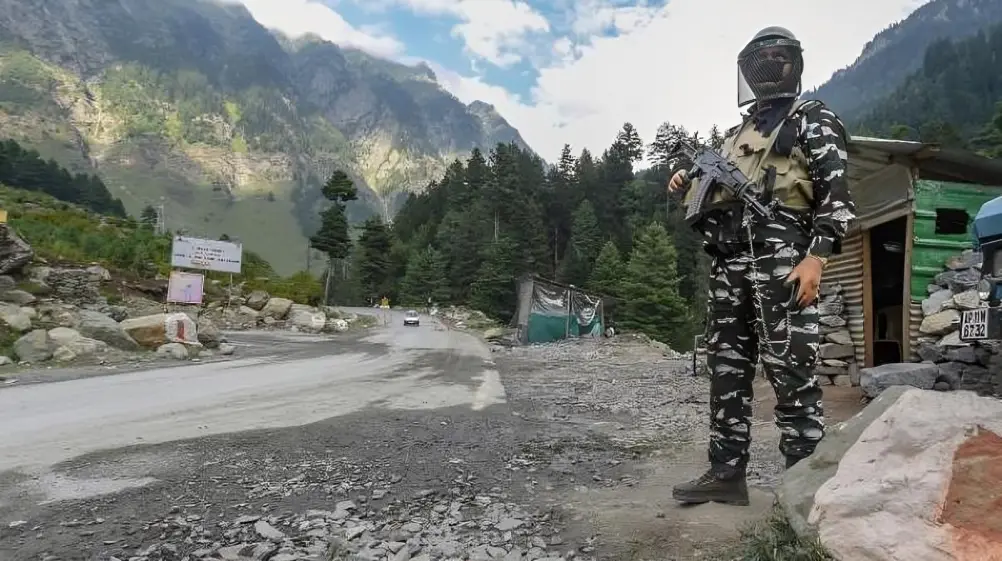
Residents are returning to 40 villages along Arunachal Pradesh’s border with China, and migration from those settlements has stopped, Union Home and Cooperation Minister Amit Shah said on Sunday. He attributed the change to improvements in infrastructure, employment and healthcare, and said populations in the villages had increased.
Speaking at a cooperative conference in the state, Shah said initiatives to improve border-area living conditions included electricity, healthcare, jobs and drinking water. He also referred to water provision for villages located on hilltops.
Shah said a Ministry of Home Affairs directive required the Indo-Tibetan Border Police (ITBP) and the Indian Army to buy agricultural and other local produce from cooperatives in border villages, rather than obtain supplies from larger centres such as Tezpur and Guwahati.
“I reviewed this yesterday. I am pleased that people have begun returning to all 40 villages (bordering with China), the population there has increased, and migration has stopped,” Shah said. He added that the procurement directive had strengthened the relationship between local communities and the Armed Forces.
Women in Arunachal Pradesh were supplying dairy products, eggs, vegetables, millets and flour through cooperative societies, Shah said. He said these activities were supporting household prosperity and local agriculture, while bringing border communities into closer contact with the Army.
Development programme targets border settlements
Shah said border villages should be regarded as the country’s first villages, not its last settlements, referring to Prime Minister Narendra Modi’s approach to border-area development. He said the Centre would assist Arunachal Pradesh wherever required.
He said discussions on the state’s development roadmap had taken approximately three-and-a-half to four hours. Union Parliamentary Affairs Minister Kiren Rijiju and other leaders reviewed areas where central support was needed. Shah assured Chief Minister Pema Khandu and the Deputy Chief Minister that the Centre would open avenues for development without delay.
Mobile Medical Units were dispatched on Sunday to villages across Arunachal Pradesh’s 11 border districts under the Vibrant Villages Programme. Shah said the programme was intended to promote development in border areas and improve access to essential services.
He also launched 199 projects worth ₹110.95 crore under the programme across the 11 districts. The projects are intended to improve infrastructure and living conditions in strategically important border settlements.
Cooperatives and women’s groups
Shah named employment, education, healthcare and the prosperity of every family as four priorities for the state’s development. He urged cooperative institutions and women’s Self-Help Groups (SHGs) to help make Arunachal Pradesh self-reliant in essential food products.
He unveiled the Arunachal Pradesh Cooperative Vision 2047, a blueprint for the cooperative sector’s development over the coming decades. The vision is intended to strengthen cooperative institutions and increase their contribution to local economic activity.
Shah also emphasised the part women-led cooperatives could play in supplying agricultural and food products. He said their participation could support rural livelihoods and reduce dependence on supplies from outside the state.
Security and border management review
The announcements came after a high-level meeting chaired by Shah in Itanagar on Saturday. The review covered law and order, internal security, border management and development-related issues in Arunachal Pradesh.
Shah called for better coordination between central and state security agencies, stronger local intelligence networks and continuous monitoring of sensitive areas to maintain peace and security. He also reviewed security arrangements and strategic infrastructure during his visit.
Arunachal Pradesh shares an approximately 1,126-kilometre-long international border with China. The initiatives outlined during Shah’s visit combine border-area development, cooperative-led economic activity and security coordination, with local employment and access to essential services among the stated priorities.