


In Defence Current Affairs for 27 November 2026, we will see the latest national and international current affairs news. These important current affairs will be beneficial for your upcoming NDA, CDS, CDS OTA, AFCAT, TA, Agniveer Army, Agniveer Navy, Agniveer Air Force, Women Military Police, INET, MNS, ACC exams, SCO, PCSL, CAPF, and SSB interviews, and direct entries for Army, Navy, and Air Force like SSC Tech, TGC, JAG, NCC, TES, 10+2 Cadet. Download a PDF file about current events at the end of this article. Let us now see the Current Affairs.
Defence Current Affairs 27 November 2026
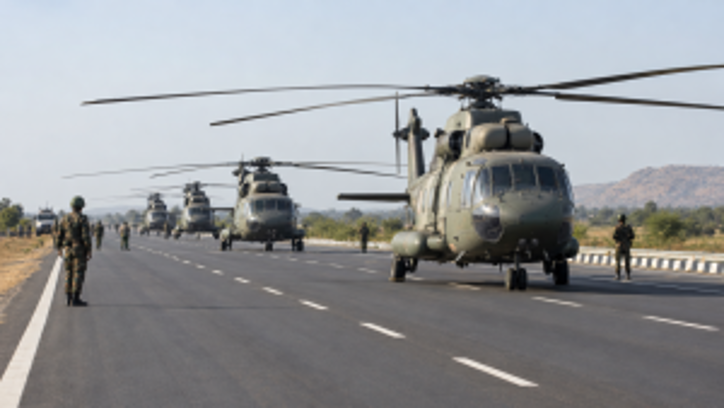
Four Indian Army Aircraft Successfully Operate from Gujarat Highway
On 26 November 2026, Union Minister for Road Transport and Highways Nitin Gadkari announced that four Indian Army microlight aircraft had successfully carried out landing and take-off operations on the Amritsar–Jamnagar Economic Corridor (NH-754A) in Gujarat.
The operation demonstrated the potential use of national highway infrastructure for supporting military aviation and strategic requirements.
Wings of Valour and Unity Expedition
The activity was conducted by the Indian Army’s Team Mountain Eagles between Chainage Km 946 and Km 949 as part of the Wings of Valour and Unity Expedition.
Nitin Gadkari described the exercise as a significant example of coordination between the Indian Army and the National Highways Authority of India (NHAI).
The expedition was flagged off on 14 November 2026 and is scheduled to conclude on 28 November 2026. It passes through three states:
- Madhya Pradesh
- Gujarat
- Rajasthan
Strategic Importance
The operation highlighted how properly developed highway infrastructure can contribute to India’s defence preparedness. Highways can support military logistics, emergency response and operational mobility, apart from their regular transportation functions.
The initiative also underlined the possibility of using suitable highway infrastructure for aero-adventure and tourism activities, provided adequate safety arrangements and coordination are maintained.
The development reflects the growing importance of integrating civilian infrastructure with the strategic and operational requirements of the Armed Forces.
Important Facts for Exams
| Particular | Details |
|---|---|
| Date | 26 November 2026 |
| Number of aircraft | Four |
| Aircraft type | Indian Army microlight aircraft |
| Highway | Amritsar–Jamnagar Economic Corridor |
| National Highway | NH-754A |
| Location | Gujarat |
| Army team | Team Mountain Eagles |
| Expedition | Wings of Valour and Unity |
| Flagged off | 14 November 2026 |
| Scheduled conclusion | 28 November 2026 |
| Highway authority | NHAI |
| Minister who announced the operation | Nitin Gadkari |
India and UAE Agree to Accelerate Defence Co-development and Co-production
India and the United Arab Emirates have agreed to strengthen their defence partnership by accelerating cooperation in the development and production of next-generation military equipment.
The decision was taken during the 14th meeting of the India–UAE Joint Defence Cooperation Committee (JDCC), held in Abu Dhabi on 26 November 2026.
The meeting was co-chaired by India’s Defence Secretary and Lieutenant General Ibrahim Nasser M. Al Alawi, Under Secretary in the UAE Ministry of Defence.
Strategic Defence Partnership Framework
The meeting provided strategic direction to the initiatives outlined in the India–UAE Strategic Defence Partnership Framework, signed in May 2026 during the Prime Minister’s visit to the UAE.
Both countries discussed ways to expand defence cooperation across several important areas, including:
- Defence industry and manufacturing.
- Defence innovation and advanced technologies.
- Artificial Intelligence (AI).
- Cybersecurity.
- Military training.
- Maritime safety.
A major outcome was the agreement to speed up partnerships involving the co-development and co-production of next-generation defence equipment.
Strengthening Defence Industry Partnerships
The meeting also focused on improving business-to-business (B2B) cooperation between defence industries in the two countries.
A delegation representing India’s defence industry accompanied the official Indian delegation. A separate B2B interaction between Indian and UAE defence companies was organised on the sidelines of the JDCC meeting.
The co-chairs also agreed to review progress in bilateral defence cooperation at regular intervals before the next JDCC meeting.
The Indian delegation included representatives from:
- Department of Defence
- Indian Defence Forces
- National Security Council Secretariat
- Ministry of External Affairs
Important Facts for Exams
| Particular | Details |
|---|---|
| Meeting | 14th India–UAE JDCC |
| Date | 26 November 2026 |
| Venue | Abu Dhabi, UAE |
| Indian co-chair | Defence Secretary |
| UAE co-chair | Lt Gen Ibrahim Nasser M. Al Alawi |
| Strategic framework signed | May 2026 |
| Major focus | Co-development and co-production |
| Key technology areas | AI, cyber and advanced defence technology |
| Other areas | Military training and maritime safety |
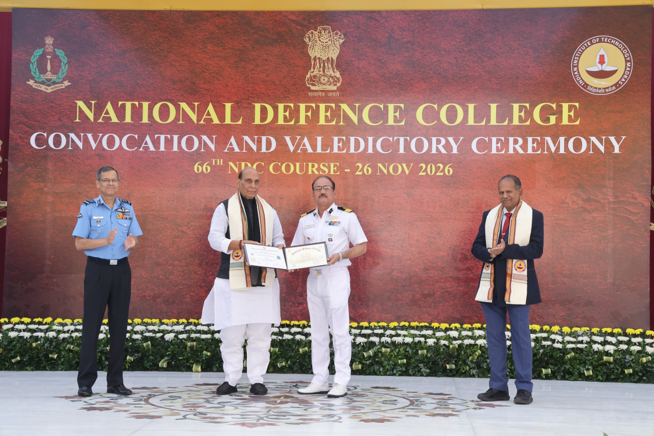
Convocation and Valedictory Ceremony of the 66th National Defence College Course
Defence Minister Rajnath Singh emphasised the importance of preparing India’s national security institutions for future challenges while addressing the Convocation and Valedictory Ceremony of the 66th National Defence College (NDC) Course.
He highlighted the need to identify emerging risks, evaluate different possible scenarios and develop institutional preparedness for an evolving security environment. He also stressed the importance of responding effectively to immediate threats arising from changing geopolitical conditions and the transformation of modern warfare.
About the National Defence College Course
The NDC course is conducted annually over a period of 47 weeks, from January to November. Its curriculum is divided into six major studies covering India’s national security, strategic environment and international affairs.
The six areas of study are:
- Understanding India and Introduction to Strategy.
- Study on Economic Security.
- Science and Technology.
- Global Issues.
- International Security Environment.
- India’s Strategic Neighbourhood and Strategies and Structures for National Security.
Participants in the 66th Course
A total of 122 officers attended the course. Participants were drawn from the Indian Defence Forces, Indian Civil Services, Indian Police Services and other government organisations.
The course also included 40 foreign officers representing 24 countries.
The participating countries were:
Afghanistan, Australia, Bangladesh, Bhutan, Brazil, Egypt, Indonesia, Iran, Japan, Kenya, Kazakhstan, Maldives, Myanmar, Nepal, Nigeria, the Philippines, Russia, Saudi Arabia, South Africa, Sri Lanka, the United Kingdom, the United States, Uzbekistan and Vietnam.
Importance of the National Defence College
The NDC provides an opportunity for senior officers and officials from different services and countries to study national security, strategic affairs and international relations.
Its multidisciplinary approach encourages cooperation and a broader understanding of security challenges, defence policy and geopolitical developments.
Important Facts for Exams
| Particular | Details |
|---|---|
| Institution | National Defence College |
| Course | 66th NDC Course |
| Ceremony | Convocation and Valedictory Ceremony |
| Defence Minister | Rajnath Singh |
| Course duration | 47 weeks |
| Course period | January to November |
| Total participants | 122 officers |
| Foreign participants | 40 officers |
| Countries represented | 24 |
| Main focus | National security and strategic studies |
India–Japan Hypersonic Partnership
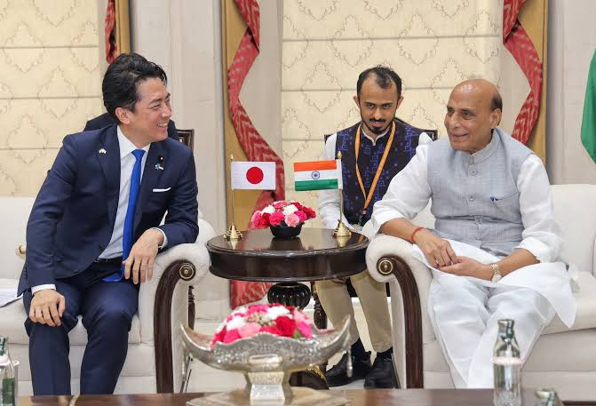
India and Japan are exploring new opportunities to deepen their strategic defence relationship, with particular attention to cooperation in hypersonic missile technologies and advanced defence-industrial development.
The discussions gained momentum during the recent India–Japan 2+2 Ministerial Dialogue, indicating an interest in expanding bilateral defence engagement beyond conventional military exchanges.
Focus on Advanced Defence Technologies
Both countries are examining possibilities for sharing technical expertise and working together on next-generation missile systems. Hypersonic technology has emerged as a potential area of cooperation.
The proposed collaboration reflects the growing importance of advanced military technologies in the Indo-Pacific security environment.
Hypersonic weapons generally refer to weapons capable of travelling at speeds above Mach 5. Their speed and manoeuvrability create complex challenges for conventional missile-defence systems.
Japan’s Changing Defence Posture
Japan is undertaking a significant transformation of its defence capabilities. Its security policy is increasingly focused on strengthening deterrence, expanding its defence-industrial capacity and developing longer-range strike capabilities.
Japan is also working towards a layered coastal defence system that would integrate different types of comparatively low-cost unmanned platforms, including:
- Unmanned Aerial Vehicles (UAVs).
- Unmanned Surface Vehicles (USVs).
- Unmanned Underwater Vehicles (UUVs).
These platforms are intended to support reconnaissance and strike-related missions.
Regional Security Context
Japan’s efforts to strengthen its defence capabilities are taking place amid increasing Chinese military activity and the development of North Korea’s missile capabilities.
Against this background, cooperation with India in advanced missile technologies could become an important component of their broader defence-industrial partnership.
Importance for India
Potential India–Japan cooperation in hypersonic and other advanced missile technologies could contribute to:
- Greater defence technology collaboration.
- Research and development partnerships.
- Strengthening indigenous defence manufacturing capabilities.
- Sharing technical expertise.
- Deepening strategic cooperation in the Indo-Pacific region.
Important Facts for Exams
| Particular | Details |
|---|---|
| Countries involved | India and Japan |
| Main area of discussion | Hypersonic missile technology |
| Related diplomatic mechanism | India–Japan 2+2 Ministerial Dialogue |
| Proposed cooperation | Research, development and technology sharing |
| Japan’s defence focus | Longer-range strike and deterrence capabilities |
| Unmanned platforms | UAVs, USVs and UUVs |
| Regional context | Indo-Pacific security |
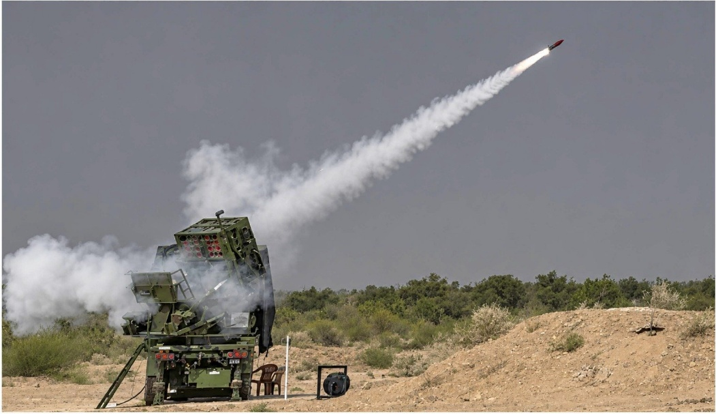
Successful Test Firing of Bhargavastra: India’s Indigenous Counter-Swarm Drone System
Solar Defence and Aerospace Limited (SDAL) has successfully completed the in-house development trials of Bhargavastra, an indigenous Vehicle-Mounted Counter-Swarm Drone System (VMCSDS).
The trials were conducted at the Pokhran Field Firing Ranges from 20 to 24 November 2026. The system has been designed, developed and integrated by SDAL to address the growing threat posed by hostile drone swarms.
What is Bhargavastra?
Bhargavastra is India’s first indigenously designed and developed two-layer vehicle-mounted counter-swarm drone system.
It has been developed to provide an integrated defence against multiple hostile drones operating together. The system is designed to engage several drones simultaneously through two complementary layers of interception.
Two-Layer Defence Mechanism
Bhargavastra combines two important components:
- Air Defence Rockets: Form one layer of the system’s defence architecture.
- Guided Micro-Missiles: Provide another layer for engaging hostile drones.
The combination is intended to create an integrated response against drone swarm attacks.
Strategic Importance
The increasing use of unmanned aerial systems in modern conflicts has created new challenges for conventional air-defence arrangements. Drone swarms can involve multiple unmanned aircraft operating together, potentially overwhelming traditional defensive systems.
Bhargavastra is designed to address this emerging threat through a vehicle-mounted platform capable of engaging multiple drones simultaneously.
Its development represents an effort towards strengthening India’s indigenous counter-drone and air-defence capabilities.
Review Questions
- Four Indian Army microlight aircraft recently landed and took off from which
highway in Gujarat?
A) Delhi-Mumbai Expressway
B) Amritsar-Jamnagar Economic Corridor (NH-754A)
C) Mumbai-Ahmedabad Highway
D) East-West Corridor
Correct Answer: B) Amritsar-Jamnagar Economic Corridor (NH-754A) - The 14th meeting of the India-UAE Joint Defence Cooperation Committee (JDCC)
was held in which city?
A) New Delhi
B) Dubai
C) Abu Dhabi
D) Sharjah
Correct Answer: C) Abu Dhabi - India and the UAE agreed to accelerate cooperation in which of the following areas?
A) Joint space tourism
B) Co-development and co-production of next-generation defence equipment
C) Civil nuclear power generation only
D) Agricultural machinery production
Correct Answer: B) Co-development and co-production of next-generation defence
equipment - How long does the National Defence College (NDC) Course run every year?
A) 24 weeks
B) 36 weeks
C) 47 weeks
D) 52 weeks
Correct Answer: C) 47 weeks
Q5. How many officers attended the 66th National Defence College (NDC) Course?
A) 100
B) 112
C) 122
D) 150
Correct Answer: C) 122 - India and Japan are exploring defence cooperation in which advanced missile
technology?
A) Ballistic missile technology only
B) Hypersonic weapons technology
C) Anti-tank guided missiles only
D) Cruise missiles exclusively
Correct Answer: B) Hypersonic weapons technology - Bhargavastra, recently developed by Solar Defence and Aerospace Limited (SDAL), is
associated with which defence technology?
A) Anti-submarine warfare system
B) Vehicle-Mounted Counter Swarm Drone System
C) Long-range ballistic missile system
D) Electronic warfare aircraft
Correct Answer: B) Vehicle-Mounted Counter Swarm Drone System - Where were the in-house development trials of the Bhargavastra system conducted
in November 2026?
A) Pokhran Field Firing Ranges
B) Mahajan Field Firing Ranges
C) Chandipur Test Range
D) Dr APJ Abdul Kalam Island
Correct Answer: A) Pokhran Field Firing Ranges - Which Country Is Not The Member Of QUAD?
A. USA
B. India
C. Japan
D. Russia
ANSWER: D - Dhanush (howitzer) Manufactured By
A. L & T
B. Boeing
C. ISRO
D. Advanced Weapons and Equipment India Limited
ANSWER: D - Where Is The Hq of The Eastern Command of The IAF?
A. Kochi
B. Vishakhapatnam
C. Shillong
D. Mumbai
ANSWER: C - PVSM Stands For
A. Param Vishisht Seva Medal
B. Param Vishisht Sainik Medal
C. Param Vishishthtm Seva Medal
D. None
ANSWER: A - Canberra Is The Capital Of
A. Armenia
B. Qatar
C. UAE
D. Australia
ANSWER: D - “Broken Wing” Book Is Written By
A. Sarojini Naidu
B. Jawaharlal Nehru
C. Maithili Sharan Gupt
D. APJ Abdul Kalam
ANSWER: A - Israeli ‘Non-Line of Sight (NLOS) Is A
A. Ballistic Missile
B. ATGM
C. Helicopter
D. Tank
ANSWER: B - Chairman Of NITI Aayog Is
A. Rajiv Kumar
B. Rakesh Asthana
C. R Hari Kumar
D. Narendra Modi
ANSWER: D - Blaser R93 Tactical Is Rifle Of
A. Oman
B. Qatar
C. Sri Lanka
D. Germany
ANSWER: D - Leclerc Is A
A. Tank
B. Missile
C. Gun
D. Rocket
ANSWER: A - Sena Medal Award Is Given To The Soldiers Of
A. Indian Army
B. IAF
C. Indian Navy
D. ICG
ANSWER: A - In The 2026 Global Firepower Military Strength Rankings, Which Position Did
Russia Claim?
A. Fifth
B. Second
C. Fourth
D. Sixth
ANSWER: B
ALSO READ:
- Latest Daily Current Affairs and Defence Updates
- Latest Daily Current Affairs October 2026[DOWNLOAD PDF]
- Latest Daily Current Affairs September 2026[DOWNLOAD PDF]
- Latest Daily Current Affairs August 2026[DOWNLOAD PDF]
- Latest Daily Current Affairs July 2026[DOWNLOAD PDF]
- Latest Daily Current Affairs June 2026[DOWNLOAD PDF]
- Latest Daily Current Affairs May 2026[DOWNLOAD PDF]
- Latest Daily Current Affairs April 2026[DOWNLOAD PDF]
- Latest Daily Current Affairs March 2026[DOWNLOAD PDF]
- Latest Daily Current Affairs February 2026[DOWNLOAD PDF]
- Latest Daily Current Affairs January 2026[DOWNLOAD PDF]
- Latest Daily Current Affairs November 2025[DOWNLOAD PDF]




