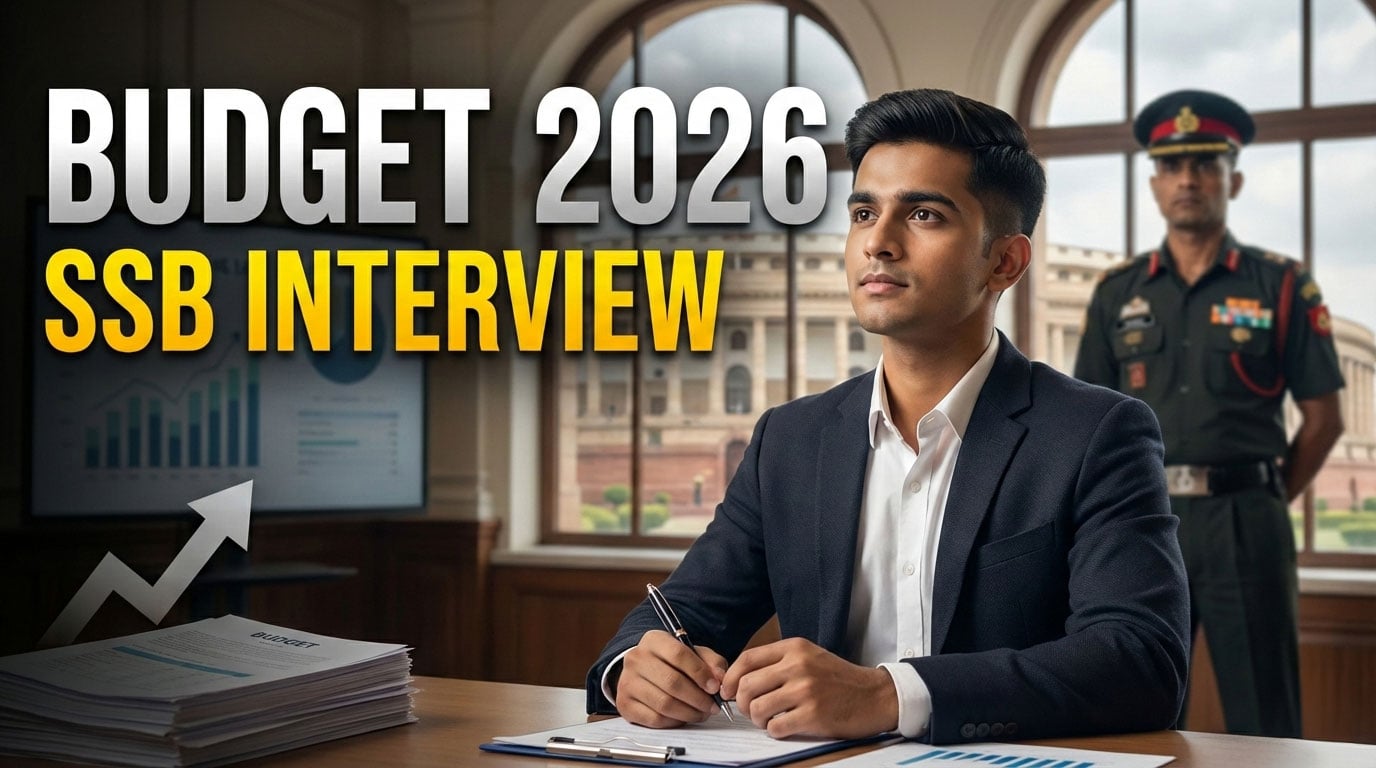
Key Points on India’s Union Budget 2026-27
- Economic Stability and Growth: The budget targets a fiscal deficit of 4.3% of GDP, with nominal GDP growth assumed at 10%, projecting around 7% real growth. Research suggests this supports sustained momentum amid global uncertainties, though external risks like trade volatility could impact outcomes.
- Defense and Security Focus: Allocation rises 21% to ₹5.9 lakh crore, emphasizing modernization and self-reliance, which aligns with national security priorities but highlights ongoing debates on balancing defense spending with social welfare.
- Infrastructure and Jobs: Capex at ₹12.2 lakh crore aims to boost employment through manufacturing and MSMEs, with evidence leaning toward job creation in sectors like semiconductors; however, critics note potential uneven regional benefits.
- Tax and Fiscal Prudence: No slab changes, but simplifications like a new Income-Tax Bill; STT hikes on F&O may curb speculation, with mixed views on middle-class relief.
- Inclusive Development: Emphasis on youth, agriculture, and tourism, though implementation challenges in rural areas remain a point of discussion.
Overview for SSB Interviews
The 2026 Union Budget, presented by Finance Minister Nirmala Sitharaman on February 1, 2026, emphasizes “Viksit Bharat” through three key duties: accelerating growth, building citizen capacity, and ensuring inclusive access. For SSB candidates, this topic tests awareness of national priorities, economic implications for defense, and leadership qualities in discussing balanced development. Key defense boosts signal self-reliance under Make in India, while fiscal discipline reflects strategic resilience. Candidates should highlight how such allocations enhance armed forces’ capabilities amid global tensions.
Defense Implications
The budget’s 21% hike in defense capex to ₹5.9 lakh crore prioritizes modernization (up 24%), indigenous manufacturing, and border infrastructure. This could strengthen India’s position in regional security, but SSB discussions might explore trade-offs with social spending. For aspirants, it underscores the armed forces’ role in economic security, like protecting trade routes.
Economic and Social Relevance
With capex at ₹12.2 lakh crore, the focus on jobs via MSMEs (₹10,000 crore fund) and semiconductors (₹40,000 crore mission) targets youth employment, relevant for SSB’s group discussions on unemployment. Agriculture gets ₹1.63 lakh crore, aiding rural stability, while no tax changes maintain predictability but spark debates on middle-class burdens.
Global Context
Amid US tariffs and trade volatility, the budget builds resilience through export incentives and rare earth corridors. SSB candidates can link this to India’s strategic autonomy, emphasizing diversified trade to mitigate risks.
India’s Union Budget 2026-27, tabled on February 1, 2026, by Finance Minister Nirmala Sitharaman, marks her ninth consecutive presentation and the third under the BJP-led NDA’s third term. Framed around the vision of “Viksit Bharat” (Developed India) by 2047, the budget adopts a theme of “Action Over Ambivalence” and “Reform Over Rhetoric,” prioritizing sustained economic growth, fiscal consolidation, and inclusive development. It balances high public investment with prudent fiscal targets, projecting a nominal GDP of ₹393 lakh crore and real growth around 7%, supported by robust domestic consumption and private sector revival. The Economic Survey preceding the budget estimated 7.4% growth for FY26 and 6.8-7.2% for FY27, highlighting regulatory reforms and macroeconomic stability as key drivers.
The budget’s fiscal arithmetic reflects a commitment to discipline: the fiscal deficit is pegged at 4.3% of GDP for FY27, down from 4.4% in revised estimates for FY26, with a long-term goal of reducing debt-to-GDP to 50±1% by 2030 (estimated at 55.6% for FY27). Gross tax revenue is projected at ₹44.04 lakh crore, driven by income tax (₹14.66 lakh crore) and corporation tax (₹12.31 lakh crore), while gross market borrowings stand at ₹11.73 lakh crore. Total budget size reaches ₹53.5 lakh crore, with revenue expenditure at ₹41.3 lakh crore and effective capex at ₹17.1 lakh crore. This approach avoids populist measures, focusing instead on structural reforms to enhance productivity, competitiveness, and resilience against global dynamics like trade volatility and US tariffs.
Sectoral allocations underscore the government’s priorities. Infrastructure receives a massive push with capital expenditure rising 9-11.5% to ₹12.2 lakh crore, aimed at crowding in private investment and job creation. Initiatives include seven high-speed rail corridors, a new east-west dedicated freight corridor from Dankuni to Surat, and operationalizing 20 national waterways over five years. Additionally, a Coastal Cargo Promotion Scheme targets increasing inland waterways and coastal shipping’s share from 6% to 12% by 2047. For urban development, ₹5,000 crore per City Economic Region (CER) is allocated over five years, alongside dedicated REITs for recycling CPSE real estate assets and an Infrastructure Risk Guarantee Fund for partial credit guarantees.
Defense emerges as a critical focus, with allocations surging 21% to ₹5.9 lakh crore, including a 24% increase in modernization funds. This supports indigenization under Make in India, enhancing firepower and strategic capabilities amid border tensions and global security challenges. The budget also emphasizes supply-chain security for critical minerals, with dedicated rare earth corridors in Odisha, Kerala, Andhra Pradesh, and Tamil Nadu to promote mining, processing, research, and manufacturing. These measures align with national security imperatives, reducing import dependencies and fostering self-reliance.
Manufacturing and MSMEs receive targeted incentives to boost employment and exports. The India Semiconductor Mission 2.0, with a ₹40,000 crore outlay, focuses on industry-led R&D, training centers, and positioning India as a global chip hub. A ₹10,000 crore SME Growth Fund aids job-creating small businesses, while the Bio-Pharma Shakti Scheme (₹10,000 crore) advances biopharma manufacturing. Customs duty rationalization across sectors improves ease of doing business, with exemptions on life-saving medicines lowering healthcare costs. The budget acknowledges job creation needs, with measures for MSMEs and productivity enhancements, though critics argue more direct youth skilling is required.
Agriculture and rural development get ₹1.63 lakh crore, including the Dhan-Dhaanya Krishi Yojana for high-yield crops. Social sectors see expansions: a new Centre of Excellence in AI for education (₹500 crore), infrastructure upgrades for five IITs, and pilot schemes for archeological sites as cultural destinations. Health initiatives include basic customs duty exemptions on select medicines, while senior citizens benefit from doubled interest income deductions to ₹1 lakh. Tourism is propelled with developments like a Global Big Cat Summit and high-speed rail connectors, aiming to raise India’s global services export share to 10% by 2047.
On taxation, the budget maintains status quo on income tax slabs and rates under both regimes, with no fresh relief for individuals. The new regime keeps exemptions up to ₹4 lakh (factoring standard deduction of ₹75,000), with rates escalating: 5% on ₹4-8 lakh, 10% on ₹8-12 lakh, up to 30% above ₹24 lakh. A new Income-Tax Bill simplifies the 1961 Act, reducing sections for clarity. However, a surprise hike in Securities Transaction Tax (STT) on futures and options aims to curb speculation, potentially impacting market volatility—as seen in the Sensex’s 1,546-point crash on budget day. TCS on overseas tour packages is cut to 2%, offering travel relief, while buyback taxes shift to capital gains (12.5% long-term, 20% short-term). For foreign investments, limits for Persons Resident Outside India rise to 24% overall and 10% individual, amid capital outflow concerns.
The budget’s three “Kartavyas” (duties) guide its philosophy: accelerating growth through productivity and resilience; building citizen capacity via skills and employment; and ensuring equitable access under “Sabka Saath, Sabka Vikas.” It includes measures like a compliance-friendly tax framework, decriminalizing minor offenses, and AI applications for governance. Crypto and digital assets see no changes, retaining 30% tax and 1% TDS.
In the context of SSB interviews, this budget serves as a vital current affairs topic, testing candidates’ grasp of economic policies’ interplay with national defense, youth empowerment, and strategic autonomy. Defense boosts reflect priorities like border infrastructure and indigenization, crucial for armed forces aspirants. Economic resilience amid global risks underscores leadership in volatile times, while job-focused incentives highlight youth’s role in Viksit Bharat. Candidates should discuss pros like fiscal prudence fostering stability, cons such as limited middle-class relief potentially fueling inequality debates, and balanced views on regional disparities in allocations.
| Sector | Allocation (₹ lakh crore) | Key Initiatives | YoY Change |
|---|---|---|---|
| Capital Expenditure | 12.2 | High-speed rails, freight corridors, waterways | +9-11.5% |
| Defense | 5.9 | Modernization, indigenization | +21% |
| Agriculture | 1.63 | High-yield crops scheme | N/A |
| MSMEs/Manufacturing | 0.1 (SME Fund) + 0.4 (Semiconductors) + 0.1 (Bio-Pharma) | Growth funds, missions | New |
| Education/Health | 0.005 (AI CoE) + expansions | IIT upgrades, medicine exemptions | Targeted |
| Fiscal Deficit (% GDP) | 4.3 (FY27) | Consolidation path | -0.1 from FY26 RE |
| Income Tax Slabs (New Regime, FY27) | Rate (%) |
|---|---|
| Up to ₹4 lakh | 0 |
| ₹4-8 lakh | 5 |
| ₹8-12 lakh | 10 |
| ₹12-16 lakh | 15 |
| ₹16-20 lakh | 20 |
| ₹20-24 lakh | 25 |
| Above ₹24 lakh | 30 |
| Deficit Trends (% GDP) | 2022-23 | 2023-24 | 2024-25 | 2025-26 RE | 2026-27 BE |
|---|---|---|---|---|---|
| Fiscal Deficit | 6.5 | 4.0 | 3.0 | 4.4 | 4.3 |
| Revenue Deficit | 4.3 | N/A | N/A | N/A | N/A |
| Primary Deficit | 0.7 | N/A | N/A | N/A | N/A |
This comprehensive approach positions India for high growth while addressing vulnerabilities, though success hinges on execution amid external shocks.