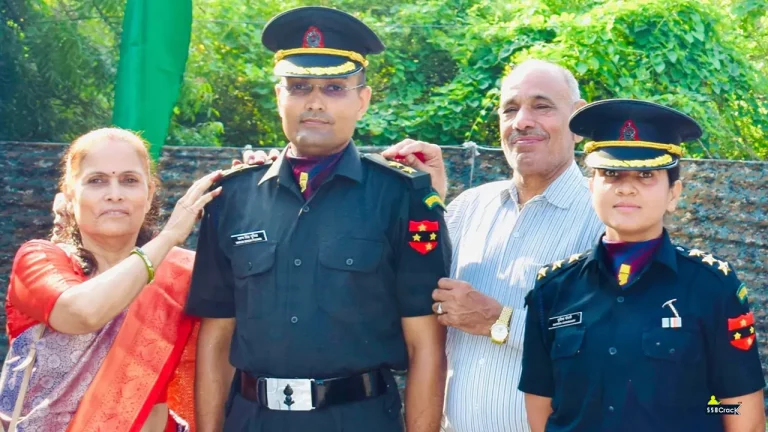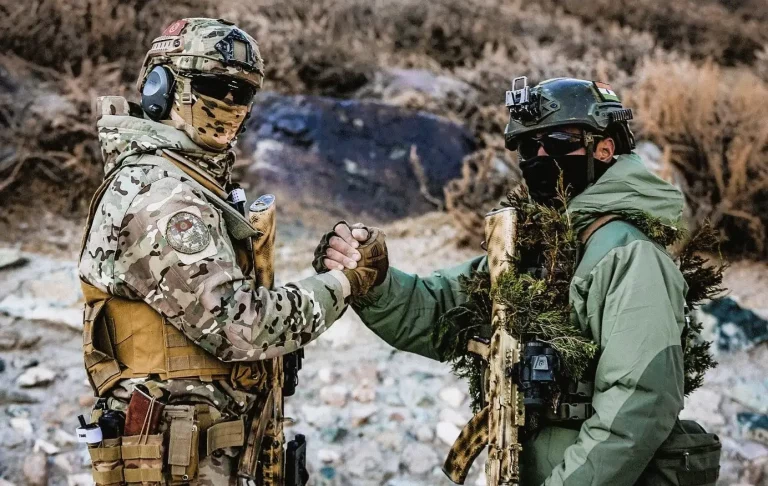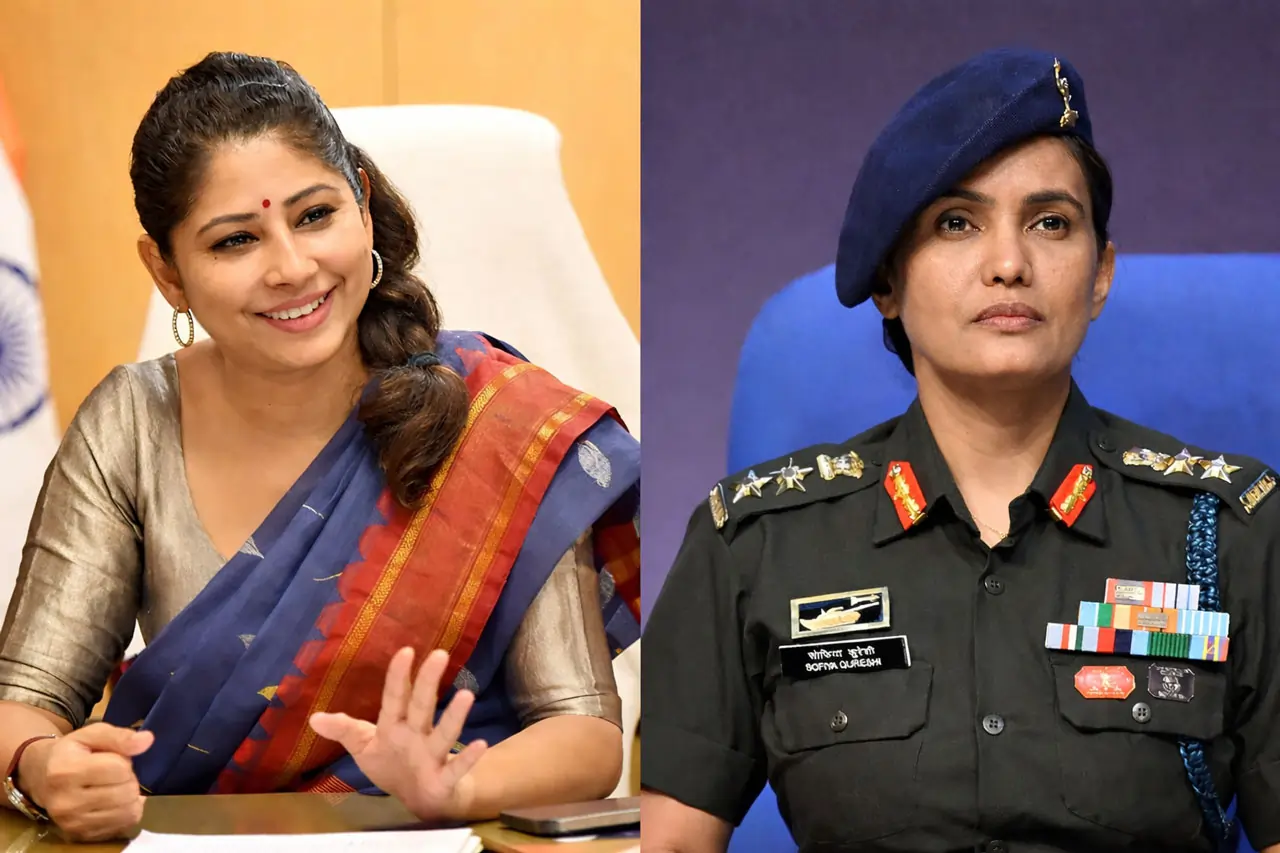
- Contextual Power Dynamics: Research suggests that IAS officers hold more comprehensive power in civilian governance and policy-making, impacting daily lives and national development, while Army officers wield superior authority in defence, security operations, and crises like wars or insurgencies. The comparison is subjective, leaning toward IAS in peacetime but Army in emergencies.
- Administrative Influence: IAS officers often have broader reach, overseeing districts, states, or central policies that affect millions, with direct access to ministers—evidence from government structures highlights their role as the “steel frame” of administration.
- Operational Authority: Army officers command troops and resources in high-stakes scenarios, including under special laws like AFSPA, but their powers are typically confined to military domains, subject to civilian oversight.
- Societal Respect and Perks: Both roles command high prestige, but Army officers receive greater public admiration for sacrifices, while IAS face scrutiny over bureaucracy; perks like salaries and facilities are comparable, with Army benefiting from additional allowances.
- Challenges and Equivalence: Equivalency in ranks exists (e.g., Lieutenant ≈ Assistant Collector), but debates around status, such as the 2016 Ministry of Defence adjustments, underscore tensions—neither is “more powerful” absolutely, as they complement each other in national service.
Overview of Roles
IAS officers, part of the Indian Administrative Service, serve as the backbone of government administration, handling policy formulation, implementation, and oversight at various levels. They manage everything from district revenue to national schemes like Swachh Bharat. Army officers, commissioned in the Indian Army, focus on national defence, leading troops in combat, training, and humanitarian aid. Their roles emphasize discipline, strategy, and readiness for threats.
Comparing Authority and Influence
In administrative spheres, IAS officers exercise decision-making powers over government departments, enforcing laws and coordinating with other services like IPS for law and order. They can assume emergency powers during crises, such as disasters or elections, granting them temporary autocracy. Army officers, while authoritative in military hierarchies, influence defence policies and operations but operate under civilian control, advising on security without direct governance over civilians unless in specified zones.
Perks, Salaries, and Lifestyle
Salaries follow the 7th Pay Commission, starting at around ₹56,100 for entry-level roles in both, but Army officers receive Military Service Pay (MSP) as an edge. Perks include housing, medical facilities, and vehicles; Army cantonments offer cleaner, more secure environments. Lifestyles differ: IAS involves bureaucratic pressures and political interfaces, while Army demands physical endurance, frequent relocations, and high-risk deployments.
Conclusion on Power
It seems likely that IAS officers hold more overall power due to their pervasive role in governance, though Army officers’ authority is unmatched in safeguarding sovereignty. The evidence leans toward a balanced view, recognizing both as vital without diminishing either side.
In-Depth Analysis: Army Officer vs. IAS Officer – A Comprehensive Examination of Power Dynamics in India
India’s governance and security framework relies on two pillars: the civil administration led by Indian Administrative Service (IAS) officers and the defence apparatus commanded by Indian Army officers. These roles, while prestigious, operate in distinct domains, making direct comparisons of “power” complex and context-dependent. This detailed exploration draws from official structures, expert analyses, and real-world applications to dissect their responsibilities, authorities, influences, perks, salaries, training, lifestyles, and hierarchies. We’ll examine how power manifests administratively, operationally, and influentially, while addressing challenges, equivalencies, and ongoing debates.
Understanding the Core Roles and Responsibilities
IAS officers form the elite cadre of the All India Services, recruited through the Union Public Service Commission (UPSC) Civil Services Examination. They are deployed across districts, states, and the central government, embodying the “steel frame” of Indian bureaucracy as envisioned by Sardar Vallabhbhai Patel. Their primary responsibilities include:
- Policy Formulation and Implementation: IAS officers draft, review, and execute government policies on education, health, economy, and social welfare. For instance, they oversee national initiatives like Ayushman Bharat (health insurance) or electric vehicle adoption policies.
- Administrative Oversight: They manage district-level governance, including revenue collection, land administration, public service delivery (e.g., healthcare and infrastructure), and coordination with other departments.
- Law and Order Maintenance: In collaboration with Indian Police Service (IPS) officers, they ensure public safety, handle riots, and enforce regulations.
- Crisis Management: During emergencies like floods or pandemics, they coordinate relief efforts, mobilizing resources and assuming temporary law enforcement powers.
- Election Duties: IAS officers gain full autocratic authority during elections to ensure fair processes, a unique power not replicated in routine military roles.
In contrast, Indian Army officers, commissioned through exams like NDA/CDS followed by Service Selection Board (SSB) interviews, focus on national defence. Their responsibilities evolve with rank but center on:
- Command and Leadership: Leading platoons, battalions, or brigades in combat, training, and operations. Entry-level Lieutenants handle small units, while Colonels or Generals oversee thousands.
- Strategic Planning and Operations: Developing war strategies, border protection, counter-insurgency (e.g., in Jammu & Kashmir), and peacekeeping missions under UN mandates.
- Logistics and Administration: Managing equipment, personnel welfare, discipline, and unit readiness within military bases.
- Humanitarian and Disaster Relief: Assisting in natural disasters, such as the 2015 Nepal earthquake or Kerala floods, where they provide rapid response.
- Internal Security: Under laws like the Armed Forces (Special Powers) Act (AFSPA) in disturbed areas (e.g., Northeast India), they have powers to search, arrest, and use force against suspects.
These roles highlight a fundamental divide: IAS emphasizes civilian governance and long-term development, while Army prioritizes immediate security and tactical execution.
Dimensions of Power: Administrative, Operational, and Influential
Power in these contexts isn’t monolithic but varies by domain. Here’s a breakdown:
- Administrative Power:
- IAS officers dominate here, with authority over vast civilian jurisdictions. As District Collectors, they control budgets, enforce laws, and make decisions affecting millions—e.g., allocating funds for rural development. They have emergency powers to “take law into their own hands” during crises, as per Indian laws, and direct access to ministers as “eyes and ears” of the government.
- Army officers’ administrative scope is narrower, limited to military logistics like base management and troop discipline. They lack routine civilian oversight unless aiding civil authorities (Aid to Civil Authority provisions).
- Operational Power:
- Army officers excel, commanding armed forces in high-stakes scenarios. Senior officers like Major Generals control resources equivalent to small armies, making life-and-death decisions in conflicts (e.g., border skirmishes with China or Pakistan). Under AFSPA, they wield extraordinary powers in disturbed areas, including the right to shoot if deemed necessary for security.
- IAS officers coordinate operations in emergencies but without direct command over troops or police; their role is supervisory, focusing on policy and resource allocation rather than execution.
- Influential Power:
- IAS officers shape national narratives through policy influence, advising on everything from economic reforms to security decisions. They interface with politicians and international bodies, impacting diplomacy indirectly.
- Army officers advise on defence strategies and military diplomacy (e.g., as Army Attachés abroad), influencing war-and-peace choices. However, their influence is channeled through civilian leadership, with the Prime Minister and IAS cadre often holding final say.
Overall, analyses suggest IAS officers hold more “power” in a holistic sense due to their broader societal impact, but Army officers’ authority is critical and unmatched in defence realms. Power is complementary: during wars, Army decisions cascade from IAS-influenced policies.
Rank Equivalencies and Hierarchies
Both services follow structured hierarchies, with pay levels aligned under the 7th Central Pay Commission. A comparative table illustrates equivalencies:
| Pay Level | Army Rank | IAS Designation | Key Powers/Notes |
|---|---|---|---|
| Level 10 | Lieutenant | Assistant Collector/Sub-Divisional Magistrate | Entry-level command/administration; basic decision-making. |
| Level 11 | Captain/Major | District Collector | Troop leadership vs. district governance; IAS has broader civilian authority. |
| Level 13 | Lieutenant Colonel | Joint Secretary (State) | Battalion command vs. state policy oversight. |
| Level 14 | Colonel | Secretary (State)/Joint Secretary (Central) | Brigade leadership vs. departmental control; Army operational focus. |
| Level 15 | Brigadier | Additional Secretary (Central) | Formation command vs. high-level policy. |
| Level 17 | Lieutenant General | Secretary (Central) | Corps/Army command vs. ministry head. |
| Level 18 | General (COAS) | Cabinet Secretary | Apex military vs. apex administrative; Cabinet Secretary ranks higher in precedence. |
This equivalence underscores parity in status, but controversies arise. A 2016 Ministry of Defence letter “downgraded” military ranks relative to civil services, sparking debates on morale and perceived power imbalances. Only IAS officers at super time scale (e.g., Joint Secretary) compare to Major Generals in protocol, highlighting civilian primacy.
Salaries, Perks, and Facilities
Compensation is competitive:
- Salary Structure:
- Entry-level (Level 10): ₹56,100 basic pay for both, plus Dearness Allowance (DA), House Rent Allowance (HRA), etc.
- Army Edge: Military Service Pay (MSP) of ₹15,500 adds to totals; e.g., a Lieutenant’s gross pay ~₹70,000–₹80,000.
- IAS: Similar without MSP but with faster promotions; top-level Cabinet Secretary ~₹2.5 lakh.
- Long-term: IAS may accrue higher due to bureaucratic opportunities, but Army allowances (e.g., High Altitude, Siachen) compensate in harsh postings.
- Perks:
- Both: Government vehicles, furnished bungalows, medical coverage, pensions.
- Army-Specific: Cantonment facilities (secure, scenic), concessional canteens, free family medical at Army hospitals.
- IAS-Specific: Greater stability in postings, though with political pressures.
- Facilities Comparison Table:
| Aspect | Army Officers | IAS Officers |
|---|---|---|
| Housing | Cantonment bungalows (clean, safe) | Government quarters/bungalows |
| Medical | Free at Army hospitals for family | CGHS coverage |
| Travel/Leave | Concessional tickets, frequent leaves | Similar, but more administrative leave |
| Security | High in bases | Personal security in sensitive roles |
| Additional | Adventure sports, regimental pride | Policy influence, networking |
Training, Lifestyle, and Challenges
- Training:
- Army: 18–24 months at academies like IMA; intense physical (fitness, combat), tactical, and leadership focus. SSB tests personality and practical skills.
- IAS: 1–2 years at LBSNAA; emphasizes administrative knowledge, field attachments, policy analysis. UPSC process is intellectually rigorous.
- Lifestyle:
- Army: Demanding—deployments in extreme conditions, family separations (high divorce rates), but fosters camaraderie and purpose.
- IAS: Bureaucratic—predictable hours but high stress from accountability, ethical dilemmas, and public scrutiny.
- Challenges:
- Common: Ethical pressures, public expectations.
- IAS: Political interference, corruption allegations, multitasking.
- Army: Physical/mental toll, sacrifices (e.g., martyrdom honors like tricolor wrapping), negligible political meddling but rigid hierarchies.
Societal Respect, Recognition, and Broader Implications
Army officers often garner more unofficial respect for heroism—evident in national mourning for figures like CDS Bipin Rawat. IAS officers are valued for development but criticized for inefficiencies. Both foster national unity, but tensions exist: the 2016 rank downgrade affected military morale, prompting calls for parity.
In essence, neither role is “better”—IAS drives progress, Army ensures survival. Aspirants should align choices with interests: policy for IAS, adventure for Army. This interplay underscores India’s civil-military balance, where civilian oversight maintains democracy.
Key Tables for Quick Reference
Power Comparison Table:
| Domain | IAS Advantage | Army Advantage |
|---|---|---|
| Administrative | Broader governance, emergency autocracy | Military logistics only |
| Operational | Coordination in crises | Direct command, AFSPA powers |
| Influential | Policy-shaping, ministerial access | Defence advice, diplomacy |
Career Progression Timeline (Approximate Years of Service):
| Years | Army Milestone | IAS Milestone |
|---|---|---|
| 0–2 | Lieutenant (Unit command) | Assistant Collector (Sub-district) |
| 5–10 | Captain/Major (Company/Battalion) | Collector (District head) |
| 15–20 | Lt. Colonel/Colonel (Brigade) | Joint Secretary (Policy roles) |
| 25+ | General (Army command) | Cabinet Secretary (Apex) |
This analysis reveals that while IAS officers may edge in overall power through governance breadth, Army officers’ contributions are indispensable for sovereignty. The debate reflects India’s unique blend of administrative and military strength.