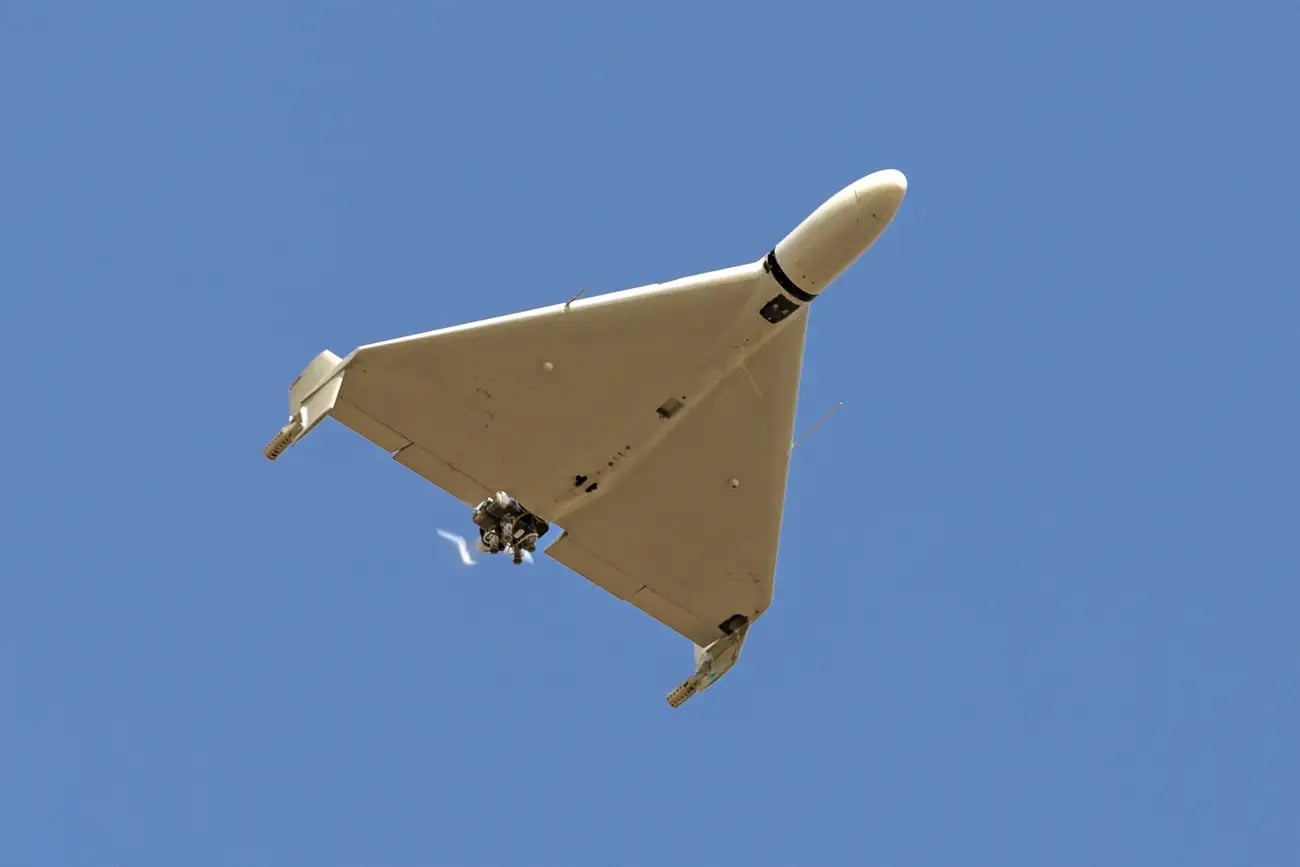
In a significant step towards enhancing maritime security, British defense firm Babcock has teamed up with Latvia-based Frankenburg Technologies to develop an innovative and affordable maritime counter-drone system. This initiative responds to the escalating threat posed by one-way attack drones, which have demonstrated their potential to undermine Western air defense capabilities, particularly in conflicts such as the ongoing situation in Ukraine.
The proposed system is expected to be housed in a containerized platform capable of launching Frankenburg’s cutting-edge, low-cost missiles. These missiles are designed for rapid and scalable production, which is crucial given the increasing frequency and sophistication of drone attacks. The maritime counter-drone system aims to safeguard ships, ports, and offshore assets through an integrated suite of sensors that detect and track hostile unmanned aerial systems. It will neutralize threats using methods ranging from electronic warfare and spoofing to kinetic responses, which may include directed energy weapons and rapid-fire guns.
David Lockwood, the CEO of Babcock, remarked on the urgency of adapting to the evolving landscape of drone warfare. He emphasized the importance of collaboration with innovative start-ups to address crucial defense challenges. “Defence has entered a new era with the rapid development of drone warfare, and industry needs to respond to this growing threat,” Lockwood stated, highlighting the partnership’s significance.
While specifics regarding the system’s capabilities and the interceptors have not yet been revealed, the development will occur in the UK. This initiative promises to generate skilled job opportunities while positioning both Babcock and Frankenburg for potential global export avenues.
Frankenburg Technologies has recently showcased the effectiveness of its Mark 1 guided rocket, which successfully intercepted a fast-moving drone resembling the Iranian Shahed at speeds of up to 200 kilometers (124 miles) per hour. The interceptor, which took only 13 months to develop using commercially available components, boasts an engagement range of at least 2 kilometers (1.24 miles) and can function as both a fire-and-forget weapon and in Lock-On-After-Launch mode. This versatility allows it to engage targets even in adverse weather conditions.
Kusti Salm, CEO of Frankenburg Technologies, reinforced the need for adaptability in modern air defense strategies. He stated, “Frankenburg Technologies’ mission is clear: to bring affordability and scale to modern air defence. The drone threat has changed the character of warfare, and every layer of defence now needs to be designed for mass and speed from the outset.” Salm expressed confidence that the collaboration with Babcock—a recognized leader in maritime defense—would leverage rapid innovation alongside established naval and industrial expertise, ultimately accelerating the delivery of a functional maritime counter-drone capability.
As global security dynamics continue to evolve, this partnership may play a pivotal role in fortifying maritime defenses against emerging aerial threats.