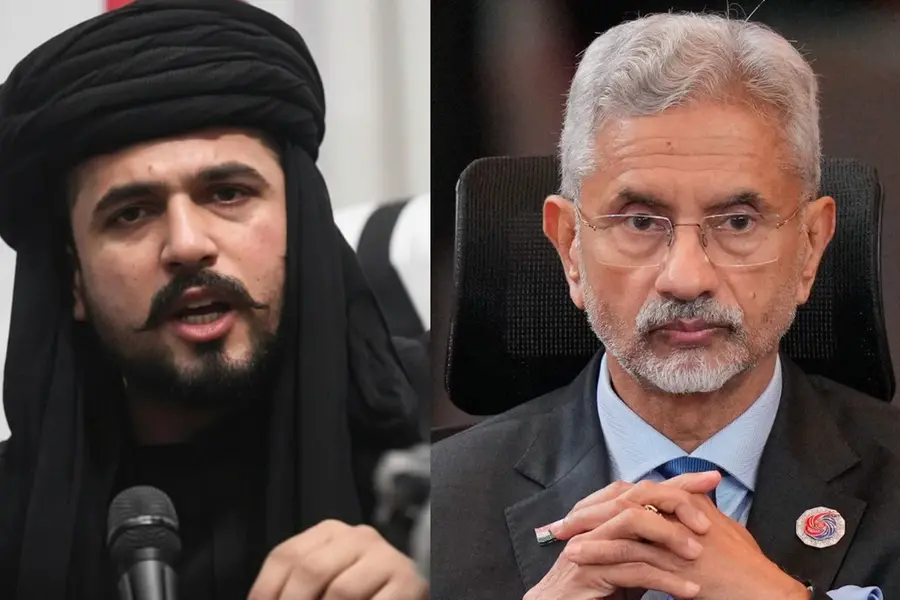
Baloch leader Mir Yar Baloch has expressed serious concerns regarding the potential for a Chinese military presence in Pakistan’s Balochistan province, urging India’s External Affairs Minister S. Jaishankar to take note of what he perceives as an escalating strategic alignment between Beijing and Islamabad. In an open letter dated January 1, 2026, which he has shared on social media, Mir Yar Baloch describes the possible deployment of Chinese troops as a significant threat to regional stability, implying it could have far-reaching implications for both Balochistan and India.
He specifically urged New Delhi to monitor developments closely and extend support to Baloch resistance forces, especially as work on the China-Pakistan Economic Corridor (CPEC) enters what he termed its “final and most sensitive phase.” CPEC is considered a cornerstone of China’s Belt and Road Initiative, aiming to connect Xinjiang with Gwadar Port.
Balochistan, often referred to as Pakistan’s largest yet most troubled province, has been a hotbed of insurgency fueled by grievances of political marginalization, economic exploitation, and widespread human rights abuses. Mir Yar Baloch warned that as the pace of CPEC accelerates, the necessity for Chinese military protection of its investments could lead to troop deployments in the region, which he argues would aggravate tensions not only in South Asia but also significantly destabilize India’s security landscape.
India has consistently opposed CPEC, asserting that the corridor runs through territory it claims as its own, specifically Pakistan-occupied Jammu and Kashmir (PoK). From the perspective of Indian strategists, the emergence of a Chinese military presence in Balochistan, especially near Gwadar Port, is perceived as a concerning extension of China’s strategic encirclement strategy within the Indo-Pacific.
In his letter, Mir Yar Baloch commended India’s Operation Sindoor, initiated in 2025 in response to a terror attack in Pahalgam, framing it as a strong stance against terrorism believed to be supported by Pakistan. He indicated that India’s commitment to counter-terrorism efforts resonates with Balochistan’s fight against what he terms Pakistan’s “illegal occupation.”
The security landscape surrounding CPEC has become increasingly turbulent, especially following multiple attacks on Chinese nationals and infrastructure by Baloch militant groups, underscoring the vulnerabilities in Pakistan’s assurances of safety. Analysts suggest that the deployment of Chinese troops could bring the Balochistan issue to greater international scrutiny, complicating relations between China and India and further heightening India-Pakistan tensions.
Moreover, Mir Yar Baloch called for heightened international attention to the human rights situation in Balochistan and hinted at the potential necessity for global intervention to prevent further militarization of the strategically significant region.
As of January 2, 2026, no official response has been reported from the governments of India, China, or Pakistan. The Indian Ministry of External Affairs has historically refrained from commenting on political dynamics within Pakistan while still voicing concerns regarding sovereignty and terrorism in international contexts.
Observers note that India is likely to remain vigilant regarding developments in Balochistan, with a focus on those involving Chinese interests, pursuing its objectives through diplomatic and multilateral avenues rather than direct intervention. Mir Yar Baloch’s appeal serves to highlight how local insurgencies, large-scale infrastructure undertakings, and the rivalry between major powers are increasingly intertwined in the geopolitics of South Asia.