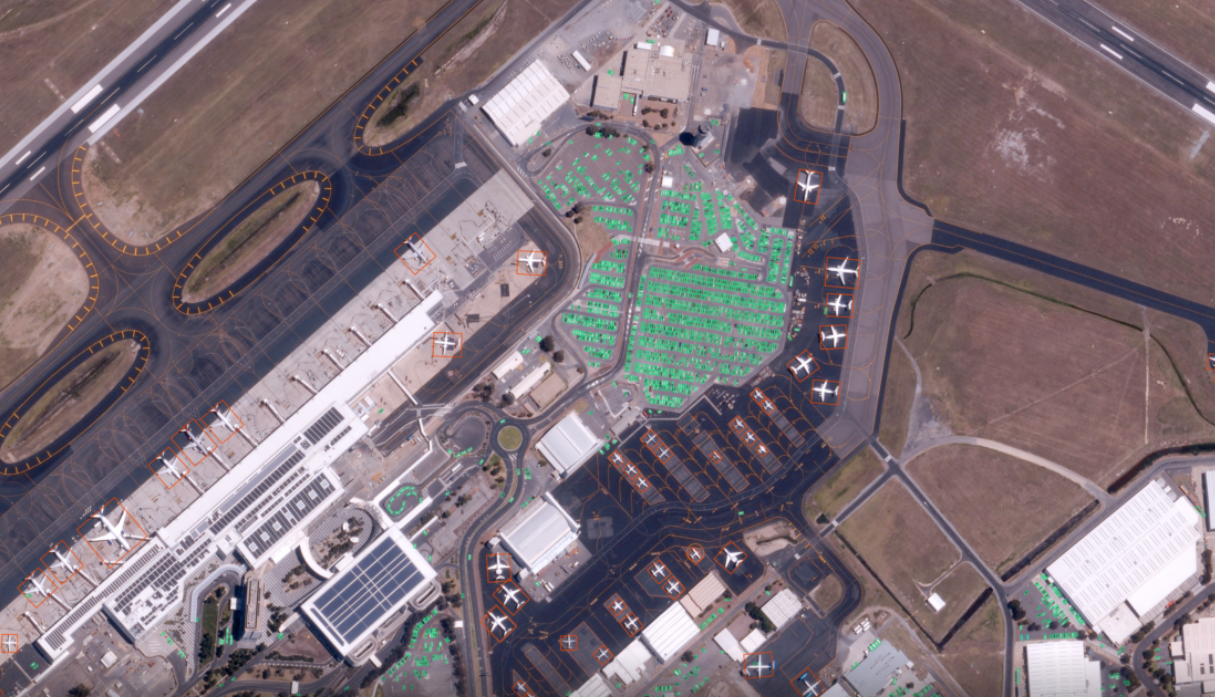
BlackSky has successfully brought its third Gen-3 satellite into commercial service just three weeks after its launch, marking a significant reduction in the typical commissioning timeline historically associated with such deployments. The speed at which this satellite, along with its predecessor launched in June, became operational is particularly noteworthy—both delivered their first imagery within approximately 12 hours of launch. In contrast, the first Gen-3 satellite, launched earlier in the year, required five days to produce its initial imagery.
This latest addition to BlackSky’s fleet bolsters the company’s capacity for very high-resolution imagery, with a spatial resolution of up to 35 centimeters (about 14 inches). The advancements in rapid operational deployment underscore the company’s commitment to meeting the growing demand for timely and accessible Earth observation data.
“Customers no longer have to wait months to access capacity from newly launched on-orbit assets,” the company stated, highlighting a shift away from traditional timelines that have often delayed the availability of new satellite capabilities.
Brian O’Toole, CEO of BlackSky, emphasized that each successful performance milestone achieved by the Gen-3 satellites is a testament to the company’s ability to meet global demands for flexible, secure tactical Intelligence, Surveillance, and Reconnaissance (ISR) capabilities at an unprecedented speed.
All three Gen-3 satellites are now accessible to clients through BlackSky’s Spectra platform, which facilitates satellite tasking, data delivery, and analytics. This system enables frequent and time-diverse imaging, both during the day and at night, and offers automated detection capabilities for vessels, aircraft, and vehicles through AI-based processing.
The Gen-3 satellites are designed to provide multiple daily passes over critical areas of interest, significantly enhancing the company’s operational capacity.
As demand for Earth observation data continues to rise, BlackSky is expanding its satellite operations. With three Gen-3 satellites currently in orbit, the company plans to introduce new satellites regularly to further enhance its overall capacity. Additionally, BlackSky has announced plans to expand its fleet with new multispectral satellites aimed at wide-area data collection, with development partners already in collaboration. Launches for these new satellites, known as AROS, are expected to begin in 2027, targeting applications such as national-level mapping, surveillance, and 3D digital modeling.