




Palestinian and Israeli civil society groups convened in Paris on Friday, issuing a strong plea for renewed support towards achieving a two-state solution to the ongoing conflict, emphasizing that “the window of opportunity” is rapidly closing. This meeting comes in light of the complex political landscape shaped by Prime Minister Benjamin Netanyahu’s government, which is considered one of the most right-wing administrations in Israel’s history. The current government is openly opposed to the establishment of a sovereign Palestinian state within the occupied West Bank and Gaza, actively working to undermine the feasibility of a two-state solution.
The gathering in Paris precedes an upcoming G7 summit in Evian-les-Bains, France, and included key figures such as the EU’s foreign policy chief, Kaja Kallas, and ministers from Brazil, Canada, the United Arab Emirates, and Turkey. In their statement, representatives from the civil groups highlighted the dire situation faced by both Israelis and Palestinians, revealing a reality filled with “fear, insecurity, and trauma.”
They urged G7 leaders to engage in urgent diplomacy, emphasizing that the current moment is critical for the peace process. “The window for a solution remains open; but it is narrowing,” they stated, calling for immediate action grounded in collaboration with civil society.
Among the measures proposed was an eight-point action plan that specifically demanded a permanent ceasefire, significant progress towards a two-state solution, and an immediate halt to the expansion of settlements. French Foreign Minister Jean-Noel Barrot reiterated France’s commitment to this vision, asserting that “this year could be decisive” for peace efforts.
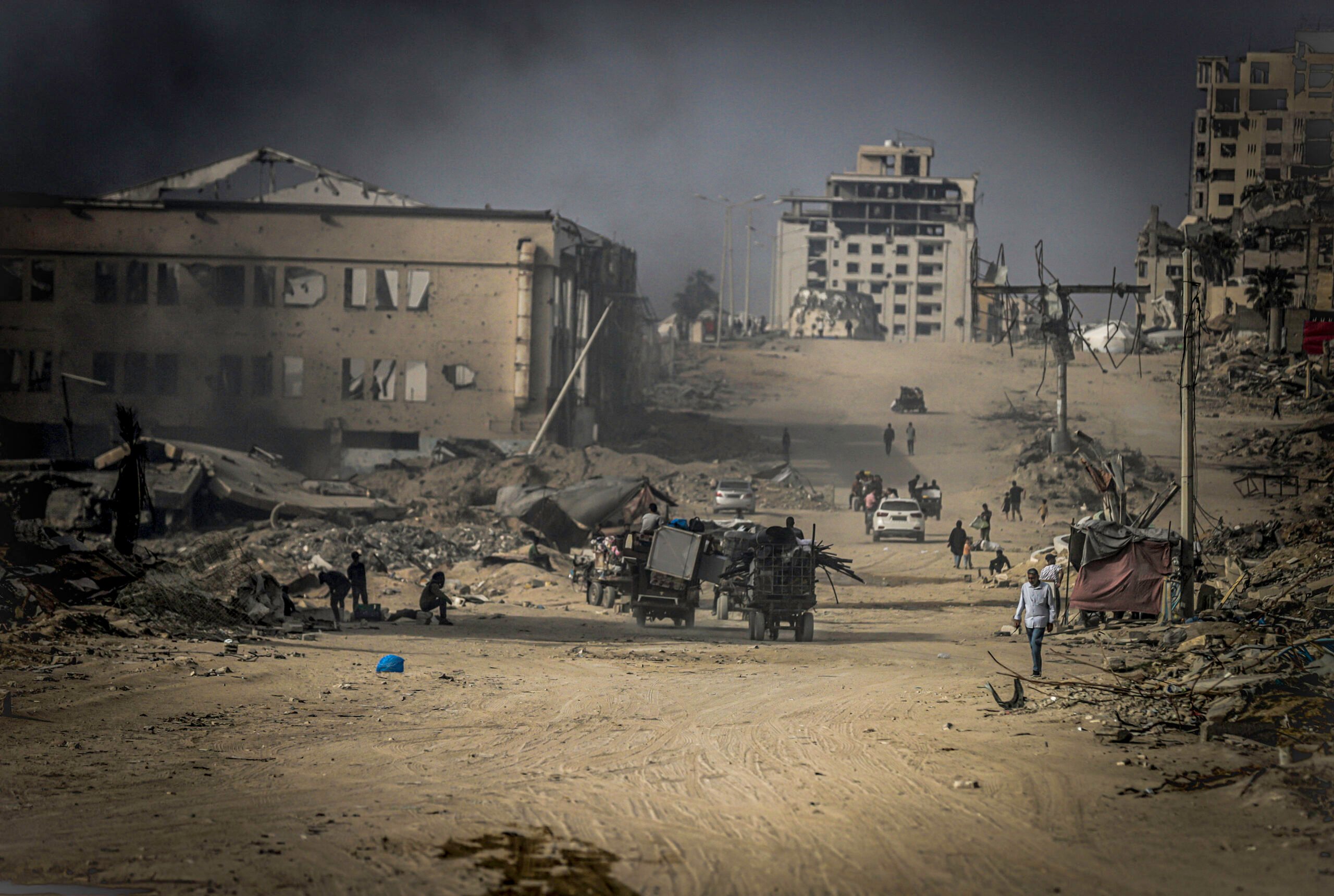
In a significant shift from traditional Western foreign policy, several countries, including France, Britain, and Canada, recognized a Palestinian state last year. The urgency of the situation has been amplified following Hamas’s attack on October 7, 2023, which escalated tensions and led to the ongoing conflict in Gaza. Although a ceasefire has been in place since October, it is fraught with near-daily accusations of violations from both sides. The Gaza Strip remains in a state of unrest, and progress towards a long-lasting resolution continues to be stalled.
Furthermore, the Palestinian Authority, led by President Mahmud Abbas, appears to be increasingly weakened and facing declining popularity among its constituents, rendering the path to peace more complex and uncertain. The pressing need for international involvement and support for civil society initiatives has never been more critical as the situation continues to evolve.


