





India achieved a significant milestone in strengthening its national security as the Defence Research and Development Organisation (DRDO) successfully carried out a series of advanced flight tests on June 10 and 11, 2026. These trials showcased the country’s growing capability to counter a wide range of aerial threats and enhance its strategic defence preparedness.
DRDO Successfully Demonstrates Advanced Missile Defence and Strike Capabilities
The tests included the successful demonstration of a Multi-layered Ballistic Missile Defence (BMD) system. During the trials, interceptor missiles accurately tracked and neutralized designated targets, proving the effectiveness of India’s indigenous missile defence architecture. The system has been designed using cutting-edge technologies to tackle modern and emerging ballistic missile threats.
The successful performance of the BMD system marks a major advancement in India’s defence capabilities. With this achievement, India has joined a select group of nations possessing the technological expertise to develop missile defence systems capable of engaging even long-range and intercontinental ballistic missile threats. Such capabilities significantly strengthen the country’s strategic deterrence and national security framework.
In addition to the missile defence tests, DRDO also conducted the maiden flight test of the Naval Anti-Ship Missile-Medium Range (NASM-MR). The missile successfully completed its mission objectives, demonstrating its potential to enhance the offensive capabilities of the Indian Navy. The NASM-MR is designed to engage hostile naval targets at medium ranges and will contribute to strengthening India’s maritime defence posture.
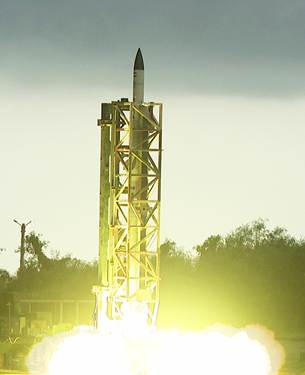
The flight trials were closely observed by senior officials from DRDO and the Indian Armed Forces. Their presence highlighted the importance of these tests in the ongoing modernization of India’s defence systems.
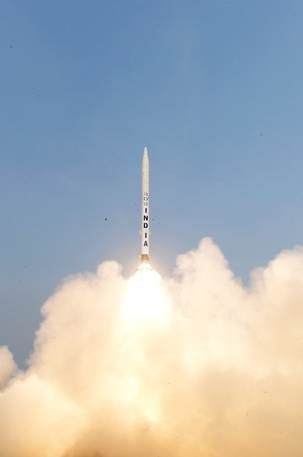
Defence Minister Rajnath Singh congratulated the scientists, engineers, and personnel involved in the successful demonstrations. He described the achievement as a significant step toward enhancing India’s self-reliance in defence technology and ensuring the nation’s security against evolving threats.
The Secretary of the Department of Defence Research and Development and Chairman of DRDO, Rajesh Kumar Singh, monitored the trials closely and praised the collaborative efforts of DRDO scientists, industry partners, and defence personnel. He emphasized that the success of these tests reflects India’s growing expertise in advanced defence technologies and indigenous weapons development.
These achievements reinforce India’s commitment to developing state-of-the-art defence systems under the vision of self-reliance and technological innovation. The successful demonstrations are expected to play a crucial role in enhancing the operational readiness and strategic strength of the Indian Armed Forces in the years ahead.
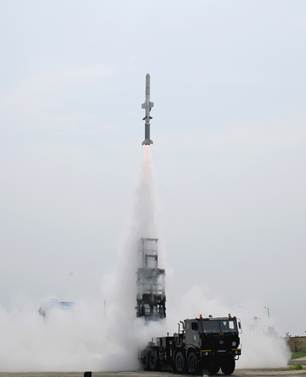
Mission Sudarshan Chakra
Mission Sudarshan Chakra is a long-term national defence initiative announced by Prime Minister Narendra Modi in 2025. The mission aims to develop an indigenous, integrated, and multi-layered air and missile defence network capable of protecting India’s critical assets from modern aerial threats such as ballistic missiles, cruise missiles, drones, and hostile aircraft by 2035.
Key Objectives
- Develop a nationwide air and missile defence shield.
- Integrate air defence, ballistic missile defence (BMD), counter-drone systems, and surveillance networks.
- Strengthen India’s indigenous defence technology under the vision of self-reliance.
- Enhance the protection of strategic military, economic, and civilian infrastructure.
Major Components
- Ballistic Missile Defence (BMD) System
- Project Kusha long-range interceptor missiles
- Advanced radar and satellite surveillance systems
- Counter-drone and electronic warfare capabilities
- Artificial Intelligence-enabled command and control networks
- Integration of existing systems such as the S-400 Triumf and indigenous air defence assets.
Recent Development (June 2026)
On 10–11 June 2026, the Defence Research and Development Organisation (DRDO) successfully conducted multiple flight tests demonstrating:
- Multi-layered Ballistic Missile Defence capability.
- Successful interception of missile targets.
- The maiden test of the Naval Anti-Ship Missile-Medium Range (NASM-MR).
These trials marked an important step toward realizing the objectives of Mission Sudarshan Chakra and strengthening India’s strategic defence preparedness.
Significance
- Places India among a select group of nations with advanced missile defence capabilities.
- Enhances protection against long-range and intercontinental missile threats.
- Strengthens national security and strategic deterrence.
- Promotes indigenous defence research and manufacturing.
Exam Points (AFCAT/CDS/NDA/UPSC)
- Announced: 15 August 2025
- Target Completion: 2035
- Nodal Agency: Defence Research and Development Organisation (DRDO)
- Purpose: Integrated Air Defence, Ballistic Missile Defence, and Counter-Drone Shield
- Associated Project: Project Kusha
- Vision: “Shield and Sword” approach combining defensive and offensive capabilities.
MCQs
1. Mission Sudarshan Chakra is primarily related to:
A. Space exploration
B. Air and Missile Defence
C. Cyber Security
D. Naval Modernization
Answer: B
2. Mission Sudarshan Chakra aims to be fully developed by:
A. 2028
B. 2030
C. 2035
D. 2047
Answer: C
3. Which organization is leading Mission Sudarshan Chakra?
A. ISRO
B. BEL
C. HAL
D. DRDO
Answer: D
4. Project Kusha is associated with:
A. Fighter Aircraft Development
B. Air Defence Interceptor Missiles
C. Nuclear Submarines
D. Satellite Launch Vehicles
Answer: B
5. Mission Sudarshan Chakra was announced by:
A. Rajnath Singh
B. Droupadi Murmu
C. Narendra Modi
D. Anil Chauhan
Answer: C


