





In Current Affairs for 11 May 2026, we will see the latest national and international current affairs news. These important current affairs will be beneficial for your upcoming NDA, CDS, CDS OTA, AFCAT, TA, Agniveer Army, Agniveer Navy, Agniveer Air Force, Women Military Police, INET, MNS, ACC exams, SCO, PCSL, CAPF, and SSB interviews, and direct entries for Army, Navy, and Air Force like SSC Tech, TGC, JAG, NCC, TES, 10+2 Cadet. Download a PDF file about current events at the end of this article. Let us now see the Current Affairs.
Current Affairs 11 May 2026
National Technology Day 2026
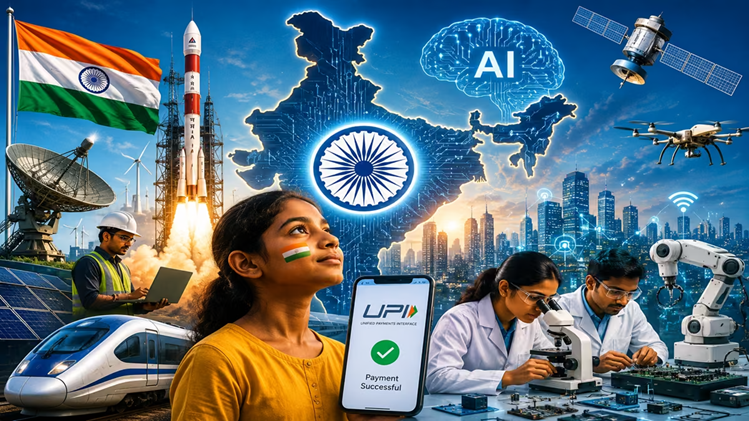
India celebrates National Technology Day every year on 11 May to recognize the country’s achievements in science and technology. In 2026, the occasion carries even greater significance as technology has become deeply connected with economic growth, national security, digital governance, healthcare, education, startups, and artificial intelligence.
Today, technology is not limited to laboratories and research centres. It directly affects the daily lives of citizens through digital payments, online education, telemedicine, e-governance, and emerging AI-based services. As India moves towards becoming a developed nation, technological innovation is playing a crucial role in shaping the future.
Historical Significance of National Technology Day
National Technology Day commemorates the successful Pokhran-II nuclear tests, also known as Operation Shakti, conducted on 11 May 1998 under the leadership of former Prime Minister Atal Bihari Vajpayee.
The nuclear tests established India as a nuclear-capable nation and demonstrated the country’s scientific and strategic capabilities. The achievement marked a turning point in India’s technological and defence development.
Apart from the Pokhran tests, two other important technological milestones were achieved on the same day in 1998:
- Successful testing of the Hansa-3 aircraft
- Successful firing of the Trishul missile
These developments highlighted India’s growing strength in indigenous aerospace and defence technologies.
Theme of National Technology Day 2026
The theme for National Technology Day 2026 is:
“Responsible Innovation for Inclusive Growth”
The theme emphasizes:
- Ethical use of Artificial Intelligence
- Indigenous technological development
- Bridging the digital divide
- Inclusive access to technology
- Sustainable innovation
The government’s focus is on ensuring that technological growth benefits all sections of society, including rural and economically weaker communities.
Technology and India’s Development
Technology has become one of the strongest pillars of India’s development strategy.
Major Areas Influenced by Technology
1. Digital Economy
India has witnessed rapid expansion in digital payments and online financial services through platforms like UPI and digital banking.
2. Education
Online learning platforms and digital classrooms have improved educational accessibility.
3. Healthcare
Telemedicine, AI-based diagnosis, and digital health records are transforming healthcare delivery.
4. Startups and Innovation
India has emerged as one of the world’s leading startup ecosystems, particularly in fintech, AI, and biotechnology.
5. National Security
Advanced missile systems, cybersecurity, drones, and indigenous defence technologies have strengthened India’s strategic position.
CJI Surya Kant Launches “One Case, One Data” Initiative
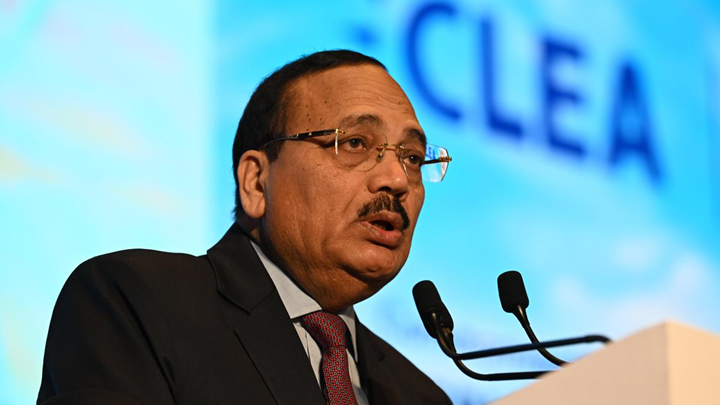
On 11 May 2026, Chief Justice of India Surya Kant launched the “One Case, One Data” initiative along with an AI-powered chatbot named “Su Sahay” at the Supreme Court of India.
The initiative aims to digitally integrate judicial records from:
- Supreme Court
- High Courts
- District Courts
- Taluka Courts
The unified framework is designed to improve:
- Case management
- Online verification of records
- Transparency in judicial administration
- Data accuracy and accessibility
AI Chatbot “Su Sahay”
“Su Sahay” is an AI-based chatbot developed by the National Informatics Centre in collaboration with the Supreme Court Registry.
The chatbot has been integrated into the Supreme Court website to help citizens access:
- Court-related information
- Case guidance
- Basic legal assistance services
The initiative reflects India’s growing adoption of Artificial Intelligence in governance and public service delivery.
Supreme Court Examines Religion-Teaching Schools Under Charity Law
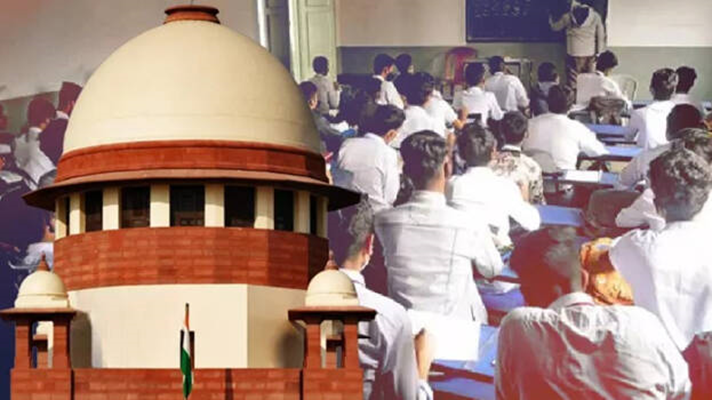
The Supreme Court of India also examined the legal status of schools providing religious instruction under constitutional and charity-law provisions.
The issue relates to the interpretation of:
- Article 26(a)
- Article 19(1)(g)
- Article 30(1)
of the Constitution of India.
Important Constitutional Provisions
Article 26(a)
Provides religious denominations the right to establish and maintain institutions for religious and charitable purposes.
Article 19(1)(g)
Guarantees the right to practise any profession or carry out any occupation, trade, or business.
Article 30(1)
Protects the rights of minorities to establish and administer educational institutions of their choice.
The Court left the matter to the Government of India for further examination under constitutional provisions.
VB-GRAMG Act to Replace MGNREGA
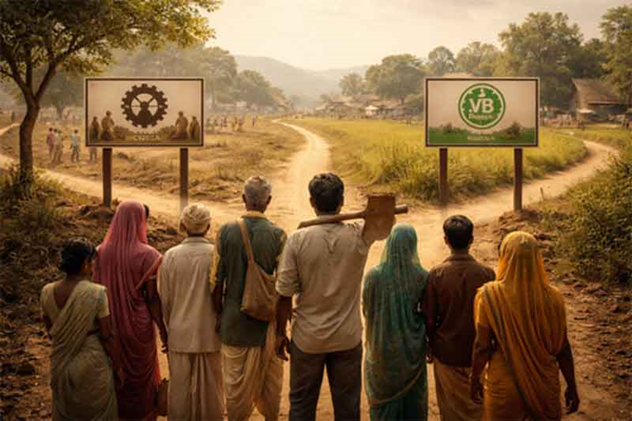
The Government of India has announced that the Viksit Bharat–Guarantee for Rozgar and Ajeevika Mission (Gramin) Act, 2025, commonly known as the VB-GRAMG Act, will replace Mahatma Gandhi National Rural Employment Guarantee Act from 1 July 2026.
The new scheme aims to strengthen rural employment generation and improve productive asset creation in villages.
Key Features of the VB-GRAMG Act
1. Increased Employment Guarantee
The annual guaranteed wage employment has been increased from:
- 100 days to 125 days
for eligible rural households.
2. Funding Pattern
Most States:
- Centre-State ratio: 60:40
Northeastern & Himalayan States and UTs:
- Centre-State ratio: 90:10
3. Transition from MGNREGA
Existing e-KYC verified MGNREGA job cards will remain valid until new Gramin Rozgar Guarantee Cards are issued.
4. Focus Areas
The scheme emphasizes:
- Climate resilience
- Rural infrastructure
- Productive asset creation
- Convergence with other welfare schemes
Economic Significance
The estimated annual expenditure under the new framework is expected to exceed:
- ₹1.51 lakh crore
The Union Government has allocated approximately:
- ₹95,700 crore for 2026–27
The programme aligns with the Viksit Bharat @2047 vision, which aims to transform India into a developed nation by the centenary year of independence.
Review Questions
1. National Technology Day is celebrated in India on:
A. 15 August
B. 26 January
C. 11 May
D. 28 February
Answer: C. 11 May
2. National Technology Day commemorates which of the following events?
A. Launch of Chandrayaan-1
B. Pokhran-II Nuclear Tests
C. Establishment of ISRO
D. Green Revolution in India
Answer: B. Pokhran-II Nuclear Tests
3. Consider the following statements regarding National Technology Day 2026:
- The theme for 2026 is “Responsible Innovation for Inclusive Growth.”
- The theme focuses on ethical AI and indigenous technology.
- National Technology Day was first observed after the Pokhran-I test.
Which of the statements given above is/are correct?
A. 1 and 2 only
B. 2 and 3 only
C. 1 only
D. 1, 2 and 3
Answer: A. 1 and 2 only
4. Which of the following achievements also took place on 11 May 1998 along with Operation Shakti?
- Testing of Hansa-3 aircraft
- Firing of Trishul missile
- Launch of PSLV-C1
Select the correct answer using the code below:
A. 1 and 2 only
B. 2 and 3 only
C. 1 only
D. 1, 2 and 3
Answer: A. 1 and 2 only
5. The “One Case, One Data” initiative launched in 2026 is related to:
A. Digital land records
B. Unified judicial data integration
C. National population database
D. Digital university framework
Answer: B. Unified judicial data integration
6. “Su Sahay,” recently seen in news, is:
A. A defence missile system
B. A satellite navigation project
C. An AI-powered chatbot for judicial services
D. A healthcare mobile application
Answer: C. An AI-powered chatbot for judicial services
7. Consider the following statements regarding constitutional provisions:
- Article 26 deals with freedom to manage religious affairs.
- Article 30(1) protects minority educational institutions.
- Article 19(1)(g) relates to protection against arrest and detention.
Which of the statements given above is/are correct?
A. 1 and 2 only
B. 2 only
C. 1 and 3 only
D. 1, 2 and 3
Answer: A. 1 and 2 only
8. The VB-GRAMG Act, 2025, is intended to replace:
A. National Rural Livelihood Mission
B. PMGSY
C. MGNREGA
D. DAY-NULM
Answer: C. MGNREGA
9. Under the VB-GRAMG Act, the guaranteed rural employment has been increased to:
A. 110 days
B. 120 days
C. 125 days
D. 150 days
Answer: C. 125 days
10. Which of the following States/Regions will follow a 90:10 funding pattern under the VB-GRAMG framework?
- Northeastern States
- Himalayan States
- Union Territories
Select the correct answer using the code below:
A. 1 only
B. 1 and 2 only
C. 2 and 3 only
D. 1, 2 and 3
Answer: D. 1, 2 and 3


