In Defence Current Affairs for 09 April 2026, we will see the latest national and international current affairs news. These important current affairs will be beneficial for your upcoming NDA, CDS, CDS OTA, AFCAT, TA, Agniveer Army, Agniveer Navy, Agniveer Air Force, Women Military Police, INET, MNS, ACC exams, SCO, PCSL, CAPF, and SSB interviews, and direct entries for Army, Navy, and Air Force like SSC Tech, TGC, JAG, NCC, TES, 10+2 Cadet. Download a PDF file about current events at the end of this article. Let us now see the Current Affairs.
Defence Current Affairs 09 April 2026
India–Egypt Joint Special Forces Exercise “Cyclone-IV”
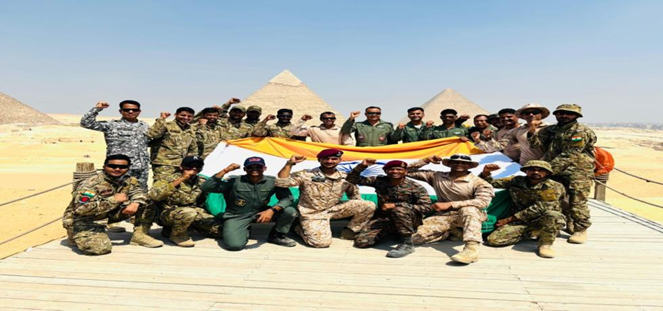
- India continues to expand its global defence cooperation as an Indian Army contingent has departed to participate in the fourth edition of the India–Egypt Joint Special Forces Exercise, Cyclone-IV. The exercise is being held in Egypt from 9 to 17 April 2026.
- The contingent, comprising around 25 personnel from special forces units, will train alongside Egyptian troops in realistic operational conditions. The exercise is designed to improve joint planning, coordination, and interoperability between the two armies.
- Training activities will focus on advanced special operations techniques, particularly suited for desert and semi-desert environments. Such exercises help both nations exchange tactical knowledge and enhance their readiness for complex missions.
- Beyond military training, Cyclone-IV also plays an important role in strengthening mutual trust, cultural understanding, and defence ties between India and Egypt. It reflects the growing strategic partnership between the two countries in the field of defence cooperation.
INS Sudarshini Showcases India’s Maritime Heritage in France
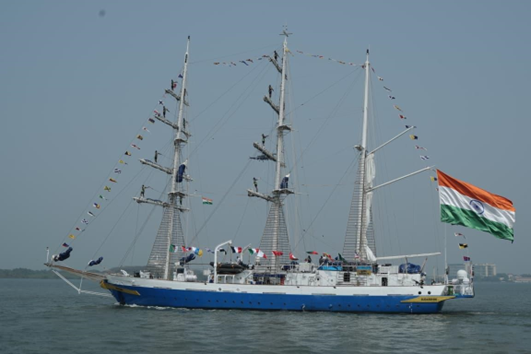
- In another significant development, INS Sudarshini, a sail training ship of the Indian Navy, successfully participated in the prestigious Escale à Sète 2026 maritime festival in France.
- The ship departed from the port city of Sète on 7 April 2026 after completing its participation in the biennial event, which is one of the largest maritime gatherings in the Mediterranean region.
- During the festival, INS Sudarshini engaged in various maritime activities alongside international tall ships, showcasing India’s rich seafaring traditions and naval capabilities. An official reception was also hosted onboard, attended by global dignitaries and representatives from different nations.
- The ship is currently on a mission under Lokayan 26, aimed at promoting maritime cooperation and strengthening India’s presence on the global stage. Following the event, it is proceeding towards Casablanca as part of its onward journey.
CRPF Valour Day
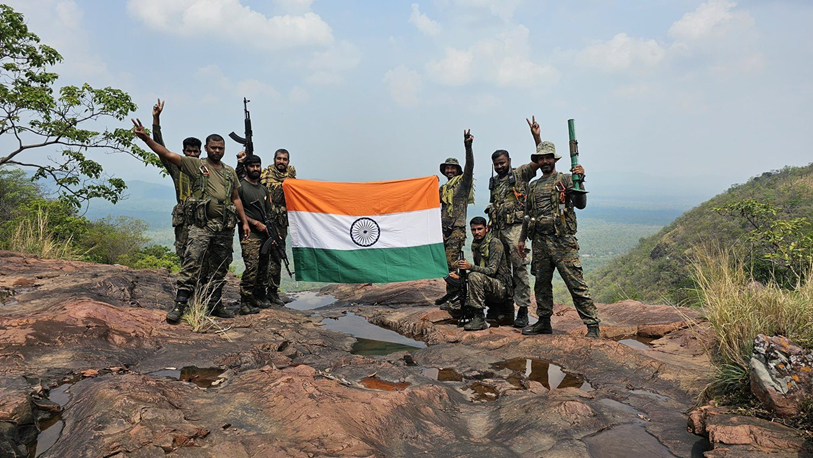
- Union Home Minister and Minister of Cooperation, Shri Amit Shah paid his tributes to the martyrs of the Central Reserve Police Force (CRPF) on the occasion of CRPF Valour Day.
- CRPF Valour Day, known as Shaurya Diwas, is celebrated annually on April 9 to honour the extraordinary courage of the CRPF on this day in 1965.
- A small contingent of 2nd Battalion CRPF at Sardar Post in Gujarat’s Rann of Kutch repulsed a massive Pakistani brigade attack, killing 34 soldiers and capturing four, while sacrificing 6-7 soldiers.
Vikram-1 Nears Historic Orbital Launch
- India is on the verge of a significant breakthrough in its space journey as Vikram-1, the country’s first privately developed orbital rocket, moves closer to its maiden launch. Developed by Skyroot Aerospace, this launch vehicle represents a new era of private participation in India’s space sector.
- Successful Payload Fairing Separation Test
- A key milestone has been achieved with the successful testing of the payload fairing separation system. This system plays a crucial role in protecting satellites during the rocket’s ascent through the atmosphere and ensures their safe release once the rocket reaches space.
- The fairing, often called the nose cone, uses a two-part clamshell design. During testing, the separation mechanism operated with precision, cleanly discarding the protective cover at the right moment. This successful demonstration marks one of the final technical validations before launch readiness.
- About Vikram-1 Rocket
- Vikram-1 is a four-stage launch vehicle designed to carry small satellites into space. It is part of the Vikram series and is named after Vikram Sarabhai.Key features include:
- Capability to place satellites into Low Earth Orbit (LEO) and Sun-Synchronous Orbit (SSO)
- Combination of solid propulsion stages and a liquid-fuel upper stage
- Use of advanced materials like carbon composites for reduced weightDesigned for cost-effective and flexible satellite launchesSignificance for India’s Space Sector
- The Vikram-1 mission is expected to be a landmark moment for India’s growing private space ecosystem. It builds upon the earlier success of Vikram-S, India’s first privately built suborbital rocket launched in 2022.
- This development reflects the impact of recent policy reforms that opened the space sector to private players. With companies like Skyroot Aerospace leading innovation, India aims to become a competitive player in the global commercial launch market.
- Towards Affordable and Accessible Space Missions
- Vikram-1 is designed to cater to the rising demand for small satellite launches across the world. Its objective is to provide faster, more affordable, and reliable launch services, making space more accessible for both domestic and international customers.
- The rocket is currently undergoing final integration and testing phases, with its launch expected soon after necessary clearances and preparations are completed.
India Approves Indigenous Runway-Independent UAV Project
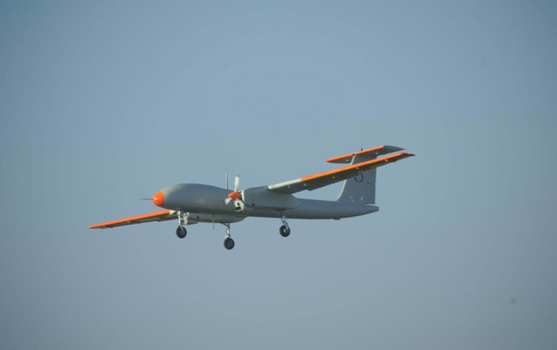
- India has taken a significant step towards strengthening its indigenous defence capabilities by approving the development of a runway-independent Unmanned Aerial Vehicle (UAV) for the Indian Air Force. This advanced project is aimed at enhancing both combat search and rescue (CSAR) operations and logistics support in challenging terrains.
- Project OverviewThe newly approved UAV project focuses on designing a highly capable unmanned system that can operate without the need for conventional runways.
- This makes it especially useful in remote and difficult environments such as mountainous regions and high-altitude zones.The initiative has been cleared under the Defence Acquisition Procedure (DAP) 2020, reflecting India’s commitment to promoting indigenous defence technologies and reducing dependence on foreign systems.
- Key Features and Capabilities
- The UAV is expected to incorporate cutting-edge technologies and advanced operational capabilities:
- Ability to operate from unprepared surfaces, including rough terrainCapable of functioning at altitudes up to 16,000–20,000 feetMinimum range of 200 km with a loiter time of about 45 minutes
- Payload capacity of around 400 kg, including stretchers and personnelEquipped with autonomous systems for take-off, navigation, and landingOperational even in GPS-denied environments
- These features will enable the UAV to perform missions such as rescuing stranded personnel and transporting essential supplies in extreme conditions.
- Role in Combat and LogisticsOne of the primary roles of this UAV will be combat search and rescue missions, allowing the military to recover injured or stranded personnel without risking manned aircraft. This is particularly crucial during wartime or emergency situations.Additionally, the UAV will serve as a logistics platform, capable of delivering supplies to forward bases and remote locations where traditional helicopters may face operational limitations.
- Indigenous Development Model
- The project is categorized under the ‘Make-I’ framework, which encourages domestic companies to lead development:
- Government funding: 70% of development costIndustry contribution: 30%Final procurement under Buy (Indian-IDDM) categoryThis ensures that a significant portion of the system is designed, developed, and manufactured within India, supporting the vision of Aatmanirbhar Bharat.Strategic ImportanceThis initiative aligns with global trends where unmanned systems are becoming central to modern warfare. The UAV is expected to:Enhance operational readiness of the Indian Air ForceReduce risks to human pilots in dangerous missionsStrengthen indigenous defence manufacturing ecosystem
- Promote innovation among Indian startups and defence companies
Review Questions
1. Cyclone-IV joint military exercise is conducted between India and which country?
A. USA
B. Russia
C. Egypt
D. France
Answer: C
2. Cyclone-IV exercise is being held in which country?
A. India
B. Egypt
C. UAE
D. Saudi Arabia
Answer: B
3. Cyclone-IV took place during which dates?
A. 1–7 April 2026
B. 5–12 April 2026
C. 9–17 April 2026
D. 10–20 April 2026
Answer: C
4. The main objective of Cyclone-IV exercise is to:
A. Space exploration
B. Trade cooperation
C. Improve interoperability and coordination
D. Cultural exchange only
Answer: C
5. Cyclone-IV focuses on operations in which terrain?
A. Arctic region
B. Jungle
C. Desert and semi-desert
D. Coastal areas
Answer: C
6. INS Sudarshini participated in which maritime event?
A. Malabar Exercise
B. Fleet Review
C. Escale à Sète 2026
D. Milan Exercise
Answer: C
7. Escale à Sète festival is held in which country?
A. Italy
B. Spain
C. France
D. Greece
Answer: C
8. INS Sudarshini is associated with which force?
A. Indian Army
B. Indian Air Force
C. Indian Navy
D. Coast Guard
Answer: C
9. INS Sudarshini is on which mission?
A. Mission Gaganyaan
B. Lokayan 26
C. Mission Sagar
D. Samudra Setu
Answer: B
10. CRPF Valour Day is observed on:
A. April 7
B. April 8
C. April 9
D. April 10
Answer: C
11. CRPF Valour Day commemorates a battle fought in:
A. 1947
B. 1962
C. 1965
D. 1971
Answer: C
12. The battle of CRPF Valour Day took place at:
A. Kargil
B. Siachen
C. Sardar Post, Rann of Kutch
D. Tawang
Answer: C
13. Vikram-1 is developed by which company?
A. ISRO
B. HAL
C. Skyroot Aerospace
D. DRDO
Answer: C
14. Vikram-1 is primarily designed to:
A. Carry astronauts
B. Launch small satellites
C. Spy missions
D. Missile testing
Answer: B
15. Vikram-1 is a how many stage launch vehicle?
A. Two-stage
B. Three-stage
C. Four-stage
D. Five-stage
Answer: C
16. Vikram-1 can place satellites into:
A. Only GEO
B. Only LEO
C. LEO and SSO
D. Only MEO
Answer: C
17. The payload fairing in a rocket is also known as:
A. Engine
B. Booster
C. Nose cone
D. Fuel tank
Answer: C
18. The newly approved UAV for IAF is special because it:
A. Is nuclear-powered
B. Requires long runway
C. Is runway-independent
D. Is manned
Answer: C
19. The UAV project has been approved under which framework?
A. Make-II
B. DAP 2020
C. Startup India
D. Digital India
Answer: B
20. Under the ‘Make-I’ category, government funding for the UAV project is:
A. 50%
B. 60%
C. 70%
D. 80%
Answer: C
ALSO READ:
- Latest Daily Current Affairs and Defence Updates
- Latest Daily Current Affairs March 2026[DOWNLOAD PDF]
- Latest Daily Current Affairs February 2026[DOWNLOAD PDF]
- Latest Daily Current Affairs January 2026[DOWNLOAD PDF]
- Latest Daily Current Affairs November 2025[DOWNLOAD PDF]
- Latest Daily Current Affairs October 2025[DOWNLOAD PDF]
- Latest Daily Current Affairs August 2025[DOWNLOAD PDF]
- Latest Daily Current Affairs July 2025[DOWNLOAD PDF]
- Monthly Defence Current Affairs June 2025 [DOWNLOAD PDF]
- Monthly Defence Current Affairs May 2025 [DOWNLOAD PDF]
- Monthly Defence Current Affairs April 2025 [DOWNLOAD PDF]
- Monthly Defence Current Affairs March 2025 [DOWNLOAD PDF]
- Monthly Defence Current Affairs February 2025 [DOWNLOAD PDF]
- Monthly Defence Current Affairs January 2025 [DOWNLOAD PDF]
- Defence Current Affairs Year End Review 2024
- Monthly Defence Current Affairs November 2024 [DOWNLOAD PDF]
- Monthly Defence Current Affairs October 2024 [DOWNLOAD PDF]
- Monthly Defence Current Affairs September 2024 [DOWNLOAD PDF]
- Monthly Defence Current Affairs August 2024 [DOWNLOAD PDF]
- Monthly Defence Current Affairs July 2024 [DOWNLOAD PDF]
- Monthly Defence Current Affairs June 2024 [DOWNLOAD PDF]