




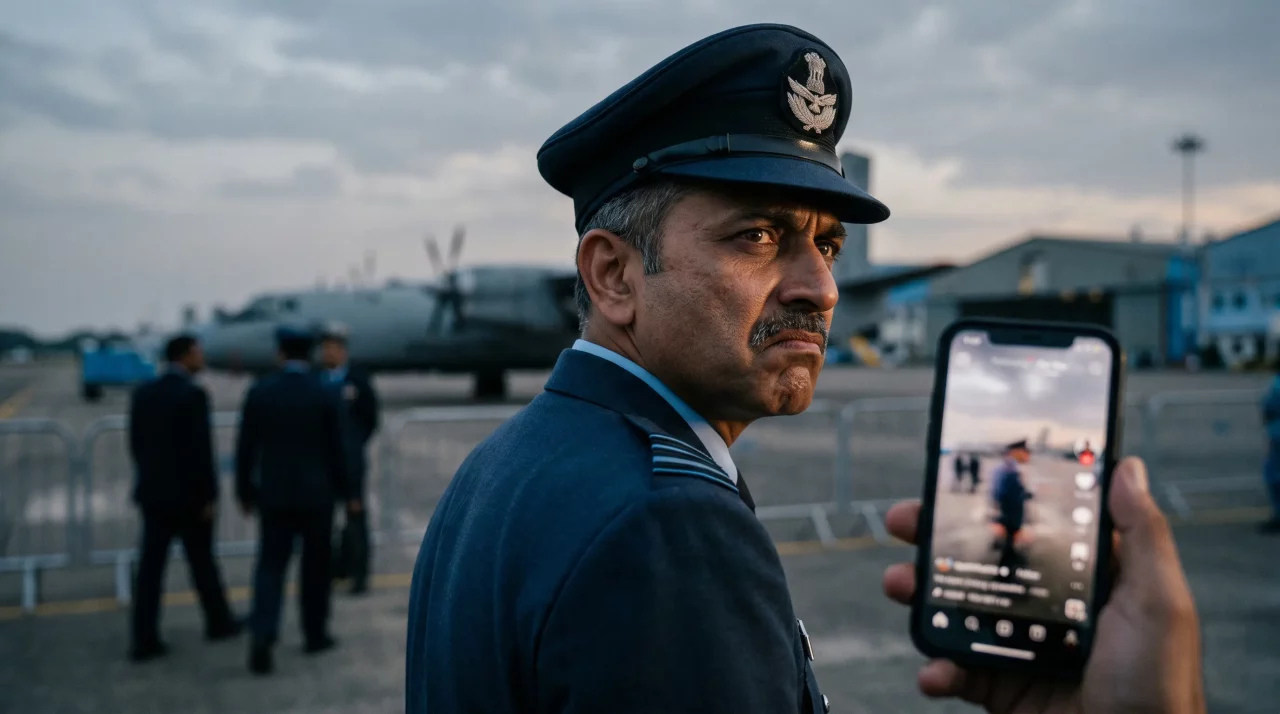
In a landmark decision, the Delhi High Court has upheld the dismissal of former Corporal Sachin Kumar Solanki from the Indian Air Force (IAF), who faced removal for recording and posting a video on Facebook while in uniform. The video criticized the perceived disparities in service conditions between officers and airmen.
The ruling, delivered by a Division Bench comprising Justices Anil Kshetarpal and Amit Mahajan, comes from a writ petition challenging Solanki’s dismissal, which the Armed Forces Tribunal (AFT) had previously supported. The Court dismissed the petition, reinforcing the importance of discipline within the military.
Solanki, who enlisted in the IAF in 2011, served as an Airman-Communication Technician. His legal battle commenced following a video he uploaded on January 22, 2017, while in uniform. The video garnered significant attention on social media, where he aired several grievances related to inequities faced by jawans compared to officers.
He specifically highlighted issues such as officers receiving full free rations while jawans receive a meager monthly allowance, disparities in uniform provision, differences in Military Service Pay (MSP), and the treatment of families at official functions. Solanki lamented that jawans do not receive equal respect and facilities compared to officers and criticized the lack of support regarding basic necessities and travel accommodations.
After the video was made public, the IAF initiated a Court of Inquiry, leading to a Show Cause Notice issued to Solanki in August 2017. Following his response, the IAF removed him from service in December 2017, citing conduct that brought disrepute to the force and violated military discipline. The authorities noted that he had not sought internal redressal mechanisms before going public.
Solanki’s subsequent challenge to his dismissal was reviewed by the Principal Bench of the AFT, which rejected his appeal, affirming the legality of the administrative action taken against him and highlighting that there was no breach of natural justice.
In upholding the decision of the AFT, the Delhi High Court reiterated the limited scope of judicial intervention in military matters, emphasizing the unique requirements of discipline and command within the armed forces. The Court indicated that when military personnel opt to voice grievances publicly, it could undermine the established hierarchy and operational integrity.
The judges noted that Solanki’s conduct was in violation of military directives that govern social media usage, particularly the Air Force Order mandating caution in such interactions. The Court found that public disclosure of grievances from uniformed personnel could adversely affect morale and the institution’s image.
Key elements from the judgment stated that the choice to bypass internal grievance mechanisms in favor of social media dissemination was detrimental to his case. The judges firmly positioned that the punishment meted out was neither arbitrary nor disproportionately harsh.
Ultimately, the Court dismissed Solanki’s petition and upheld his removal from service, thereby reinforcing the strict standards of conduct expected from members of the military and emphasizing the importance of adhering to established grievance channels within the armed forces. The judgment serves as a significant reminder of the balance between individual expression and military discipline.


