




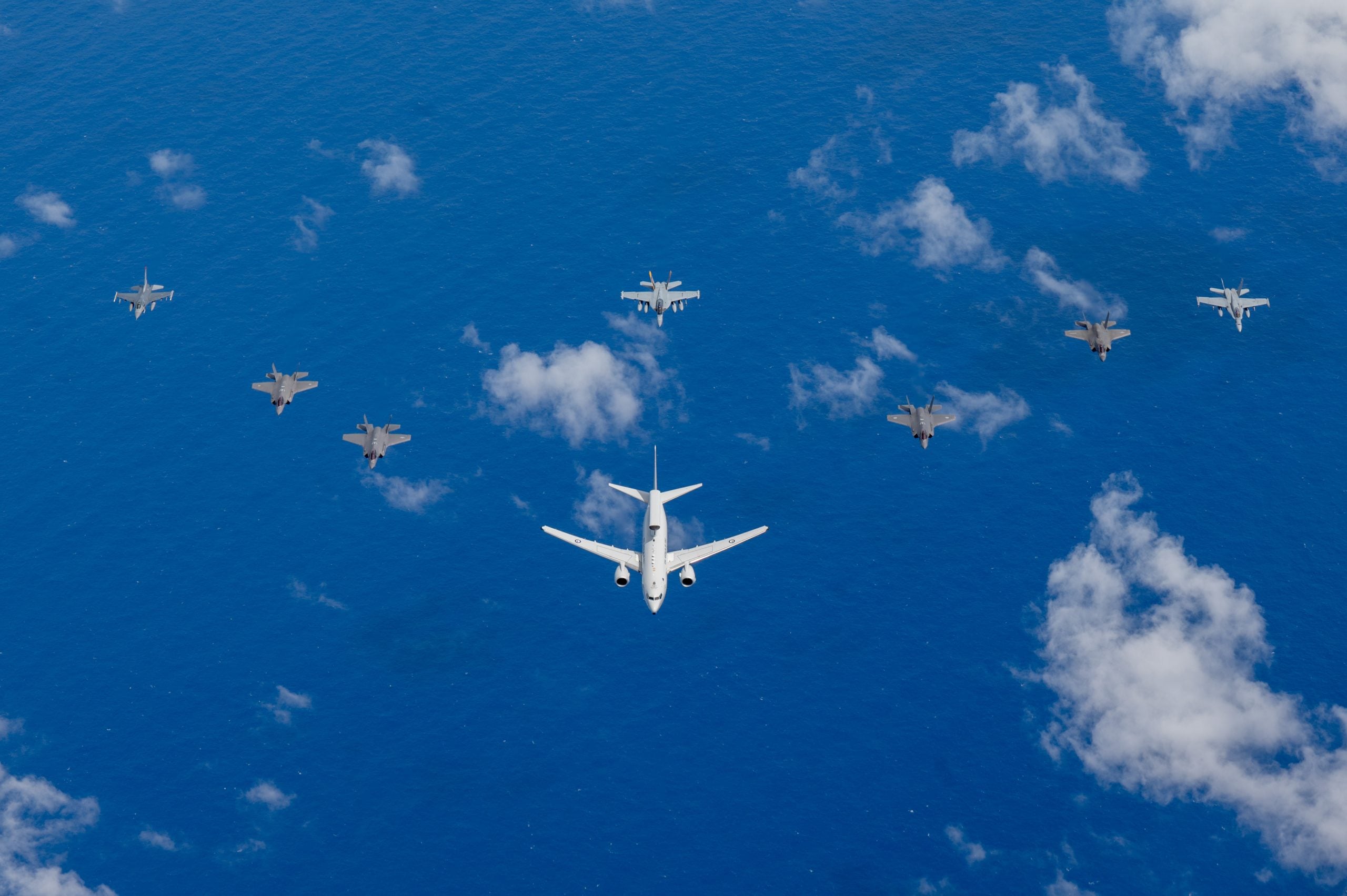
In contemporary military operations, situational awareness has emerged as a critical component in decision-making processes. Commanders need a real-time perspective on the dynamics of air, sea, and ground, particularly when it comes to ensuring effective responses during combat scenarios. This is where the E-7 Wedgetail aircraft plays a vital role, providing advanced airborne early warning and control capabilities.
The E-7 Wedgetail, developed by Boeing, functions as an airborne early warning and control (AEW&C) system. Its primary mission is to deliver comprehensive, 360-degree surveillance while detecting threats and enabling command and control for allied forces. Unlike traditional radar systems that often have limited scopes, the Wedgetail is equipped with a Multi-role Electronically Scanned Array (MESA) radar. This advanced radar can simultaneously detect a variety of targets, whether airborne, maritime, or terrestrial, over extensive distances—often exceeding hundreds of kilometers.
The Wedgetail not only monitors threats but also facilitates communication among various military units, effectively serving as a flying command post in dynamic operational environments. By coordinating defenses and aircraft across multifaceted missions, it provides commanders with the ability to manage complex operations in real-time.
Developed from the Boeing 737-700 commercial airliner, the E-7 has been modified to include a prominent MESA radar dome positioned above the fuselage. This design choice ensures high reliability, extended mission endurance, and lower operating costs compared to bespoke military aircraft. The program began in the late 1990s in collaboration with the Royal Australian Air Force, aimed to replace older AEW&C models. By the mid-2000s, the first Wedgetail aircraft entered service, and it has since been adopted by several countries, including Turkey, South Korea, and the UK.
The operational capabilities of the E-7 Wedgetail are remarkable. At the core of its systems is the Northrop Grumman MESA radar, which offers 360-degree coverage and can track numerous targets across vast distances simultaneously. Equipped with an elaborate command and control suite, the aircraft integrates radar data into a cohesive operational picture, enabling real-time direction of friendly aircraft and assets.
The Wedgetail stands out for its strengths in various dimensions, including:
– Situational Awareness: Offers unparalleled coverage of both air and maritime domains.
– Network Integration: Seamlessly connects with joint forces and data networks.
– Endurance: Capable of sustaining long missions through air-to-air refueling.
– Multi-Target Tracking: Monitors and engages multiple threats across extensive areas.
However, it isn’t without limitations. The E-7 does not carry weapons, placing it in a support role rather than a combatant one. Its radar performance may be compromised in environments with high electronic warfare activity, necessitating substantial ground infrastructure and logistics support. Additionally, sensor performance is constrained by physical laws, such as altitude limitations and the inherent characteristics of radar technology.
The operational footprint of the Wedgetail spans several air forces globally. Having been deployed in various real-world missions, exercises, and joint multinational operations, the aircraft has showcased its ability to monitor hundreds of targets while facilitating the coordination of naval and air assets effectively.
Looking ahead, enhancements are anticipated for the Wedgetail, specifically focusing on improving radar capabilities and electronic warfare resistance. Plans include integrating future unmanned aerial systems and expanding networked operations for multinational task forces. As modern warfare continues to demand real-time intelligence and synchronized actions, the E-7 Wedgetail is positioned to remain a pivotal asset for airborne command, control, and surveillance for the foreseeable future.


