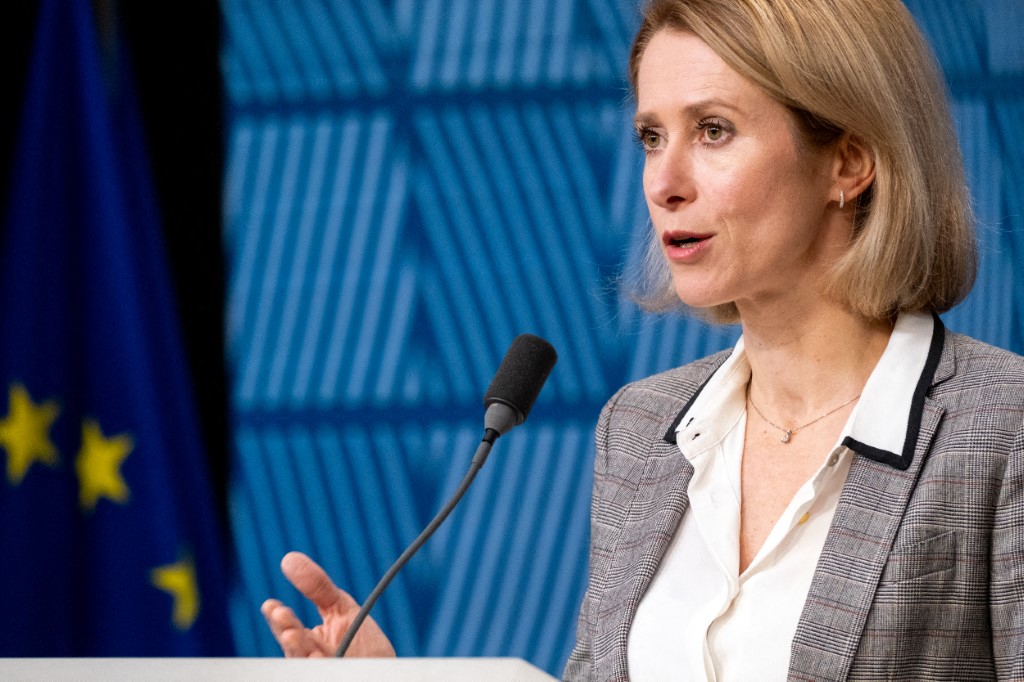
The European Union faces a pivotal moment as its leaders prepare for a critical summit focused on securing funding for Ukraine amidst the ongoing conflict with Russia. EU foreign policy chief Kaja Kallas emphasized the urgency of the situation on Monday, stating that “very important” decisions must be made during the gathering scheduled for Thursday in Brussels.
Kallas conveyed a sense of determination, asserting that despite challenges in negotiations surrounding the use of frozen Russian assets, the EU is committed to reaching a consensus. “We are not there yet, and it is increasingly difficult, but we’re doing the work and we still have some days,” she remarked, highlighting the dwindling time before the summit.
At the forefront of discussions is Belgium, which is home to a significant portion of the Russian central bank assets currently frozen in the EU. The Belgian government has been hesitant to support a proposed plan that would utilize these assets to finance a 90-billion-euro reparations loan to Ukraine, a proposal that has garnered backing from numerous EU member states. Supporters argue that accessing these funds is crucial for helping Ukraine cope with anticipated budget deficits as the conflict approaches its four-year milestone.
However, Belgium’s apprehension stems from concerns of potential legal and financial repercussions from Russia. The government has expressed the need for solid assurances that it will not bear the burden alone should complications arise. Other nations, such as Italy, have echoed similar reservations, complicating the dialogue.
The European Commission has devised a “three-tier defense” strategy aimed at protecting Belgium and Euroclear, the organization responsible for holding the frozen assets. Yet, this proposal has yet to yield a breakthrough in negotiations. Adding to the tension, Russia’s central bank has initiated legal action against Euroclear, signaling an escalation in the ongoing economic battle.
As EU leaders convene, they are acutely aware of the geopolitical landscape, particularly with the United States actively pursuing its own strategies to resolve the conflict. European officials remain vigilant about the possibility that the U.S. might leverage the frozen Russian assets in any agreement made to halt hostilities, a scenario that could significantly impact the EU’s position.
The upcoming summit represents a critical juncture for the EU as it navigates complex political dynamics while striving to provide substantial support to Ukraine during a time of considerable strife. Kallas’s insistence that leaders will not depart without a resolution underscores the high stakes involved in their discussions.