




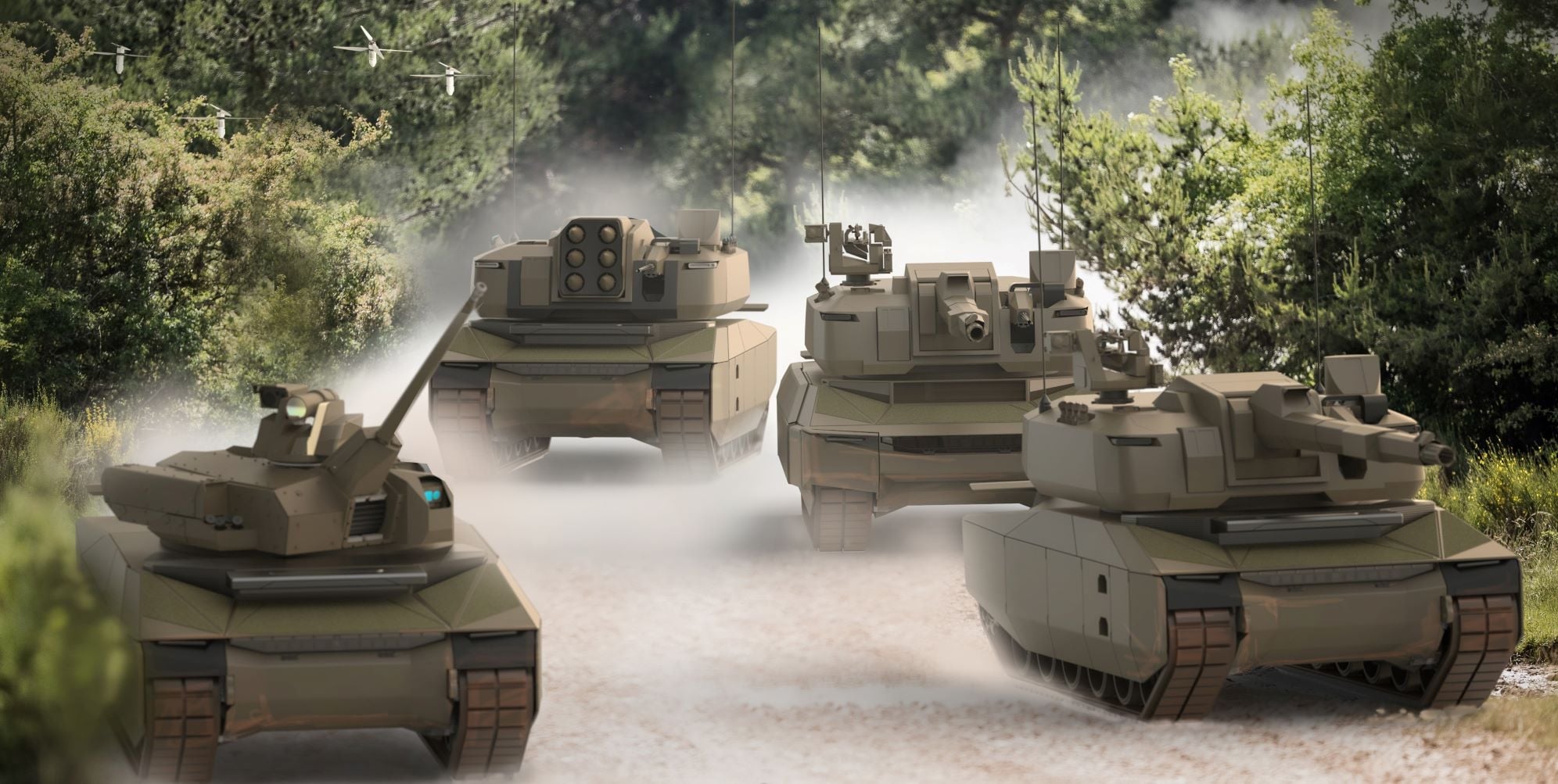
In a strategic shift within armored warfare, the Main Ground Combat System (MGCS) emerges as a pioneering initiative led by France and Germany. As global defense landscapes evolve, the capabilities of tanks are no longer solely defined by traditional metrics like armor thickness or gun caliber. Instead, effectiveness in operations is increasingly dependent on integration within a complex networked battlespace, particularly shaped by advanced sensors, precision-guided threats, and unmanned systems.
The MGCS program aims to create a next-generation armored warfare system that is set to replace the aging French Leclerc and German Leopard 2 main battle tanks. This ambitious multinational initiative is designed as a “system-of-systems,” integrating a variety of combat elements including manned armored platforms, unmanned ground vehicles, sophisticated sensors, and advanced command networks. The overarching goal is to enhance the relevance and survivability of armored forces amidst threats such as drones and anti-tank guided munitions.
The essence of MGCS is not built around a singular heavy vehicle but instead focuses on a modular ecosystem capable of operating cohesively within the battlefield. Central to this concept is the manned combat platform, which serves as both a command center and a source of firepower. This platform will be supported by unmanned vehicles tasked with reconnaissance, providing fire support, and undertaking high-risk missions, thereby minimizing crew exposure to direct threats.
An advanced sensor network lies at the heart of MGCS, incorporating radar and electro-optical systems bolstered by artificial intelligence to create a comprehensive real-time battlefield picture. These components are interconnected via a digital command architecture, ensuring seamless data sharing and cooperative functionality between manned and unmanned assets.
Key priorities for the MGCS initiative include enhancing survivability through dispersion of forces, integrating networked warfare capabilities with other military assets, improving lethality with next-generation weapons systems, and enabling greater automation to reduce crew exposure during operations. Moreover, its modular design allows for adaptability to emerging threats, ensuring that the system can evolve alongside the rapidly changing battle environment.
However, the program faces considerable challenges. The complexity of industrial collaboration between France and Germany poses significant hurdles, as does the risk associated with integrating advanced technologies like autonomy and AI. Concerns around escalating costs and uncertain timelines further complicate the development process, reflecting the broad scope required to align diverse national defense strategies.
As MGCS continues on its developmental path, it symbolizes a transformative evolution in the approach to armored combat. If successful, this program could redefine European land forces by transitioning from reliance on a singular dominant tank to orchestrating interconnected combat networks comprising both manned and unmanned systems. The future of armored warfare is rapidly becoming less about individual vehicle capabilities and more about a cohesive, network-driven combat environment.


