




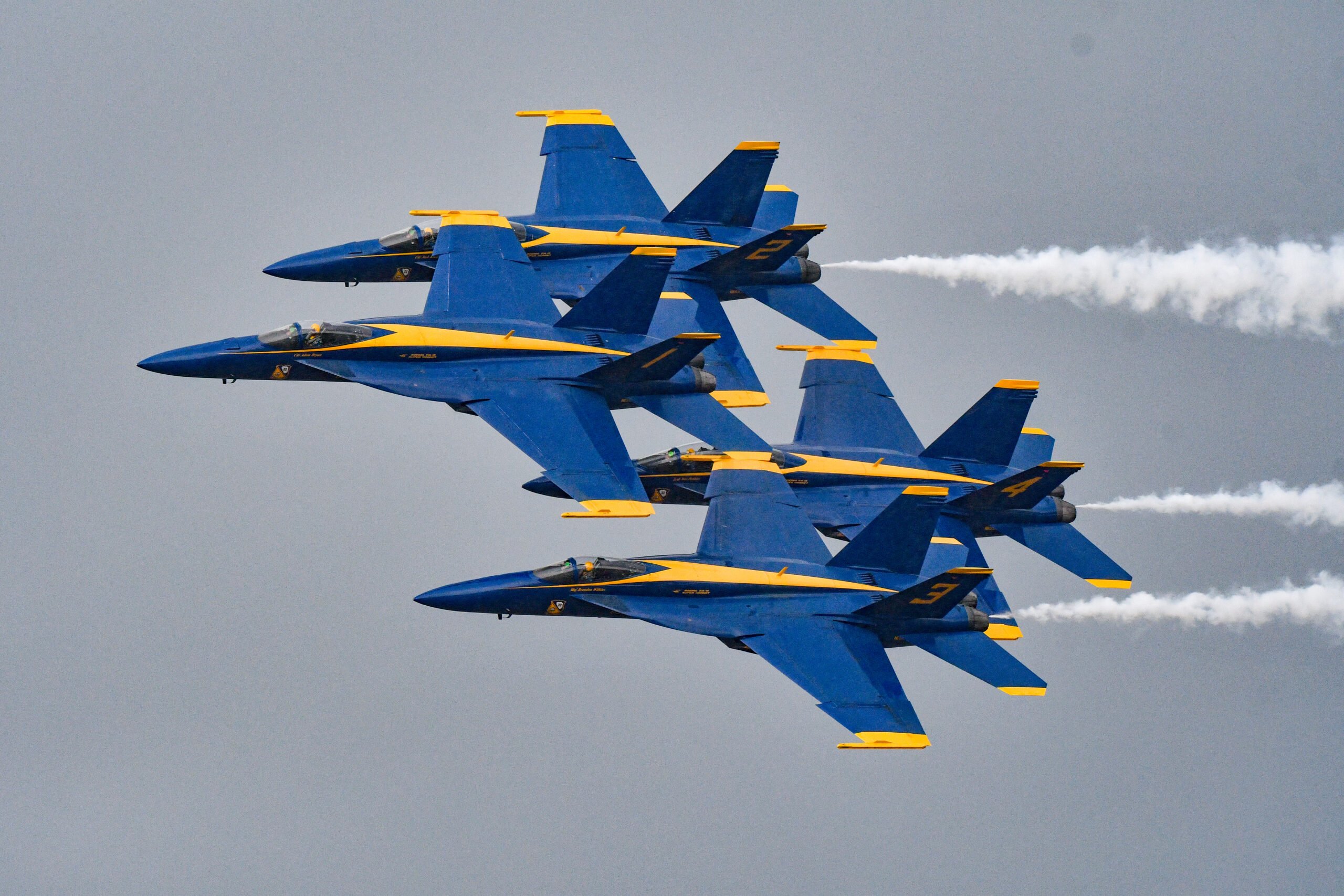
On the bustling deck of an aircraft carrier, where every second counts and space is at a premium, the F/A-18E/F Super Hornet takes to the skies, embarking on missions that can reach thousands of miles away from its base. Designed to replace outdated fighters and enhance the capabilities of naval aviation, the Super Hornet stands out for its speed, versatility, and formidable firepower.
The Super Hornet’s origin dates back to the late 1980s and early 1990s when the US Navy recognized the urgent need for a more capable carrier-based fighter to succeed the aging F-14 Tomcat and augment the earlier Hornets. The resulting aircraft features a larger frame, more powerful engines, increased internal fuel capacity, and advanced avionics tailored for contemporary carrier operations. Constructed by Boeing for naval use, the Super Hornet excels in a variety of roles, from dogfights to precision strikes and electronic countermeasures.
The Super Hornet family comprises different variants, each designed for specific operational needs. The F/A-18E is a single-seat aircraft focused on strike and air superiority, while the F/A-18F offers a two-seat configuration, allowing it to conduct complex missions with the assistance of an additional weapons systems officer. The introduction of Block II and Block III upgrades has kept the aircraft competitive through the modernization of its avionics, sensor systems, and overall capabilities.
An important variant within the Super Hornet lineup is the EA-18G Growler, a specialized electronic warfare jet designed to suppress enemy air defenses, highlighting the adaptability of the platform.
Key features of the Super Hornet underline its multi-role design, allowing it to perform a diverse array of missions such as air superiority, precise ground strikes, aerial refueling, and combating enemy air defenses. The aircraft’s power is generated by twin General Electric F414-GE-400 engines, each producing approximately 22,000 pounds of thrust. This impressive thrust delivers outstanding speed, strength, and operational endurance.
The Super Hornet is equipped with cutting-edge avionics, digital displays, and advanced radar systems like the AN/APG-79 AESA, which provide it with superior situational awareness and targeting capabilities compared to earlier fighter models. Its armament includes an internal 20mm cannon and up to 11 hardpoints for mounting a variety of air-to-air and air-to-surface weapons, enabling engagement with threats across multiple domains.
Initially deployed in 2002 aboard the USS Abraham Lincoln, the Super Hornet has since participated in numerous operations, including missions in Iraq and ongoing deployments with US carrier strike groups. While the US Navy remains its primary user, allied nations, including Australia and Kuwait, have also integrated the Super Hornet into their fleets, enhancing global interoperability.
Strengths of the Super Hornet include its exceptional versatility as a multi-role aircraft, a design optimized for carrier operations, and modern sensors that ensure relevance against diverse threats. However, it is not without limitations; the Super Hornet lacks stealth capabilities, although it does feature low-observable enhancements. As a fourth-generation fighter, it increasingly operates alongside more advanced fifth-generation aircraft like the F-35.
Looking ahead, the Super Hornet’s future is promising, with continued upgrades through Block III enhancements. These improvements focus on advanced avionics, electronic warfare modernization, better flight controls, and enhanced warning systems, ensuring the Super Hornet remains a valuable asset to naval aviation well into the next decade amidst evolving threats and the introduction of new platforms worldwide.


