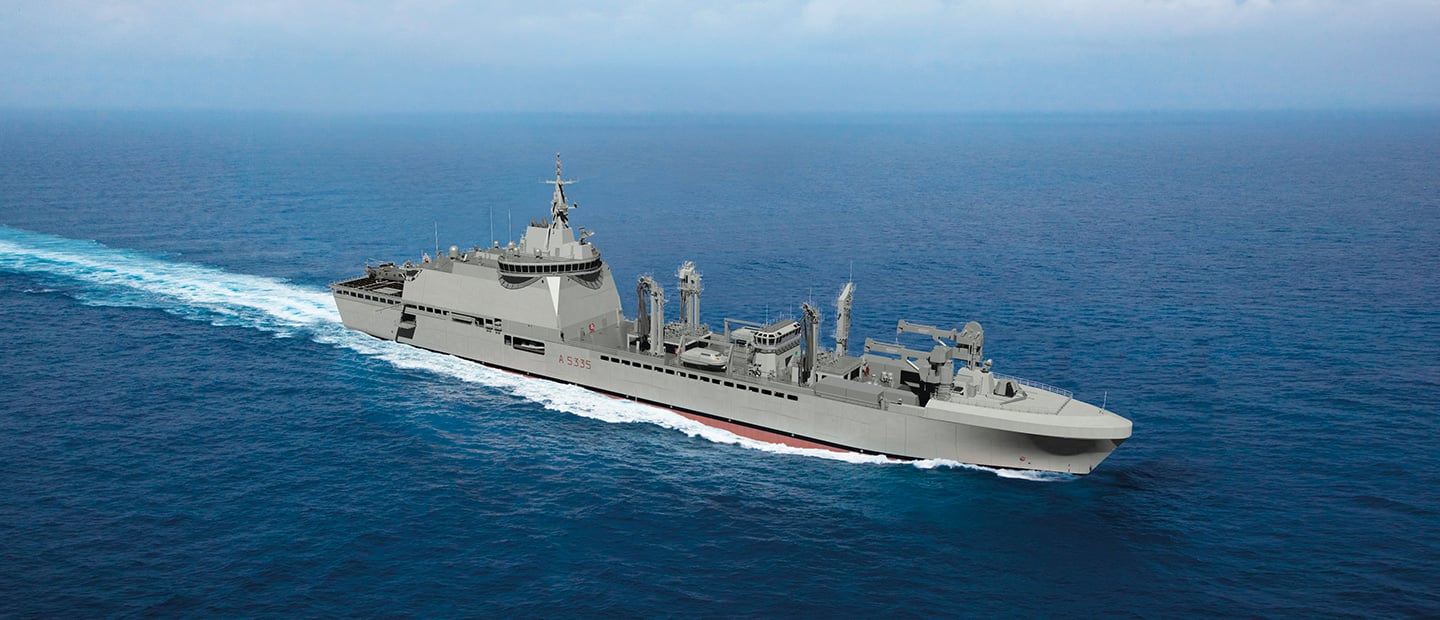
Fincantieri is set to bolster the capabilities of the Italian Navy by providing a state-of-the-art supply vessel designed for enhanced operational versatility, particularly in underwater missions. This initiative reflects a significant stride in the ongoing modernization efforts of Italy’s naval forces.
The vessel is being developed through Fincantieri’s Underwater Technology Hub and will undergo a comprehensive refitting process at the company’s shipyard in Palermo. This overhaul aims to transform the vessel into a cutting-edge platform that seamlessly integrates with Italy’s national naval capabilities.
One of the vessel’s standout features is its modular configuration, which allows for quick adaptations to various mission requirements, ranging from logistical support to specialized operations. This flexibility is expected to significantly enhance the operational readiness and effectiveness of the Italian Navy.
Pierroberto Folgiero, the CEO of Fincantieri, emphasized that this project underscores the company’s role as a technological enabler in the defense sector. He asserted that the initiative will combine operational speed, innovation, and a forward-thinking industrial approach, which ultimately supports Italy’s strategic maritime objectives.
This project aligns with a larger modernization drive within the Italian Navy that has been ongoing over the past year. A notable advancement is the commissioning of the amphibious transport dock Trieste in 2024, which improves the Navy’s capacity for rapid troop deployment and humanitarian missions. Furthermore, the Navy is enhancing its submarine fleet through upgrades to the Sauro-class submarines while prepping for the introduction of the new Todaro-class (Type 212A) submarines, which are designed to offer enhanced capabilities, such as improved sonar systems and extended underwater endurance.
In addition, Fincantieri continues to play a vital role in modernizing the Navy’s surface vessels. Recent updates to frigates and corvettes, particularly the FREMM multipurpose frigates, involve the incorporation of advanced radar, missile, and electronic warfare systems to ensure sustained interoperability with NATO allies.
This concerted effort to advance naval capabilities is crucial for maintaining Italy’s defense readiness and supporting international security commitments in a rapidly evolving maritime environment.