




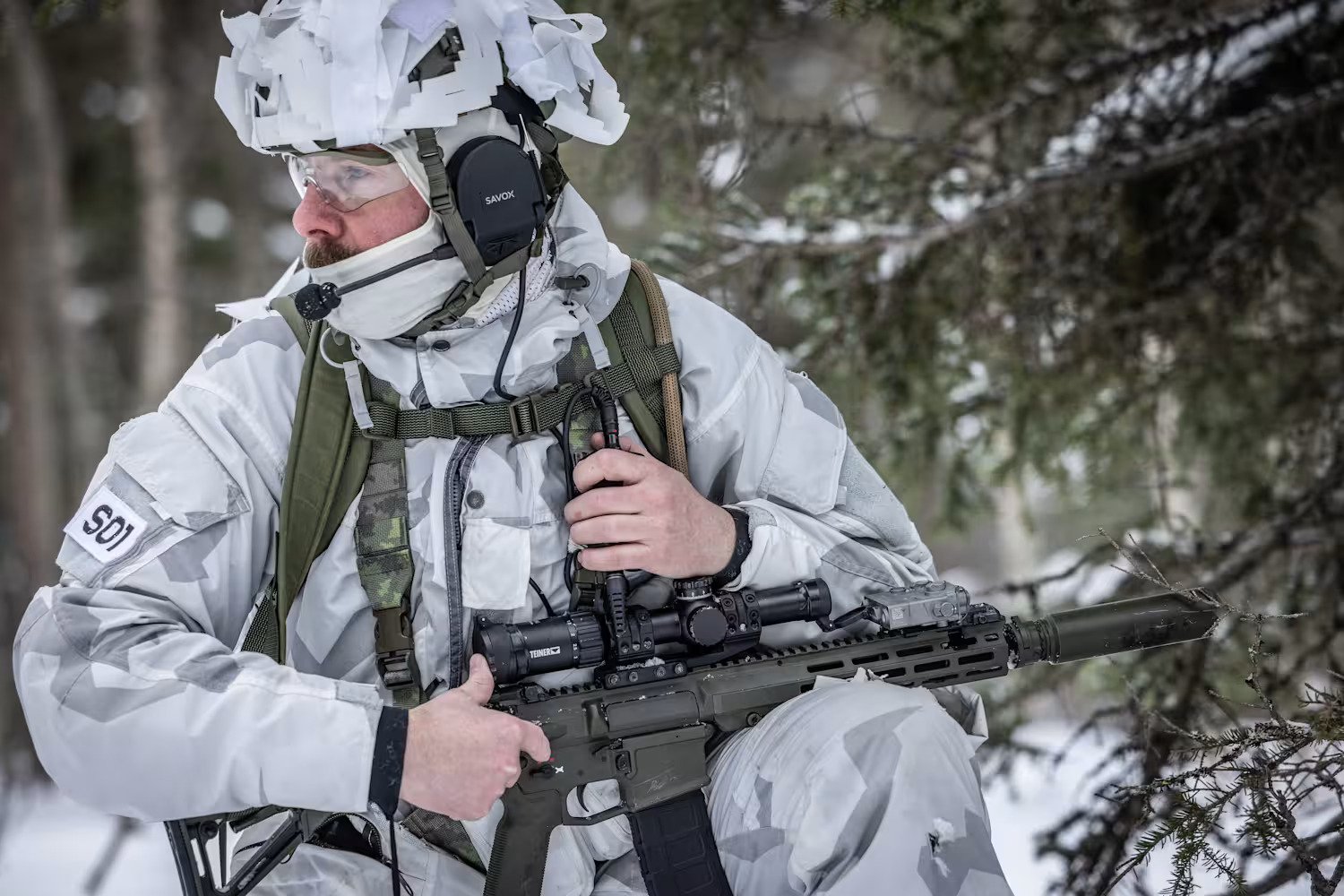
The Finnish Defence Forces have announced a significant transition to NATO-standard calibers for their future small arms, marking an end to reliance on Soviet-era ammunition. This strategic shift aims to enhance operational effectiveness and ensure interoperability with NATO forces, while also improving security within supply chains.
The new standard for assault rifles will adopt the 5.56×45mm caliber, while specific forces will utilize the 7.62×51mm and 12.7×99mm rounds. The established 9×19mm caliber will remain in use for pistols. The 7.62×51mm is primarily used in battle and sniper rifles, whereas the 12.7×99mm serves as NATO’s standard heavy machine gun ammunition, specifically designed for the M2 Browning machine gun.
This transition is part of a broader modernization initiative focused on small arms, which includes the procurement of new assault and sniper rifles, as well as essential auxiliary equipment. Upgrades will encompass night-vision devices, laser illuminators, thermal imagers, and weapon- and helmet-mounted lighting.
While transitioning, existing ammunition calibers—namely 7.62×39mm, 7.62×53mmR, and 12.7×108mm—will remain in service, although future procurements of these rounds are not planned.
Brigadier General Sami-Antti Takamaa, Chief of Operations at Army Command, noted that a multitude of factors influenced the selection of these new calibers. Key considerations included capability requirements, soldier load, interoperability with allied forces, security of supply, ammunition availability, and national production capacity.
One of the key advantages of adopting these new calibers is enhanced lethality and a reduced soldier load. The higher muzzle velocity and flatter trajectory associated with the new ammunition will significantly improve hit probability, allowing soldiers to carry fewer rounds during operations. This shift is projected to decrease the overall load by approximately 3.5 kilograms (7.71 pounds), reducing the carried weight from 8.9 kilograms (19.62 pounds) to about 5.4 kilograms (12 pounds).
In addition to lower recoil and improved accuracy, the transition is expected to lower procurement costs, driven by increased availability and reduced raw-material requirements. This approach will streamline marksmanship training, as soldiers will have easier access to training ammunition.
The ongoing conflict in Ukraine has highlighted the high demand for small arm cartridges, necessitating sufficient stockpiles readily available during wartime. “It is crucial,” Takamaa stated, “that both nationally and within the Nordic region, we maintain production capacity for the small arms calibers we employ. Utilizing the same calibers as our allies ensures compatibility in both peacetime training exercises and during exceptional circumstances.”


