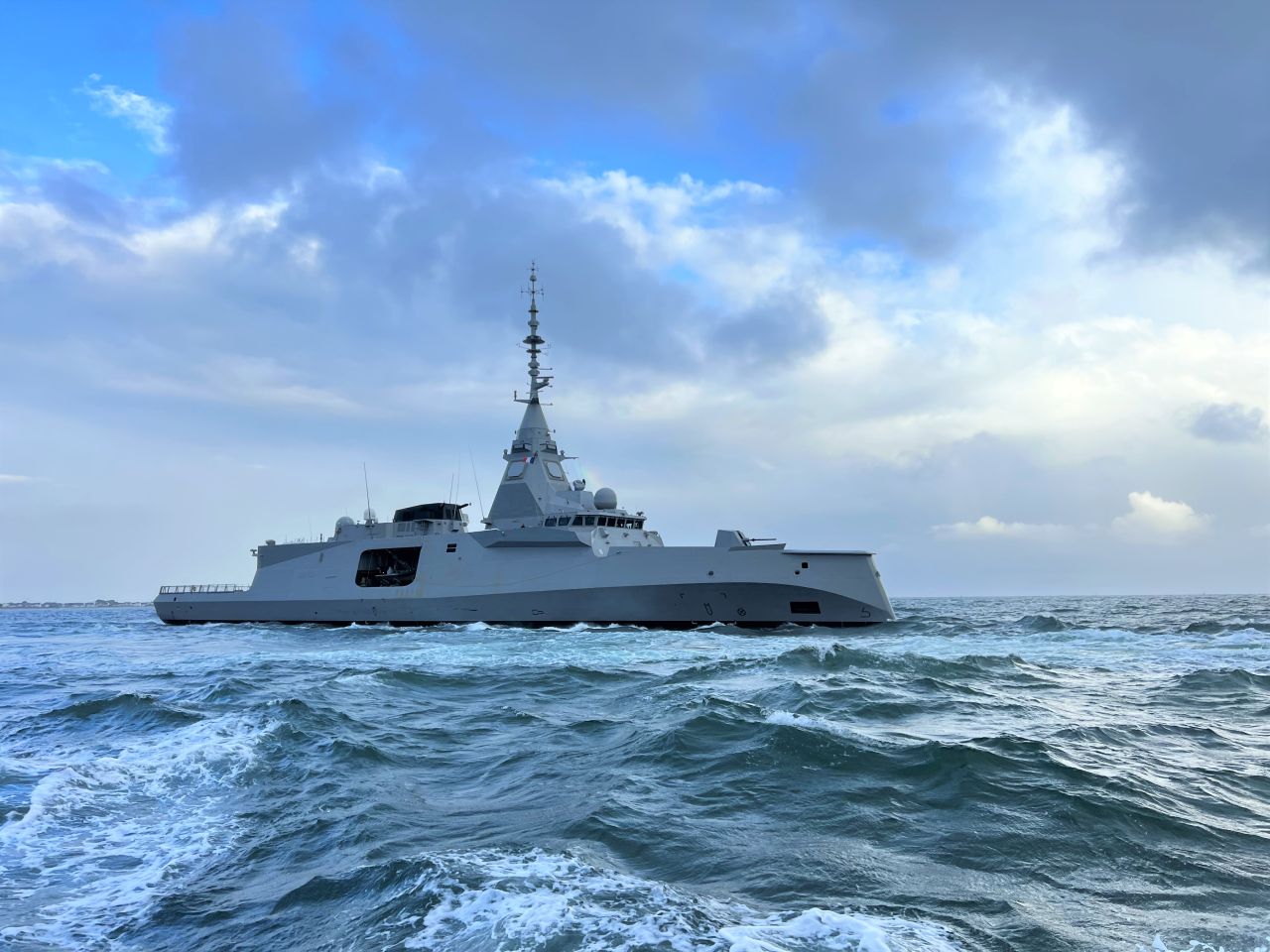
On a bright morning at the Naval Group shipyard in Lorient, France marked a significant advancement in its naval capabilities as the first FDI (Frégate de défense et d’intervention) frigate launched into the water. This vessel represents a pivotal shift into next-generation naval warfare, showcasing cutting-edge design and technology.
The FDI frigate is crafted to excel in detection, engagement, and real-time operational adaptability. It embodies a sleek, digital approach to modern surface combat, designed not only to address contemporary threats but to anticipate future challenges.
The origins of the FDI program date back to the mid-2010s, initiated as France sought to modernize its aging surface fleet. The goal was to replace outdated frigates with a new design emphasizing digital architecture and multi-domain warfare capabilities. The contract for this ambitious project was awarded to Naval Group, supported by leading partners such as Thales and MBDA.
Construction of the first ship, named Amiral Ronarc’h, commenced around 2020, with the keel officially laid in December 2021. Following an extensive series of sea trials, the ship is expected to be delivered to the French Navy in October 2025, signifying the formal integration of the FDI fleet into operational service. This program aligns with France’s broader naval modernization strategy outlined under the 2019 to 2025 military planning law, catering not only to the French Navy but also to international clients, including the Hellenic Navy of Greece.
With a displacement of approximately 4,500 tons, the FDI frigate measures 122 meters in length and has a beam of 18 meters. Designed for high-speed maneuvers, it can reach up to 27 knots and sustain operations for around 45 days with a crew of 125. Its advanced capabilities include air defense using Aster 15 and 30 missiles, anti-surface operations with Exocet MM40 Block 3 missiles, and robust anti-submarine warfare capabilities utilizing MU90 torpedoes.
As part of its export potential, there are plans for variants tailored for several foreign navies such as Saudi Arabia, Sweden, Indonesia, Denmark, and Portugal. These models would offer enhancements like increased vertical launching system (VLS) capacities and specialized defensive suites compatible with their operational requirements.
At the heart of the FDI frigate’s capabilities lies its digital architecture, which facilitates continuous software upgrades and mission capacity expansions without substantial physical modifications. This design includes virtualized data centers and integrated data flows that enhance sensor fusion and threat response, establishing it as the first French frigate built with cyber-resilience in mind.
The ship’s sensor suite features the Sea Fire AESA radar, which provides comprehensive tracking across all frequency bands. Its sonar system includes hull-mounted and variable-depth sonars, crucial for anti-submarine warfare. Additionally, the Panoramic Sensor and Intelligence Module (PSIM) enhances situational awareness by integrating various forms of radar, electronic support, and communications capabilities.
In terms of armament, the FDI is equipped with advanced weapon systems, allowing for effective anti-air, anti-surface, and anti-submarine operations. It features a 76mm main gun, accommodates medium helicopters, and is capable of deploying unmanned systems and special forces.
Despite its strengths, the FDI has certain limitations, such as a comparatively smaller VLS capacity of 16 cells, which is less than some larger frigates offer. This might restrict its overall missile payload without future upgrades. Additionally, its weight class may affect endurance capabilities and necessitate expansion systems to enhance performance.
As the first unit, Amiral Ronarc’h, integrates into the French Navy by 2025, it aims to replace older La Fayette-class frigates, enhancing operational capabilities in various environments, particularly high-intensity and littoral operations. Greece’s interest in receiving similar units reflects the frigate’s adaptability to the unique dynamics of the Aegean Sea.
The future prospects of the FDI program appear optimistic, with additional hulls expected to enter service through the late 2020s and into the 2030s. Naval Group is actively investigating next-generation launch systems to increase missile capacity significantly, offering an exciting avenue for future upgrades. As naval environments evolve with emerging threats, the FDI frigate’s digital backbone and adaptive capabilities position it as a formidable platform for the future of maritime defense, ensuring relevance in the decades to come.