




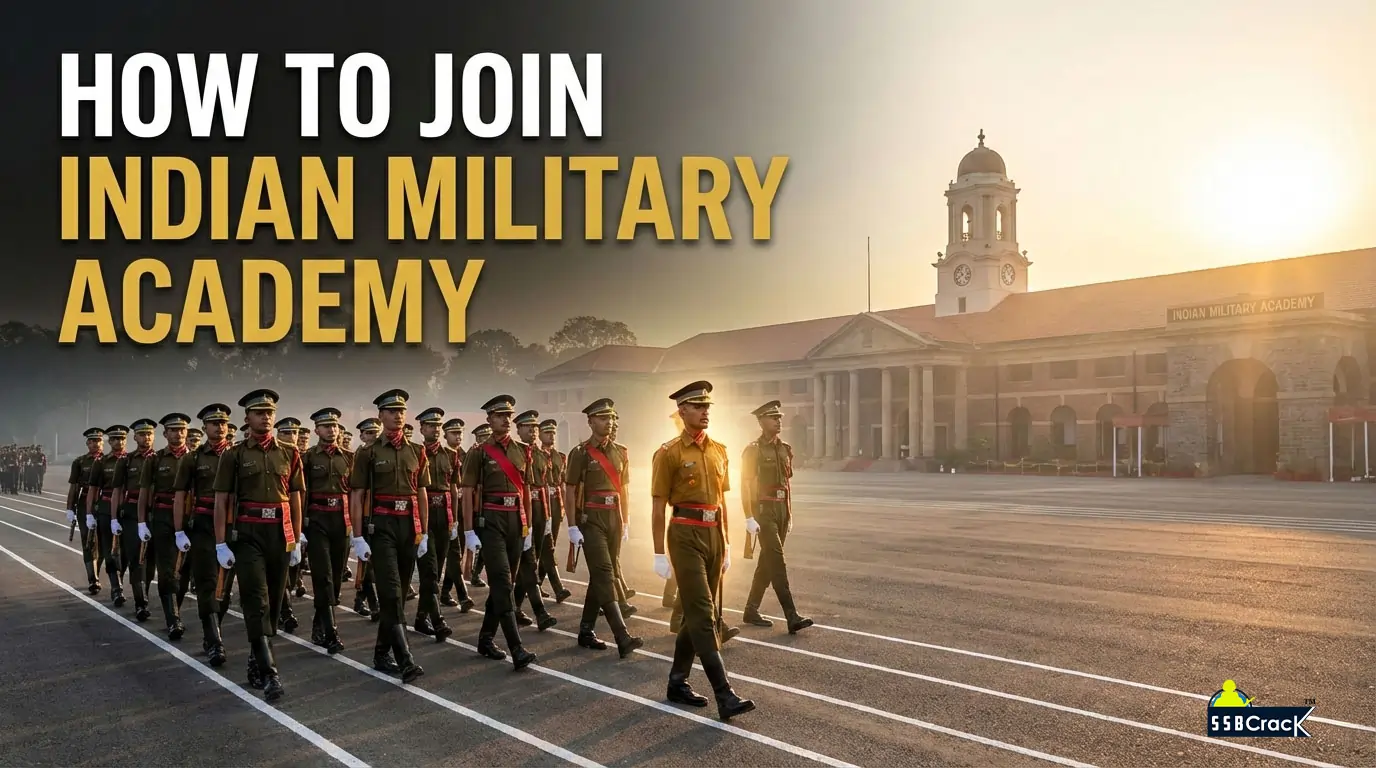
Key Ways to Join the Indian Military Academy (IMA) Dehradun
- Primary Routes: The most common paths include the National Defence Academy (NDA) for post-12th candidates, Combined Defence Services (CDS) for graduates, 10+2 Technical Entry Scheme (TES) for science stream students, Technical Graduate Course (TGC) for engineers, and NCC Special Entry for those with NCC certification; research suggests these cover over 90% of entries, though some like University Entry Scheme (UES) have been discontinued.
- Eligibility Essentials: Age typically ranges from 16.5-19.5 years for school-leavers to 20-27 for technical graduates; educational requirements start from 12th pass (with PCM for technical paths) to bachelor’s degrees; only unmarried males are eligible for most schemes, with strict physical and medical standards applying across all.
- Selection Process: Involves written exams (via UPSC for NDA/CDS), Services Selection Board (SSB) interviews assessing leadership and psychology, and medical exams; evidence leans toward preparation in physical fitness and current affairs being key to success.
- Training Overview: Generally 1 year at IMA focusing on leadership, tactics, and physical conditioning; it seems likely that rigorous discipline builds camaraderie among diverse cadets.
- Challenges and Considerations: Competition is high with thousands applying annually; the process acknowledges the need for mental resilience, as rejection rates at SSB can exceed 90% in debated estimates from coaching sources.
Overview of IMA Dehradun
The Indian Military Academy (IMA) in Dehradun, established in 1932, trains gentlemen cadets for permanent commission in the Indian Army. Located in Uttarakhand’s Himalayan foothills, it emphasizes valor, wisdom, and patriotism through comprehensive officer development. Aspiring officers from varied backgrounds unite here, fostering esprit de corps.
Basic Eligibility Criteria
Candidates must be Indian citizens or meet specific nationality clauses (e.g., Nepali or Bhutanese subjects). Physical standards include a minimum height of 157 cm, proportionate weight, and fitness for activities like running and push-ups. Medical fitness is non-negotiable, covering vision, hearing, and absence of chronic conditions.
Step-by-Step Joining Process
Start by monitoring notifications on joinindianarmy.nic.in or UPSC sites, released biannually. Apply online, prepare for exams/SSB, and undergo medicals. Success leads to joining instructions for IMA.
Preparation Tips
Focus on balanced study: academics for exams, fitness for physical tests, and personality development for SSB. Coaching can help, but self-discipline is crucial.
A Comprehensive Guide to Joining the Indian Military Academy (IMA) Dehradun: Pathways, Preparation, and Cadet Life
The Indian Military Academy (IMA) in Dehradun stands as a cornerstone of India’s defense training infrastructure, molding young aspirants into commissioned officers ready to lead in the Indian Army. Founded in 1932 amid the scenic Himalayan foothills of Uttarakhand, IMA spans a vast campus divided by National Highway 72 into northern and southern sections. Its motto, “Veerta Aur Vivek” (Valor and Wisdom), encapsulates the dual focus on physical prowess and intellectual acumen. Over the decades, IMA has evolved from its initial role in training a small cadre of officers to a premier institution that commissions hundreds annually through rigorous programs. As of 2026, with India’s defense sector emphasizing modernization and inclusivity, joining IMA remains a prestigious yet demanding pursuit for patriotic youth. This guide explores the multifaceted process of entry, drawing from official notifications and expert insights to provide a thorough roadmap.
Understanding IMA’s Role and Legacy
IMA was established to address the need for Indian officers during British rule, initially commissioning 40 gentlemen cadets. Post-independence, it expanded, briefly integrating with the National Defence Academy (NDA) before reverting to its standalone status in 1960. Today, it trains cadets in four battalions named after legendary figures: Cariappa, Thimayya, Manekshaw, and Bhagat. These house companies and platoons where cadets from diverse socio-economic backgrounds learn to embody army values like discipline, integrity, and secularism. The academy’s infrastructure includes the iconic Chetwode Building (named after Field Marshal Philip Chetwode, who emphasized the “safety, honor, and welfare of your country” in his famous creed), Khetarpal Auditorium, and Drona Dwar. Training here is not just about warfare but holistic development, preparing officers for leadership in peacetime and conflict. Notably, IMA has produced numerous gallantry awardees, underscoring its impact on national security.
Entry Schemes: Diverse Pathways to Commissioning
Joining IMA involves selecting an appropriate entry scheme based on age, education, and background. Below is a detailed breakdown of active schemes as per 2026 notifications. Some entries like the University Entry Scheme (UES) and Army Education Corps (AEC) Technical Graduate Course have been discontinued, shifting focus to streamlined paths.
| Entry Scheme | Age Limit | Educational Qualification | Marital Status/Gender | Key Features | Training Path |
|---|---|---|---|---|---|
| NDA Entry | 16.5–19.5 years | 12th pass (PCM for Navy/Air Force; any stream for Army) | Unmarried male | Joint services entry; broad foundation | 3 years at NDA Khadakwasla + 1 year at IMA |
| CDS Entry (for IMA) | 19–24 years | Graduation in any discipline | Unmarried male | Graduate-level exam; permanent commission | Direct 1-year training at IMA |
| 10+2 TES | 16.5–19.5 years | 12th with 60% in PCM; JEE Mains appeared | Unmarried male | Technical focus; no written exam post-shortlisting | 1 year pre-commission at CME/OTE + 3 years technical training + 1 year at IMA |
| TGC | 20–27 years | BE/B.Tech in notified streams (e.g., Mechanical, Civil) | Unmarried male | For engineers; shortlisting based on academics | 1-year training at IMA |
| NCC Special Entry | 19–25 years | Graduation; NCC ‘C’ Certificate (Army Wing) | Unmarried male | No written exam; direct SSB | 1-year training at IMA |
| JAG Entry | 21–27 years | LLB with 55% marks; CLAT PG appeared | Unmarried male | For law graduates; SSC in Judge Advocate General | 49 weeks at OTA Chennai (not IMA, but related for context) |
These schemes are notified biannually via the official Indian Army website or UPSC portals. For instance, CDS-I 2026 applications closed on December 30, 2025, with exams in April 2026, while TES-52 targeted PCM students with JEE requirements. Vacancies vary; CDS 2026 allocated 100 for IMA. Nationality extends to Indian citizens, Nepali/Bhutanese subjects, or certain refugees, but all must be unmarried males for IMA-specific paths.
Eligibility Criteria in Depth
Eligibility is multifaceted, ensuring only the fittest and most qualified proceed:
- Age and Nationality: Precise birth date verification via matric certificates; no changes allowed post-submission. For TES, born between July 2, 2005, and July 1, 2008.
- Educational Standards: Varies from 12th aggregate (60% for TES) to graduation (no minimum for CDS but consistent performance advised). Technical streams require specific disciplines.
- Physical and Medical Requirements: Height 157.5 cm (relaxable for certain regions); vision 6/6 (better eye) correctable; fitness tests include 1-mile run in 5:30 minutes, 50 push-ups, and swimming. Medicals screen for color perception (CP-II), hearing, and absence of deformities. Tattoos are restricted to non-offensive inner forearms.
- Other: No criminal record; financial solvency for initial expenses (e.g., uniforms).
The Selection Process: From Application to Merit List
The journey begins with online applications on joinindianarmy.nic.in or upsc.gov.in.
- Written Examination: For NDA/CDS, conducted by UPSC. NDA includes Math and General Ability; CDS covers English, GK, and Math. TES and NCC skip this if shortlisted via academics/NCC cert.
- SSB Interview: A five-day ordeal at centers like Allahabad or Bangalore. Day 1: Screening (OIR tests, PPDT). Days 2-4: Psychology (TAT, WAT, SRT), GTO tasks (group discussions, obstacle courses), and personal interviews. It assesses Officer Like Qualities (OLQs) like initiative and social adaptability.
- Medical Examination: Conducted by military boards; appeals possible within 42 days.
- Merit List and Joining: Final ranking considers scores; successful candidates receive joining letters with instructions like carrying ID proofs and certificates.
Rejection is common, with SSB pass rates around 10-15%, highlighting the need for balanced preparation.
Training at IMA: Forging Leaders
Upon arrival, cadets undergo 1-1.5 years of training divided into terms:
- Curriculum: Military tactics, strategy, history; academics in humanities/sciences; technical skills like map reading.
- Physical Training: Daily PT from 5:30 AM, including runs, obstacles, sports (boxing, horse riding).
- Leadership Focus: Command roles, war games, ethics sessions.
- Duration Variations: NDA entrants get 1 year; CDS/TGC 1 year; TES includes prior technical phases.
Cadets receive a stipend (Rs 56,100/month) and graduate as Lieutenants with CTC around Rs 17-18 lakh annually.
Daily Life as a Cadet: Discipline and Camaraderie
Life at IMA is regimented yet enriching:
- Routine: Wake-up at 5:30 AM for PT; classes till lunch; afternoon drills; evening sports; study till 10:00 PM lights out.
- Facilities: Shared dorms, mess halls with balanced meals, gyms, libraries, and clubs for debates or adventure sports like paragliding.
- Culture: Strict discipline—no alcohol/tobacco; emphasis on unity, with events promoting India’s diversity. Penalties for lapses include extra duties.
- Challenges: Homesickness, physical strain, but rewards include lifelong bonds and personal growth.
Preparation Strategies and Common Pitfalls
To succeed:
- Academic Prep: Use resources like NCERT for exams; stay updated on current affairs.
- Fitness: Build endurance gradually; practice SSB tasks via mock sessions.
- Mindset: Develop OLQs through sports and leadership roles.
- Pitfalls: Underestimating SSB psychology; ignoring medical prep; applying without verifying eligibility.
Coaching institutes like SSBCrack offer guidance, but self-motivation is key. With India’s army modernizing, opportunities abound for dedicated aspirants.
In summary, joining IMA demands perseverance but offers a fulfilling career in service to the nation. Monitor official sites for updates, as policies evolve.


