




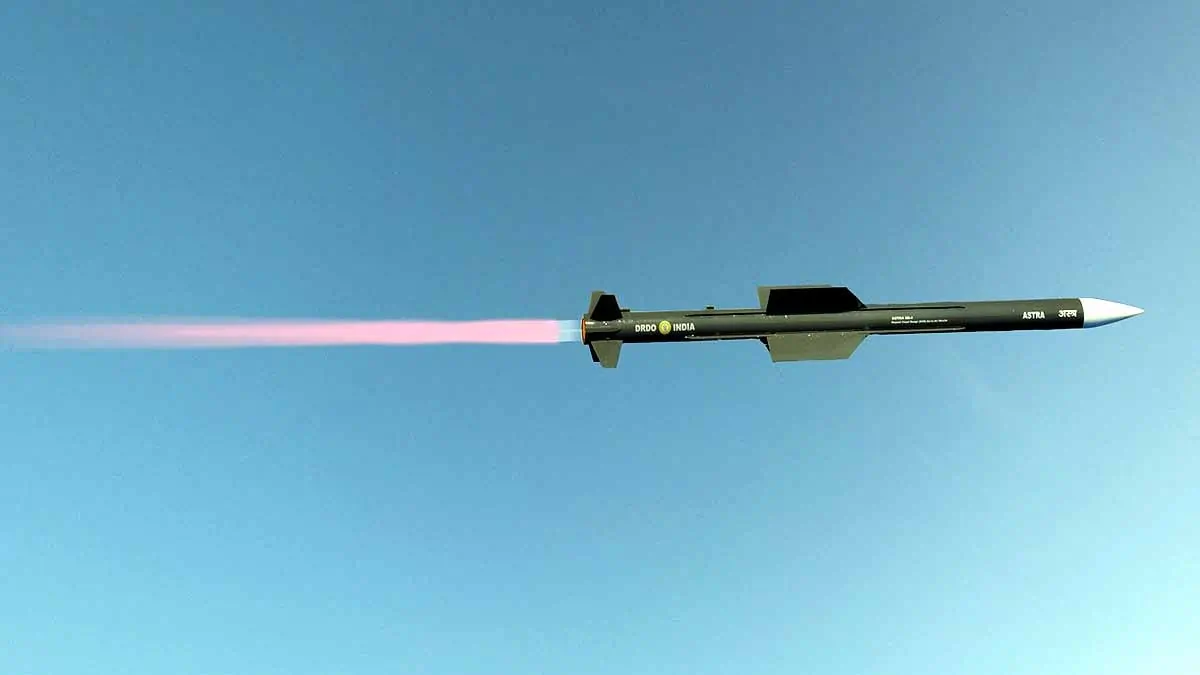
An Indian government official announced on Tuesday that India will supply the BrahMos supersonic cruise missile system and the indigenous Astra beyond-visual-range air-to-air missile (BVRAAM) to Indonesia, marking a significant expansion of defense cooperation between the two nations.
This announcement coincided with Prime Minister Narendra Modi’s three-day visit to Indonesia, during which he engaged in bilateral talks with President Prabowo Subianto in Jakarta. The visit aims to deepen the Comprehensive Strategic Partnership established in 2018, focusing on advancing collaboration in various sectors, including defense, critical minerals, maritime infrastructure, and electoral technology.
Indonesia entered into an agreement with India in March 2026 to procure the BrahMos missile system as part of its efforts to modernize its armed forces and enhance maritime defense capabilities. The recent development involves the supply of additional BrahMos missile batteries, further augmenting Indonesia’s inventory of this advanced supersonic weapon.
Developed by BrahMos Aerospace—a joint venture between India’s Defence Research and Development Organisation (DRDO) and Russia’s NPO Mashinostroyeniya—the BrahMos is one of the fastest operational supersonic cruise missiles globally. It can achieve speeds ranging from Mach 2.8 to 3.0 and boasts precision guidance, enabling it to engage both sea and land targets with high accuracy. Its versatile configurations, including land-based coastal defense, ship-launched, and air-launched variants, are already in service with Indian forces, while export versions typically have a range of approximately 290 kilometers. Indonesia’s interest in the BrahMos aligns with its objective of enhancing deterrence along key maritime routes in the Indo-Pacific.
In a related development, Indonesia has decided to import the Astra BVRAAM, following the missile’s successful performance during recent Indian military operations. The Astra, developed indigenously by the DRDO and manufactured by Bharat Dynamics Limited (BDL), is India’s first active radar-homing BVRAAM. With a strike range exceeding 100 kilometers—some enhanced variants demonstrating up to 160 kilometers in recent tests—it possesses all-weather capability and can engage targets day and night. The missile has undergone extensive trials and integrates seamlessly with Indian Air Force platforms, including the Su-30MKI and Tejas, making it a suitable addition to the Indonesian Air Force’s Su-30 fleet.
The supply of these advanced missile systems is set to significantly bolster Indonesia’s air and maritime defense posture, particularly in safeguarding the sea lanes of communication around the strategically critical Strait of Malacca. For India, this development represents sustained momentum within its defense export initiative under the Aatmanirbhar Bharat program. The recent supply of BrahMos to the Philippines and a confirmed deal with Vietnam further demonstrate India’s expanding influence in the global defense market.
These transactions reflect India’s emergence as a credible supplier of sophisticated, combat-proven defense equipment to allied nations, particularly in the ASEAN region. They also indicate a growing strategic convergence between India and Indonesia in the Indo-Pacific, as both countries prioritize regional stability, secure maritime trade routes, and adherence to a rules-based international order.
During Prime Minister Modi’s visit, discussions also encompassed cooperation across several complimentary domains, which include:
– Indian investments in Indonesia’s manufacturing sectors such as steel, nickel, and rare earth permanent magnets to strengthen resilient critical minerals supply chains.
– The joint development of the strategically located Sabang port in Aceh, which overlooks the Strait of Malacca and is in proximity to India’s initiatives on Great Nicobar infrastructure projects.
– Collaboration on Indonesia-specific electronic voting machines, leveraging India’s expertise in electoral technology.
These initiatives complement the defense sector developments and highlight the multifaceted nature of the bilateral relationship. Specific details regarding quantities, contract values, delivery schedules, and technology transfer arrangements have not been disclosed in official communications and are expected to be finalized through subsequent government-to-government and commercial engagements.
India has consistently shown a willingness to share advanced defense technologies with trusted partners. The confirmation of the BrahMos expansion and Astra supply to Indonesia strengthens this commitment while aiding in the modernization and self-reliance ambitions of both nations’ armed forces. These developments are being closely monitored across the region as key indicators of the deepening strategic ties between India and Indonesia, as well as India’s growing footprint in the global defense sector.


