




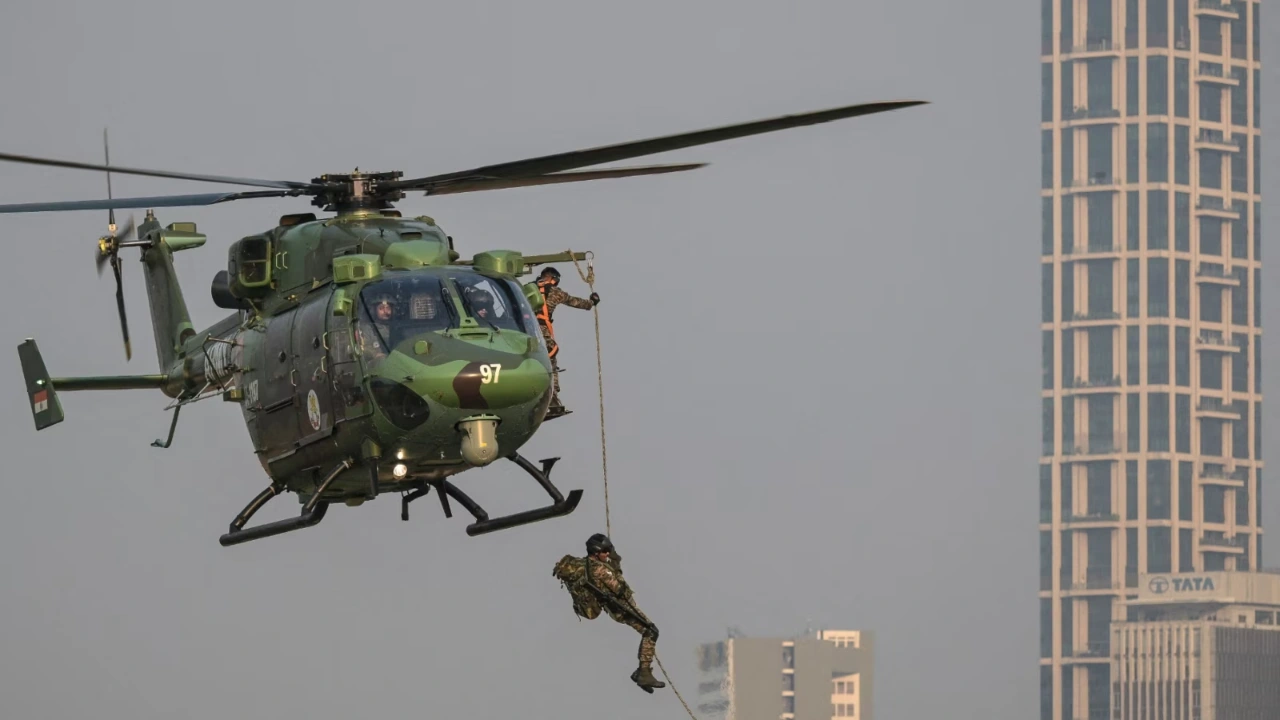
The Indian Air Force (IAF) is intensifying its efforts to bolster counter-drone capabilities by planning to equip its attack helicopters with advanced technologies. This strategic enhancement will include specialized micro-missiles, artificial intelligence (AI)-powered target identification systems, and cutting-edge electronic warfare equipment. The initiative is part of the IAF’s wider commitment to strengthen its air defense architecture as the nature of modern warfare evolves, particularly in the face of increasing drone threats on the battlefield.
Details of this proposal were shared at the IAF-SIDM Seminar SANKALP 2026, held in New Delhi. During the event, the Air Force unveiled its latest Problem Statements Handbook, aimed at engaging the indigenous industry to create advanced technological solutions tailored to future operational needs.
The envisioned systems involve helicopters that will carry micro-missiles expressly designed to target slow-moving, low-flying unmanned aerial systems (UAS), including loitering munitions and suicide drones. These precision-guided weapons are expected to complement existing forward-mounted 20 mm cannons, giving helicopters multiple engagement options against aerial threats.
A standout feature of this initiative is the incorporation of AI-driven target identification systems, which will enable helicopters to quickly detect, classify, and track hostile drones while minimizing the workload for operators. Additionally, lightweight airborne radio-frequency (RF) and GPS jammers are planned to disrupt enemy drone communications and navigation, enhancing the helicopters’ effectiveness during engagements.
The IAF has also proposed developing proximity-fused and time-delay fragmentation warheads for the micro-missiles. These are designed to detonate near the target rather than requiring a direct hit, dispersing high-velocity fragments over an approximate 25-meter lethal radius. This design significantly increases the likelihood of neutralizing small and agile drones.
While the Air Force has yet to specify which platforms will be outfitted with these systems, it is anticipated that the AH-64E Apache attack helicopter and the indigenous Light Combat Helicopter (LCH) Prachand will be the primary beneficiaries. Both platforms have the agility and sensor capabilities necessary for effective anti-drone operations. The older Mi-25 and Mi-35 Hind attack helicopters, which are being gradually downgraded, are not expected to receive these advanced systems.
This initiative signals a notable shift in the IAF’s methodology for addressing unmanned aerial threats. Historically, anti-drone efforts have focused primarily on ground-based air defense systems, radars, and electronic warfare assets. However, the changing dynamics in combat—highlighted by terrain-masking tactics, low-altitude flight profiles, and swarming attacks—have underlined the limitations of these static ground-based defenses.
By positioning helicopters as active airborne counter-drone platforms, the IAF seeks to mitigate these constraints. Operating at low to medium altitudes, helicopters can detect and intercept drones outside the reach of ground-based systems, while also delivering flexible air defense for critical installations and forward-deployed forces.
This strategic development follows Operation Sindoor, which prominently featured drones, loitering munitions, and unmanned surveillance platforms during military operations. The outcomes of this operation have underscored the pressing need for layered counter-UAS capabilities that effectively address both reconnaissance and armed drones.
Moreover, this project aligns with India’s broader push for defense indigenization through the Aatmanirbhar Bharat initiative. The publication of operational requirements via the SANKALP 2026 handbook invites Indian defense firms, start-ups, and research institutions to develop homegrown AI-enabled sensors, electronic warfare systems, and specialized micro-missile technologies that meet future battlefield demands.
As drone technology accelerates, the IAF’s initiative to integrate AI, precision-guided micro-missiles, and airborne electronic warfare systems into its helicopter fleet represents a critical advancement. This move is crucial for establishing a more agile, technology-driven, and future-ready air defense capability capable of countering emerging aerial threats.


