




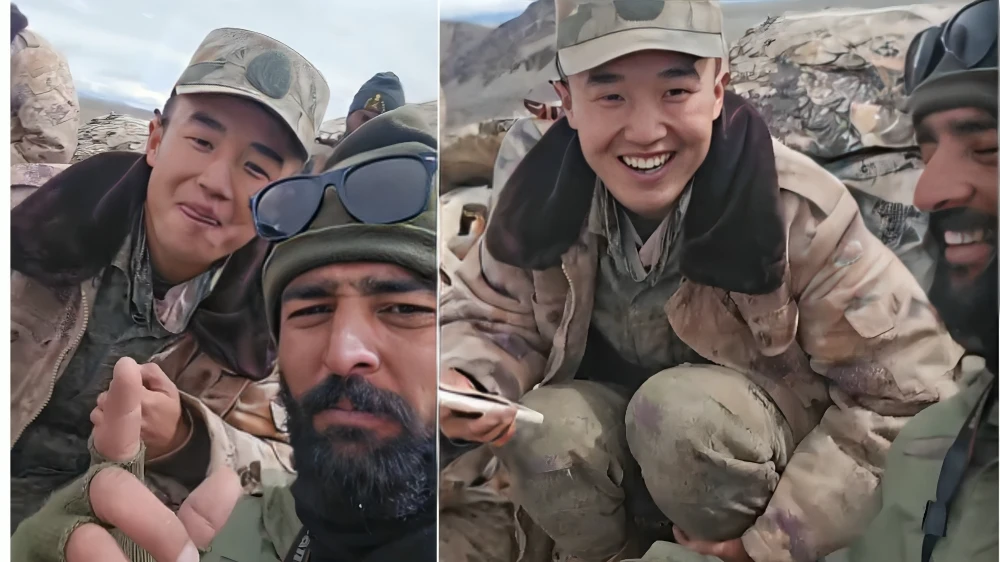
In a poignant display of camaraderie, soldiers from the Indian Army and China’s People’s Liberation Army (PLA) actively engaged in friendly interactions along the Line of Actual Control (LAC), signaling a hopeful shift in relations amid the complexities of their border dynamics. A recently circulated video captures the moment, where PLA soldiers are seen cheerfully singing "Aankhein Khuli," a beloved Bollywood song from the iconic film Mohabbatein, prompting smiles and warm exchanges among Indian troops and social media observers. This interaction reportedly took place during a routine border personnel meeting, underscoring the potential for cultural bonds to ease international tensions.
The choice to sing a song from Indian cinema not only highlights the significant popularity of Bollywood in China but also serves as a reminder of the cultural connections that can transcend geopolitical challenges. Shah Rukh Khan’s films continue to resonate with Chinese audiences, creating a backdrop of goodwill even amid political frictions.
Such friendly exchanges along the LAC are not unprecedented. Traditionally, troops from both nations participate in Border Personnel Meetings (BPMs) during significant occasions, such as national holidays or military anniversaries, allowing for greetings, souvenir exchanges, and informal conversations. These initiatives aim to foster communication between the two military forces and mitigate potential misunderstandings along one of the world’s most sensitive borders.
However, this heartwarming encounter contrasts sharply with the backdrop of recent tensions that have marked India-China relations, particularly following the violent clash in the Galwan Valley in June 2020, which resulted in casualties on both sides and transformed the security landscape in the region. Since that pivotal incident, both countries have increased military presence along the LAC, with thousands of troops, armored vehicles, and defensive systems deployed in the area, all while engaging in ongoing diplomatic talks to deescalate the situation.
In the months that followed, structured communication and military dialogue have become essential tools for managing relations along the border. Despite unresolved boundary disputes, there has been progress in establishing buffer zones and phased disengagement at various friction points, which is aimed at restoring stability and reducing the likelihood of direct confrontations.
The interaction between Indian and Chinese soldiers brings to light the critical role of professionalism and communication in effective border management. These officially sanctioned interactions serve to foster familiarity and understanding among troops stationed in close proximity, creating opportunities for goodwill while acknowledging the ongoing strategic complexities both nations face.
For the Indian Army, ensuring vigilance along the LAC remains paramount. At the same time, confidence-building measures and communication mechanisms are seen as vital for long-term stability until a comprehensive resolution to the boundary disputes can be achieved.
The underlying rivalry between India and China persists across various fronts, including border security and regional influence. Yet, the sight of soldiers sharing a light-hearted moment over a cherished Bollywood classic illustrates that even in areas defined by high military presence and tension, avenues for mutual respect and warmth can still flourish. Such interactions highlight the importance of dialogue and professional military engagement, reaffirming their collective commitment to maintaining peace along the Line of Actual Control.


