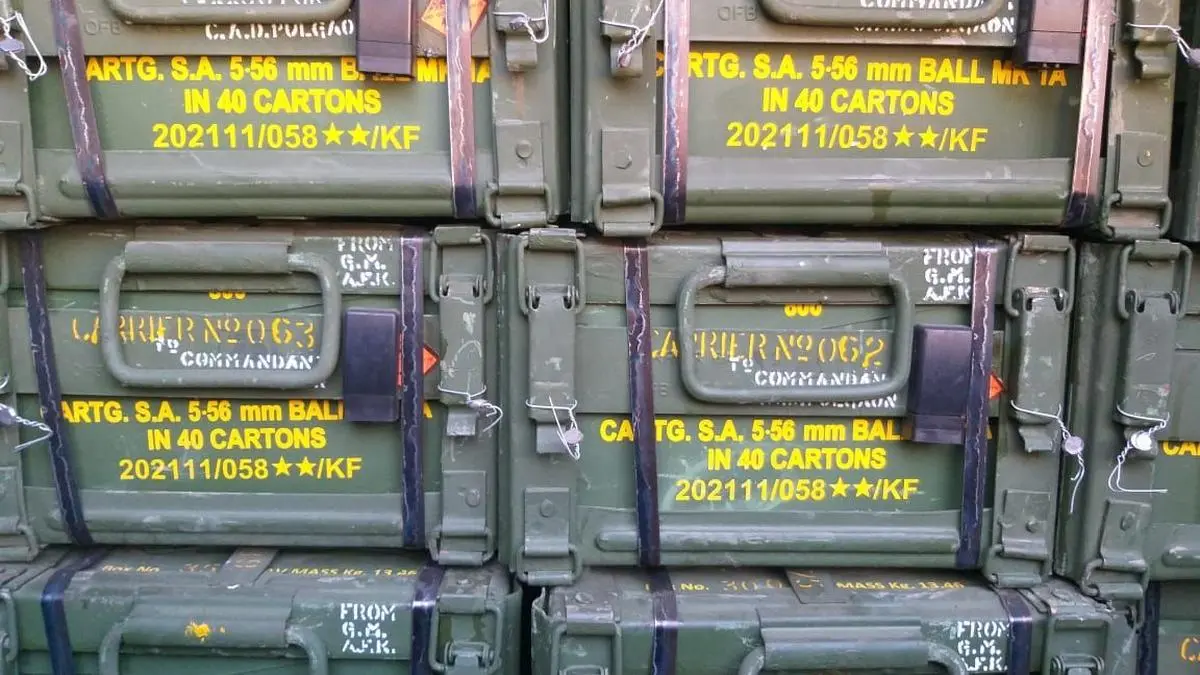
The Indian Army has made significant strides toward achieving defence self-reliance by successfully indigenising 159 out of 175 ammunition variants, achieving an impressive 91% self-sufficiency rate. This development comes at a critical time, as global supply chain disruptions have made reliance on imports increasingly challenging.
The groundbreaking initiative is spearheaded by the Ministry of Defence (MoD), in collaboration with defence public sector undertakings (DPSUs) and private industry. The primary aim is to ensure sustained firepower during prolonged conflicts, a necessity underscored by the army’s heightened operational readiness following Operation Sindoor.
Key contributors to this push for self-reliance include Munitions India Limited (MIL) and various private manufacturers such as Solar Industries India Limited. Their combined capabilities have effectively established reliable domestic supply chains for small-, medium-, and large-calibre ammunition, enabling the army to reduce its dependence on foreign imports.
Among the remaining 16 ammunition variants yet to be fully indigenised, the MoD has taken action to initiate in-house production for four to seven critical types, particularly focusing on smart ammunition to boost precision and effectiveness in the battlefield. This category includes Russian-origin Armour-Piercing Fin-Stabilised Discarding Sabot (APFSDS) anti-tank rounds and 84 mm ammunition of Swedish design.
The production facilities for APFSDS ammunition at MIL’s Pune location are now at an advanced stage after long-pending technology transfers that were sought as early as 2015-16. Similar progress has been made for the 84 mm ammunition as well, with a dedicated production plant currently being established.
In a related effort toward efficiency, the Army and MoD have decided to consolidate five ammunition variants under what they term “economic order quantities.” This move is based on limited overall demand and ensures that existing reserves are adequately utilized, allowing for cost-effective production strategies.
As the nature of warfare evolves, defence sources indicate that future conflicts will require sophisticated munitions capable of precise and deep strikes while minimizing collateral damage. In addition to traditional artillery, the Army is exploring advanced munitions solutions for combat unmanned aerial vehicles (UAVs), highlighting the growing significance of unmanned systems in modern military operations.
This recent progress is a notable advancement from the previous year, when 154 out of 175 variants (approximately 88%) had been indigenised, showcasing consistent momentum toward ammunition self-reliance.
In the realm of procurement, this year alone, the army has acquired ammunition valued at ₹6,000 crore under Emergency Procurement-6, ensuring immediate operational readiness. Concurrently, the MoD is actively seeking to maintain production viability during peacetime by boosting exports of military-grade ammunition and explosives.
India has ramped up its exports to multiple countries, including the United States and various European nations, covering a range of products from artillery shells to advanced explosives such as TNT, RDX, and HMX. This not only strengthens India’s reputation as a reliable global defence supplier but also emphasizes the nation’s expanding capabilities in sustaining high-intensity military operations independently. This achievement bolsters national security and aligns with India’s ambition to become a prominent defence manufacturing and export hub.