




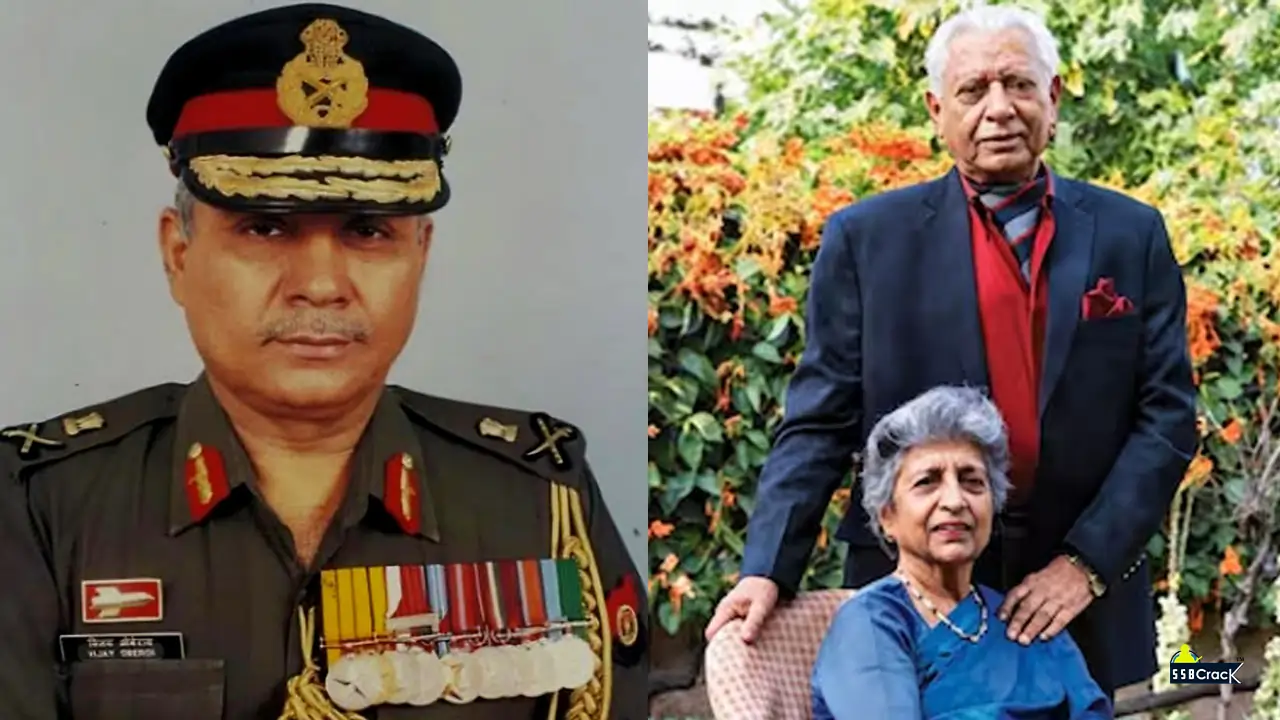
The Indian Army and the broader defense community are in mourning following the passing of Lieutenant General Vijay Oberoi, a highly respected figure in military circles. The retired general, known for his exemplary service and deep commitment to the welfare of war-disabled veterans, died on June 14, 2026, at the age of 84. After enduring the lasting impacts of severe injuries sustained during the Indo-Pakistani War of 1965, including the amputation of his right leg, Lieutenant General Oberoi’s health had deteriorated in recent years, leading to his eventual passing at the Army Hospital in Chandigarh/Chandimandir.
Tributes have poured in from military leaders and veterans alike. Former Chief of Army Staff General V.K. Singh described Oberoi as “a decorated soldier-scholar,” whose life served as a testament to courage that transcended physical limitations. Various senior military officers praised him as “a General of rare breed” who was a truthful and forthright leader, dedicated to advocating for the dignity and welfare of all soldiers.
Lieutenant General Oberoi was born in 1941 in Chakwal, now part of Pakistan, and came from a family with a strong military tradition. He was commissioned into the 1st Maratha Light Infantry in June 1961, following his graduation from the National Defence Academy. His commitment to soldiering was more than a career; it was a covenant of service, honor, and bravery that he embodied throughout his life.
His career path took a challenging turn during the Indo-Pakistani War of 1965. While serving as a Captain, he was grievously wounded in a fierce encounter with enemy forces, resulting in a severe injury that led to the amputation of his leg. Despite the odds stacked against him, he chose to remain in the infantry and made a remarkable return to active duty. Through rigorous physical training and an unwavering spirit, he competed alongside his able-bodied peers.
Lieutenant General Oberoi’s illustrious military career is marked by significant accomplishments and leadership roles. He served in various high-profile positions, including Director General Military Operations, and eventually became the Vice Chief of Army Staff. His extensive education, including his graduation from the US Army War College, helped shape his analytical approach to military operations and policy.
Even in retirement, Lieutenant General Oberoi continued his mission to support war-disabled veterans. He founded the War Wounded Foundation and served as its President, tirelessly advocating for the financial security and recognition of these soldiers. His role as the founding Director of the Centre for Land Warfare Studies (CLAWS) further established him as a leader and thinker in military scholarship.
Personal life also played a significant role in shaping Oberoi’s legacy. During his rehabilitation period, he met and married Daulat, a college student, who stood by him as a partner throughout their decades-long journey together. They shared two daughters and a loving family, exemplifying warmth and resilience despite life’s challenges.
Lieutenant General Oberoi’s enduring legacy lies not just in his military achievements but also in his commitment to the well-being of soldiers. He was a role model for those who suffered disabilities, emphasizing that the limitations are often mental rather than physical. His influence will continue to resonate, reminding us of the dignity and respect that those who serve the nation deserve.
The Indian Army and the nation as a whole have lost a revered officer and a true patriot. The memory of Lieutenant General Vijay Oberoi will live on, inspiring future generations of defense aspirants and veterans. He is survived by his wife, Daulat, and their family, who receive heartfelt condolences from the defense community during this difficult time.


