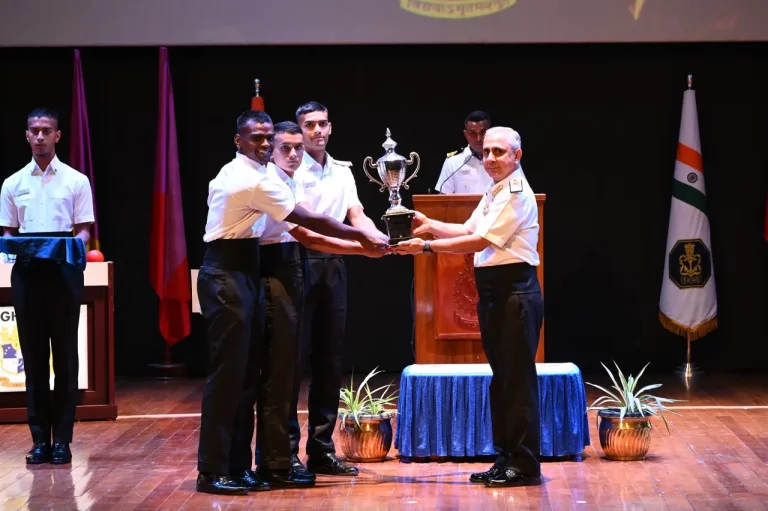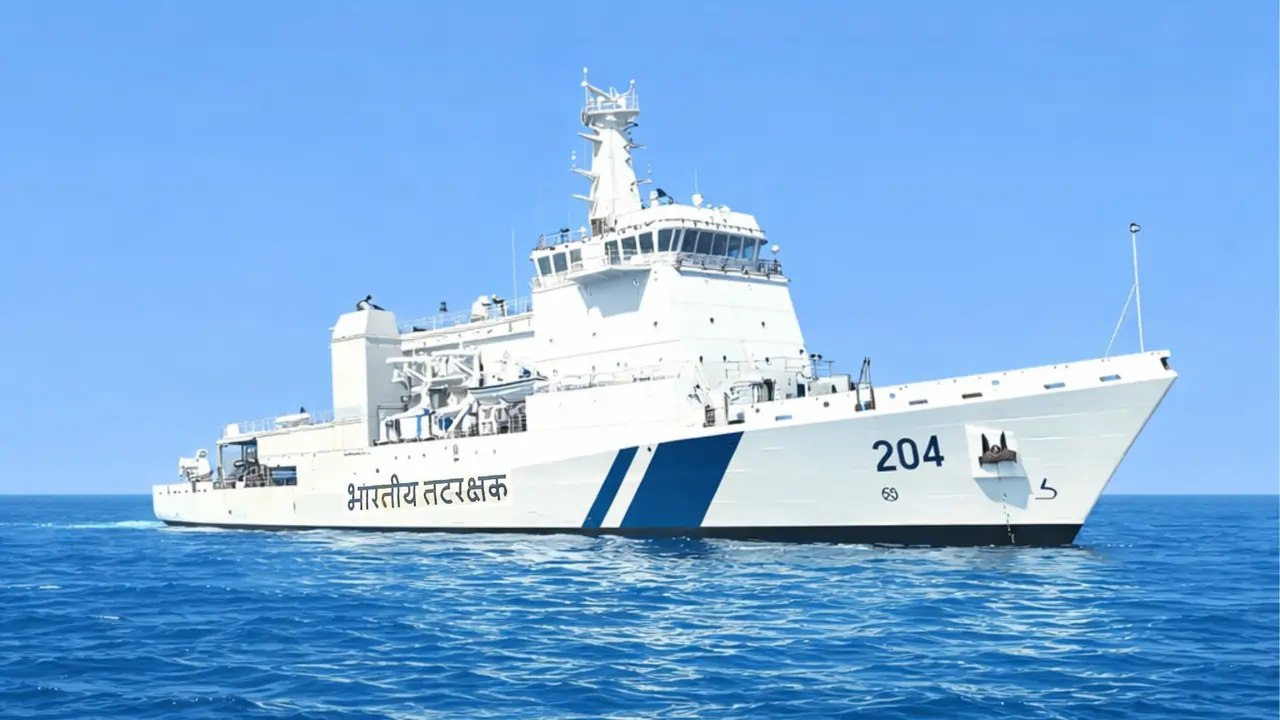
In a significant advancement for India’s maritime capabilities, Raksha Mantri Rajnath Singh recently commissioned the Indian Coast Guard Ship Samudra Pratap, marking the nation’s first indigenously designed Pollution Control Vessel (PCV). This development is viewed as a pivotal step in enhancing self-reliance in shipbuilding and maritime operations. Constructed by Goa Shipyard Limited (GSL), ICGS Samudra Pratap is the largest vessel in the Indian Coast Guard’s fleet to date, featuring over 60% indigenous components.
During the commissioning ceremony, Rajnath Singh characterized the ship as a testament to India’s robust defense industrial ecosystem. He emphasized the government’s initiative to elevate the local content in naval platforms to 90%. Although specifically designed for pollution control, ICGS Samudra Pratap’s multi-role capabilities significantly bolster coastal patrol, maritime safety, firefighting, and extensive surveillance of India’s expansive maritime territories.
Highlighting its environmental and operational capabilities, the vessel is outfitted with sophisticated pollution detection technology, specialized response boats, high-capacity oil skimmers, side-sweeping arms, floating booms, and a dedicated pollution control laboratory. These features will enhance India’s capacity to respond promptly to oil spills and other marine pollution events. Furthermore, its External Fire-Fighting System (Fi-Fi Class 1), helicopter hangar, and aviation support facilities expand its operational scope, even in severe sea conditions.
Rajnath Singh underscored the moral imperative of protecting the marine environment amidst the challenges of climate change and global warming. He noted the ship’s rapid detection, careful station-keeping, and efficient recovery systems, which can safeguard coral reefs, mangroves, fisheries, and marine biodiversity—crucial for supporting coastal livelihoods and contributing to the blue economy.
The minister commended the Indian Coast Guard’s (ICG) multifaceted role, which extends beyond pollution control to encompass search and rescue operations and maritime law enforcement. He conveyed a clear strategic message that any maritime misconduct would elicit a firm response, reaffirming India’s status as a “Responsible Maritime Power” dedicated to ensuring peace and stability in the Indo-Pacific region.
Rajnath Singh also advocated for the ICG’s evolution from a platform-centric force to one driven by intelligence and integration, recommending the development of specialized career paths in areas like maritime law enforcement, environmental protection, and maritime cybersecurity.
In a groundbreaking move towards gender inclusion, ICGS Samudra Pratap will feature two women officers among its complement, reflecting the ICG’s commitment to fostering an inclusive and gender-neutral working environment. The minister praised the increasing role of women officers in frontline positions, noting that they set exemplary standards for future generations.
Named “Majesty of the Seas,” ICGS Samudra Pratap displaces 4,170 tonnes, measures 114.5 meters in length, and exceeds speeds of 22 knots. It is powered by twin 7,500 kW diesel engines with indigenously developed controllable pitch propellers, granting it an impressive endurance of 6,000 nautical miles. The vessel incorporates advanced automation systems, including Dynamic Positioning and Integrated Bridge and Platform Management Systems, alongside automated power management features. Its armament consists of a 30 mm CRN-91 gun and two 12.7 mm stabilized remote-controlled guns.
Based in Kochi and under the operational control of the Coast Guard Region (West), ICGS Samudra Pratap significantly enhances India’s environmental response, maritime safety, and coastal security, further cementing the nation’s growing self-reliance and leadership in maritime affairs.