




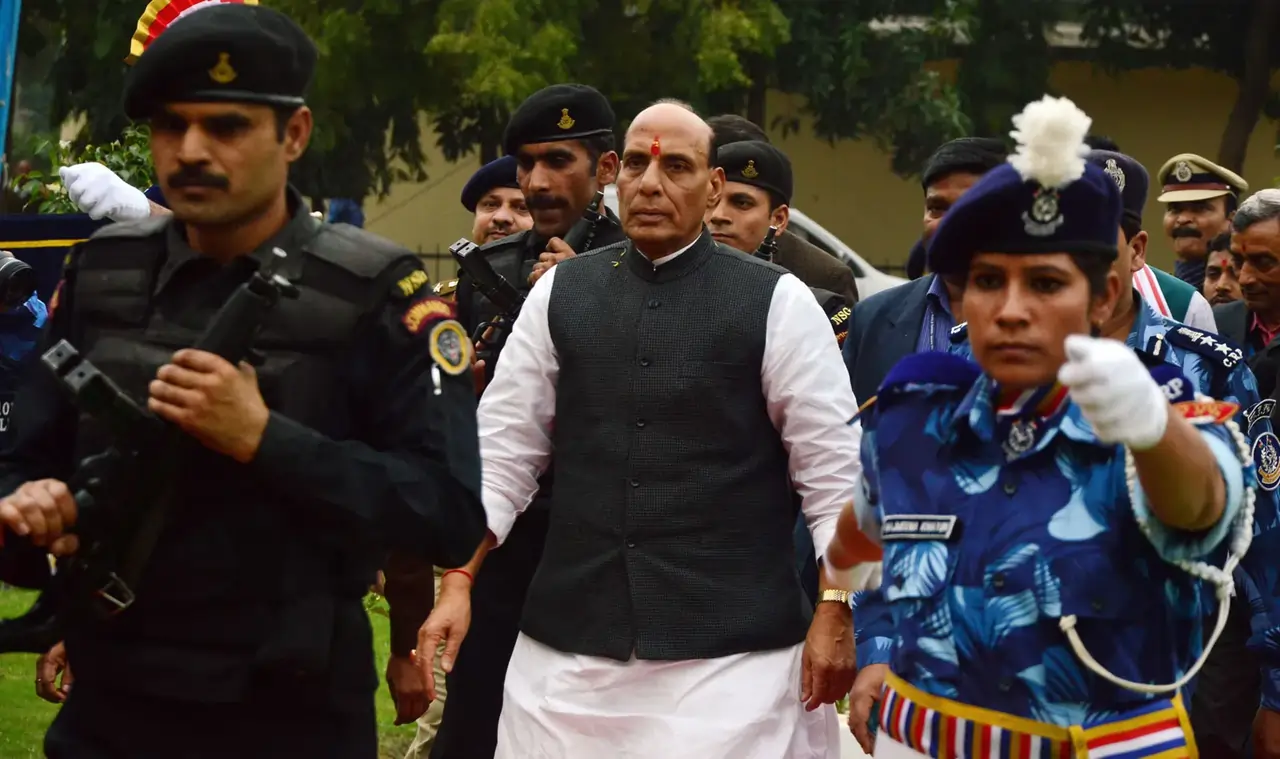
In a recent address in New Delhi, Raksha Mantri Shri Rajnath Singh highlighted Operation Sindoor as a significant milestone in India’s defence preparedness. He attributed this success to the unwavering commitment of the Prime Minister Narendra Modi-led Government to prioritize national interests and support the armed forces. The operation is seen as a testament to the transformative changes in India’s defence capabilities, showcasing technological advancements and a growing self-reliance in defence manufacturing.
Rajnath Singh reiterated the government’s strict zero-tolerance stance on terrorism, underlining that India’s resolve is reflected through its operational capabilities rather than mere rhetoric. He characterized Operation Sindoor as a demonstration of modern military effectiveness and the courage of the Indian Armed Forces, while also validating the substantial reforms undertaken in the defence sector over the past twelve years.
The Raksha Mantri detailed how the operation effectively integrated indigenous technologies into modern warfare, employing advanced systems such as the Akash Teer air defence system, the Akash missile system, and the BrahMos supersonic cruise missile. This successful integration highlights the government’s confidence in domestic defence industries and military capabilities, which have been strengthened through years of prioritizing local manufacturing.
Under the Aatmanirbhar Bharat initiative, significant strides have been made in India’s defence sector, with five Positive Indigenisation Lists now comprising 509 items, and an additional 5,012 items listed for procurement from Defence Public Sector Undertakings. The government is expected to announce another list to further enhance indigenous procurement efforts.
The transformation in India’s defence manufacturing ecosystem is evident, with annual production surging to around Rs 1.78 lakh crore in FY 2025-26, a significant increase from Rs 40,000 crore in 2014. Defence exports have also seen remarkable growth, leaping from Rs 686 crore in FY 2013-14 to over Rs 38,000 crore. The government aims to surpass Rs 2 lakh crore in defence production this financial year and target Rs 3 lakh crore by 2029, with defence exports projected to reach Rs 50,000 crore by the same year.
Shri Rajnath Singh noted that India is transitioning from relying on foreign defence equipment to becoming a producer and exporter of advanced military technologies, asserting that true strategic autonomy hinges on the ability to meet domestic defence needs independently during crises.
The government has introduced comprehensive policy reforms to facilitate defence modernisation and self-reliance. Initiatives such as the Defence EXIM Portal, simplified export processes, and the establishment of Defence Industrial Corridors in Uttar Pradesh and Tamil Nadu are pivotal to promoting indigenous manufacturing. About Rs 70,000 crore has been earmarked for investment across these two corridors, resulting in substantial employment opportunities and integration into global defence supply chains.
In defence acquisitions, the Raksha Mantri shared that 75% of the budget allocated for modernization is designated for procurement from Indian industries, alongside a new Defence Acquisition Procedure set to prioritize domestic production.
Innovation and technological advancement are also central to India’s defence transformation. Through initiatives like Innovations for Defence Excellence, significant procurement approvals have been granted to start-ups and MSMEs, underscoring the active participation of over 676 start-ups in the defence ecosystem.
Furthermore, Shri Rajnath Singh remarked that India is gradually evolving from being solely a manufacturer for domestic needs to becoming a reliable global security partner. He cited recent diplomatic engagements with countries such as Indonesia, Australia, and New Zealand as evidence of India’s expanding role in regional and global security dynamics.
The transformation in defence diplomacy includes technical collaboration, industrial partnerships, and integration into global supply chains, driven by the contributions of the armed forces, scientists, and innovators.
Concluding his remarks, the Raksha Mantri reaffirmed the government’s commitment to establishing an Aatmanirbhar and Viksit Bharat, where citizens, armed forces, and industries are equipped to thrive on the global stage. He expressed confidence that India will be recognized not only as the world’s largest democracy but also as a formidable defence power by the centenary of its independence in 2047.


