




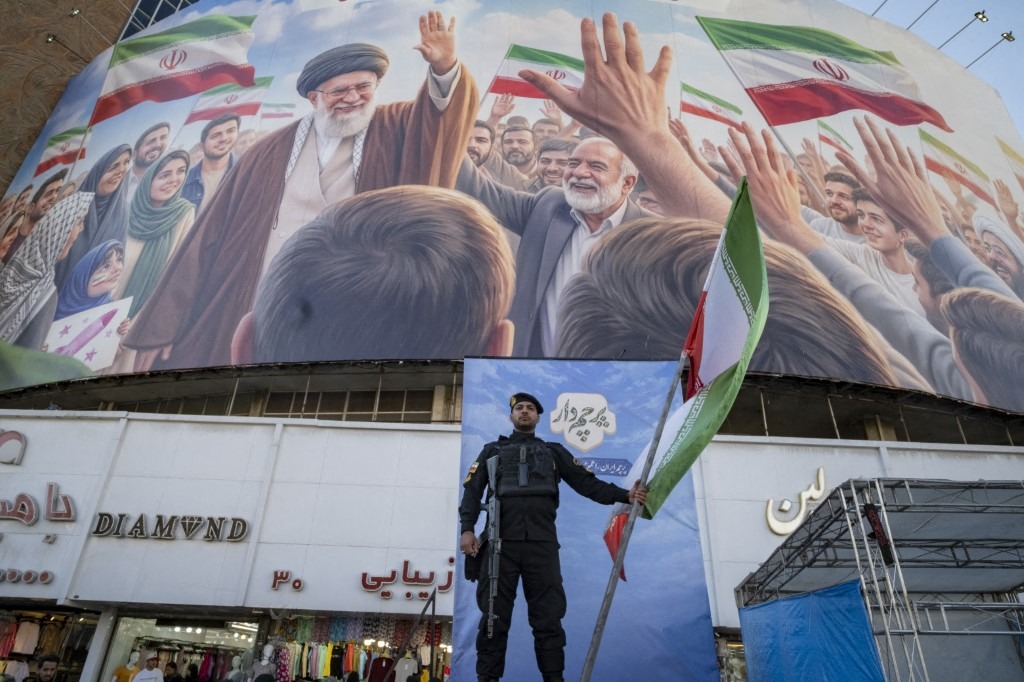
Iran’s foreign minister expressed concerns on Wednesday about the state of ongoing negotiations to resolve the escalating conflict in the Middle East, stating that “no tangible progress” has been achieved. This sentiment follows a worrying resurgence of violence, with new US and Iranian strikes complicating an already fragile ceasefire.
According to Kuwaiti officials, recent clashes included an Iranian drone strike targeting a passenger terminal at Kuwait International Airport, resulting in one fatality and injuring 63 others. The deceased has been identified as an Indian national, prompting a condemnation from Kuwait’s military, which labeled the attack as “criminal Iranian aggression.”
In stark contrast to the Iranian perspective, US President Donald Trump displayed optimism about the negotiations, suggesting that progress could be made as early as the weekend. Trump noted, “I hear the negotiation itself is going very well actually,” regarding the attempts to bring an end to the US-Israeli engagement in the region, which reignited on February 28.
However, the push for de-escalation faced a political setback as the House of Representatives passed a resolution aimed at withdrawing American troops from the conflict in Iran. This resolution garnered bipartisan support, with four Republicans voting alongside Democrats, although its impact remains largely symbolic, given Trump’s potential veto power.
During a congressional hearing, Secretary of State Marco Rubio highlighted Tehran’s stockpiles of highly enriched uranium as a pivotal issue in discussions with Iran. Washington demands that Tehran relinquish its near-weapons-grade enriched uranium and restrict its nuclear endeavors, in addition to ensuring the reopening of the Strait of Hormuz, a crucial maritime corridor for Gulf oil and gas.
Araghchi reiterated that communication lines with the US remain open, yet cautioned that any Israeli aggression targeting Beirut would prompt a “full-scale resumption” of hostilities. He maintained that Iran’s armed forces are prepared to retaliate if Israel strikes the Lebanese capital.
In response to the rising tensions, Israeli Prime Minister Benjamin Netanyahu accused Iran of “playing with fire,” warning that the US stands ready for a possible return to military action if necessary.
The recent wave of attacks poses a significant test for the April 8 ceasefire, which had momentarily halted over a month of conflict instigated by US-Israeli airstrikes against Iran. Despite moments of intermittent fire, the ceasefire had largely endured until the latest incidents.
Kuwait temporarily halted air traffic post-attack, diverting incoming flights to alternative locations, before resuming operations later. The airport had just resumed normal activity earlier in the week following previous disruptions.
Amidst this turmoil, Israel and Lebanon managed to agree on a ceasefire after two days of direct negotiations, with a focus on ensuring a “complete cessation” of fire by Hezbollah. Plans were laid out for “pilot zones” where Lebanese armed forces would regain control, effectively excluding militia from the area.
Despite the ceasefire agreement, exchanges of fire persisted, with Hezbollah reporting missile strikes on northern Israel and claims of Israeli counterattacks resulting in fatalities within Lebanon. With Israeli troops conducting their most extensive ground operations into Lebanon in 20 years, the region remains embroiled in instability, and a previous truce that was meant to be established in April has yet to be realized.


