Recent pronouncements from Iraqi officials in Baghdad touting progress in the effort to restrict weapons to state control have been met with cautious optimism as a potential restoration of Iraqi sovereignty. However, a deeper examination reveals a less straightforward reality.
Rather than true disarmament, it appears that Iran-backed militias are executing a calculated strategy to buy time amid increasing regional and international scrutiny. Iraqi officials have introduced concepts such as dialogue with armed factions, judicial oversight, and the impending enforcement of laws. In parallel, militia leaders have issued statements that appear to express conditional support for state authority, yet they stop short of making any significant commitments to surrender their arms.
The timing and coordination of these messages cannot be dismissed as coincidental. The critical question remains: who among these factions is genuinely relinquishing weapons, and to whom are they being handed over?
### Rebranding Control as Compliance
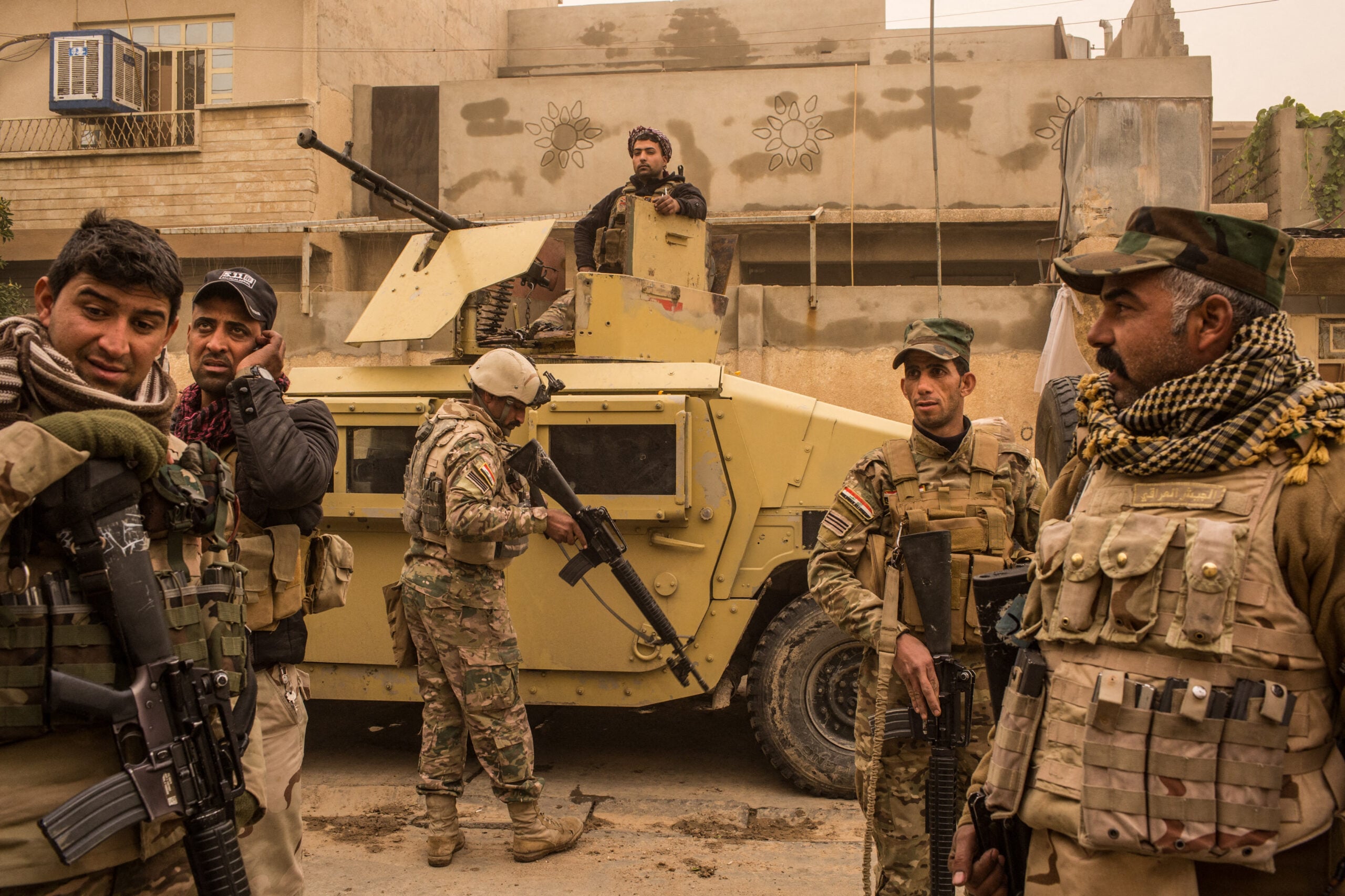
Militia factions are asserting that any potential disarmament would involve a handover to the Popular Mobilization Forces (PMF). They argue that the PMF is a legally recognized state institution, having been formalized by the parliament. Nonetheless, this assertion obscures crucial realities. The PMF does not operate as a neutral, national force but rather as an umbrella organization dominated by the very militias that are now signaling compliance. Many of these groups maintain independent chains of command, intelligence units, economic operations, and foreign allegiances.
Transferring weaponry from these militias to a force they effectively control does not constitute disarmament; it’s merely a rebranding of control.
Certain factions have gone further by outright rejecting unconditional disarmament and framing their arsenals as ideologically non-negotiable. This rhetoric does not bode well for any genuine efforts toward central governance but rather signals intentions of delay.
### Disarmament as a Delay Tactic
The timing of these developments is particularly notable. Baghdad has recently received warnings via both regional and Western channels regarding potential Israeli operations targeting militia infrastructure. Concurrently, U.S. engagement with Iraqi leadership has ramped up. Under this backdrop, a sudden pivot toward “disarmament” seems designed to slow potential escalations, complicate external decision-making, and create an illusion of cooperation—without yielding actual authority or control.
This pattern isn’t new. For over a decade, armed groups in Iraq have responded to increasing pressure with symbolic gestures, only to revert to established practices once the spotlight dims. The current situation fits this historical pattern closely.
With statements from Iraq’s judiciary commending militia leadership for their supposed compliance with the rule of law, the events appear to be little more than political theater. Courts have failed to hold armed groups accountable for a myriad of unlawful activities, ranging from assassinations to intimidation of activists. The public, long accustomed to impunity, is unlikely to be reassured by a sudden invocation of legal authority.
### Politics Without Accountability
The discourse surrounding a “transition to political action” does not signify a true departure from the existing political landscape. Militia factions already have a presence in parliament, and numerous lawmakers are tied to these armed groups. In Iraq, politics has not displaced weaponry; rather, arms have seeped into the political arena, further entrenching militia influence.
For Iraq to genuinely reclaim state authority, concrete steps are necessary: dismantling factional command structures, integrating individuals into security forces instead of entire brigades, closing militia economic operations, and pursuing objectives of accountability for serious crimes regardless of political affiliation. As of now, none of these measures are in motion.
What is occurring in Baghdad amounts to a superficial transfer of weapons from “factional” to “state” control, yet they remain with the same leaders and continue to serve the same interests.
For external stakeholders, especially Washington and its allies, the real danger lies in misinterpreting this rhetoric as genuine progress. Treating these symbolic gestures as meaningful reform risks reinforcing the very systems that have undermined Iraqi sovereignty for years. Stability built on the postponement of action is ultimately no stability at all.
What is transpiring in Baghdad should not be viewed as a breakthrough but rather as a calculated pause designed to absorb pressure and navigate through a politically turbulent moment. The militias are not disarming; they are merely buying time.