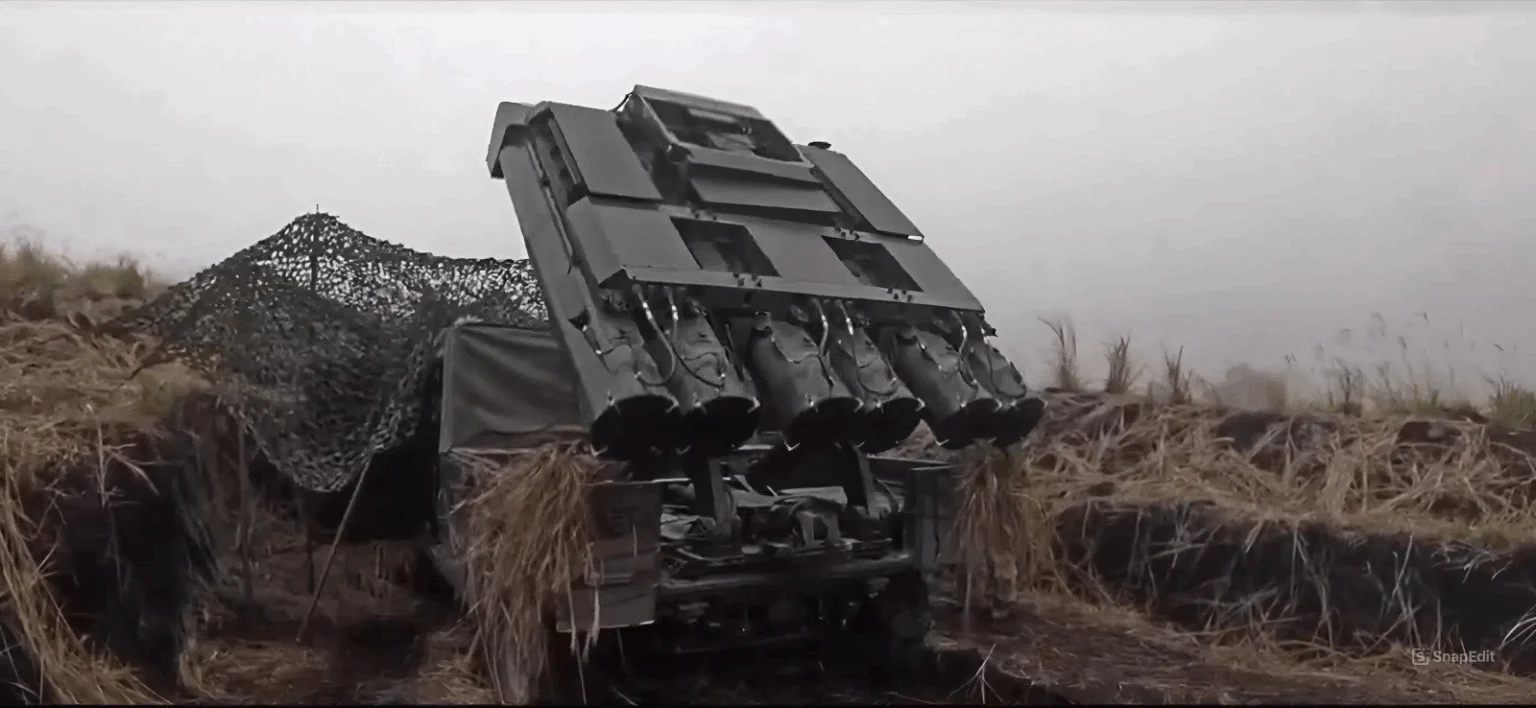
Japan is taking substantial steps to enhance its coastal defense capabilities as reflected in its 2026 defense budget request. This initiative focuses particularly on safeguarding the nation’s remote southwestern islands amid escalating regional tensions.
The Japan Self-Defense Force (JSDF) is set to acquire 11 launchers for the newly developed Multi-Purpose Missile System Kai, according to budget documents released by the Ministry of Defense. This advanced system aims to provide a robust defense against potential amphibious landings and armored threats, marking it as a focal point in Japan’s major acquisition plans for the upcoming fiscal year.
The Multi-Purpose Missile System Kai is designed as an upgrade over the Type 96 multi-purpose missile system, which was originally developed during the Cold War. The Kai is equipped to handle multiple targets at once, showcasing its capability to engage landing craft, amphibious assault vehicles, air-cushion vessels, and armored vehicles effectively. According to the Acquisition, Technology & Logistics Agency, the upgraded missile system offers extended engagement range and enhanced multi-target capabilities.
This development is expected to integrate seamlessly with Japan’s existing long-range anti-ship assets, including the Type 12 missile, as well as future programs for cruise and hypersonic missiles. Together, these systems are part of a larger strategy to establish comprehensive layered coastal defense and area-denial mechanisms around Japan’s outlying islands, which have historically been under scrutiny due to strategic vulnerabilities.
Additionally, Japan has initiated a series of expansions in its military infrastructure, including the establishment of new bases and the deployment of coastal defense units throughout the Nansei Islands that extend toward Taiwan. The government’s motivation for these enhancements is rooted in what it describes as a “severe and complex security environment,” necessitating a stronger military footprint in the region.
The budget for 2026 further includes funding for Synchronized, Hybrid, Integrated, and Enhanced Littoral Defense, emphasizing the deployment of multiple unmanned systems aimed at improving surveillance and response readiness in the face of potential amphibious operations.
In recent months, Japan has accelerated its arms procurement and development efforts, largely as a countermeasure to China’s growing military presence. In November, the U.S. State Department approved a possible sale of precision-guided munitions and related equipment to Japan, valued at approximately $82 million.
Moreover, the Japan Self-Defense Force has made significant strides in missile technology, testing its first hypersonic missile system which was fast-tracked into mass production due to threats posed by North Korea and China. Recent advancements also include the successful flight of jet-powered drones, managed in real-time from a Bell 205 helicopter, showcasing Japan’s increasing emphasis on integrating advanced technologies in its defense operations.