




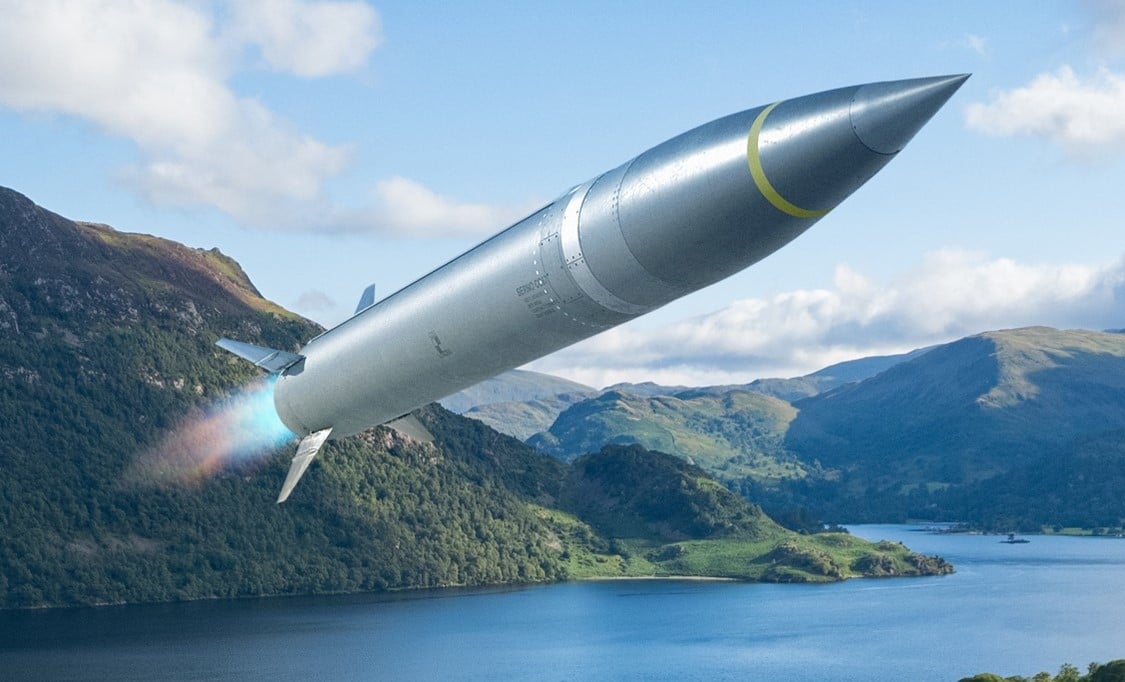
L3Harris Technologies has successfully conducted a significant propulsion test for the U.S. Army’s ramjet-powered Precision Strike Missile (PrSM) Increment 4 program, which aims to double the missile’s range for future threat environments. The recent Direct Connect Transition Test verifies the missile’s ability to transition from a solid-rocket booster to an air-breathing ramjet engine, signifying a critical step toward initiating flight testing later this fall.
Unlike earlier versions that relied solely on rocket propulsion, Increment 4 integrates a combination of a rocket booster and a ramjet engine. This innovative design allows the missile to utilize atmospheric oxygen for combustion during its cruise phase, negating the need to carry an onboard oxidizer. The result is a striking capability that enables the missile to engage targets at ranges exceeding 1,000 kilometers (approximately 621 miles), nearly doubling the range of previous variants.
Scott Alexander, President of Missile Propulsion and Missile Solutions at L3Harris Technologies, emphasized the importance of this advancement. “Rapidly advancing our next-generation propulsion system through ground test and into flight test demonstrates our unique ability to deliver on the Army’s mission requirements and near-term fielding plans,” he stated. He added that the propulsion system balances capability and affordability, addressing the Army’s needs for speed, range, and lethality.
Increment 4 is intended for launch from existing HIMARS and M270 systems and is designed to operate effectively in GPS-denied environments. Its high control authority and terminal velocity are especially beneficial in challenging anti-access/area-denial scenarios. The missile’s development is being expedited for potential deployment in the Indo-Pacific region, where it could threaten long-range land and maritime targets.
To maintain momentum in the program, prime contractor Lockheed Martin and L3Harris have committed over $300 million toward investments in additive manufacturing and automation, aiming to create a rapid-production hardware pipeline. Randy Crites, Vice President of Advanced Programs at Lockheed Martin, noted the significance of the test. “The Direct Connect Transition Test shows the missile’s core propulsion is not a future concept but a validated capability that can be loaded onto current HIMARS and M270 launchers quickly, dramatically shortening the time to warfighter delivery,” he explained.
This achievement marks a pivotal moment in the development of the Precision Strike Missile, underscoring the commitment of both L3Harris Technologies and Lockheed Martin to enhance the U.S. Army’s missile capabilities for modern warfare scenarios.


