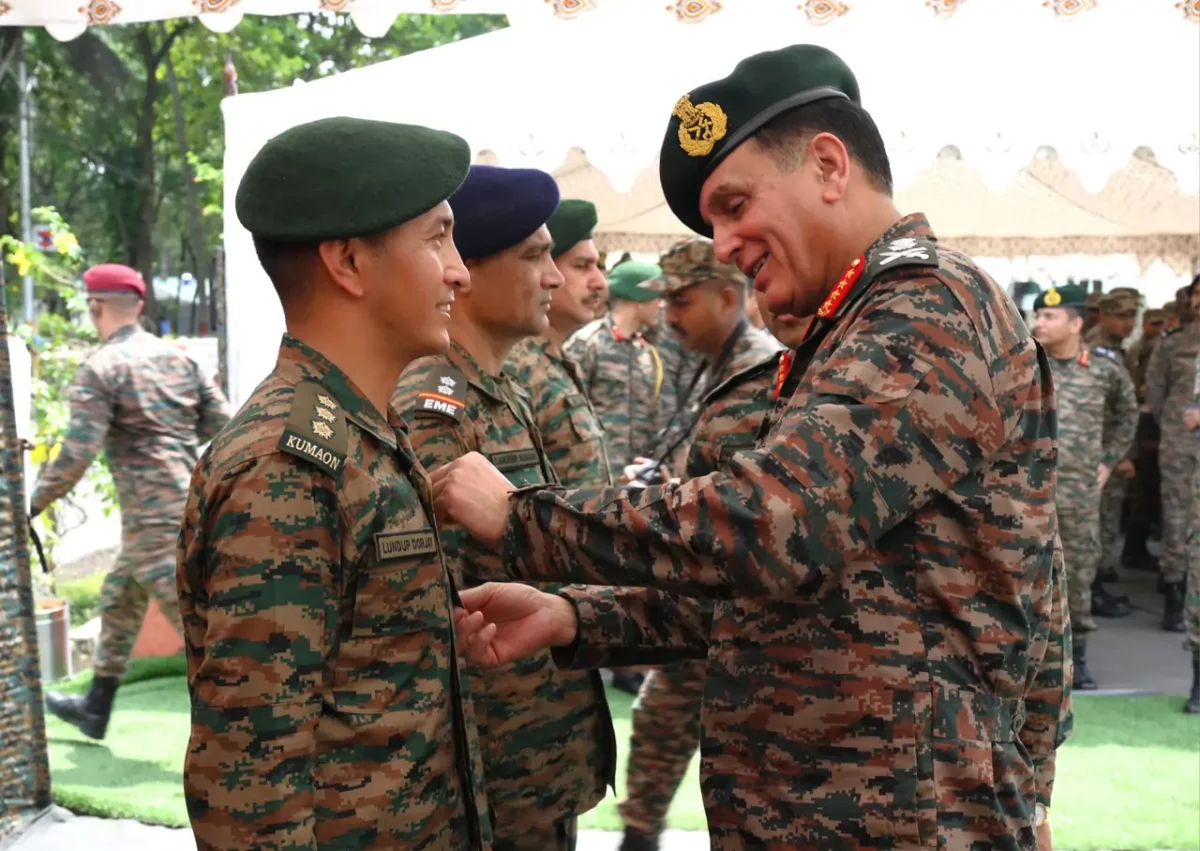
General Dhiraj Seth is the current Chief of the Army Staff (COAS) of India as of November 2026. He assumed charge on 30 June 2026, succeeding General Upendra Dwivedi. The Ministry of Defence officially described him as the 31st Chief of the Army Staff.
The Chief of the Army Staff is the professional head of the Indian Army and one of the most important military appointments in the country. The Army Chief leads the service, oversees operational preparedness, guides modernisation and advises the government on matters concerning land warfare and national security.
For candidates preparing for NDA, CDS, AFCAT, SSB interviews, UPSC and other competitive examinations, knowing the current Indian Army Chief and the list of former Army Chiefs is an important part of defence general knowledge.
Who Is the Current Army Chief of India in 2026?
General Dhiraj Seth, PVSM, UYSM, AVSM, is the current Chief of the Army Staff of India. He took office on 30 June 2026 after General Upendra Dwivedi retired from military service.
| Particular | Details |
|---|---|
| Current Army Chief | General Dhiraj Seth |
| Appointment | Chief of the Army Staff (COAS) |
| Date of Assuming Office | 30 June 2026 |
| Official COAS Number | 31st |
| Predecessor | General Upendra Dwivedi |
| Parent Arm | Armoured Corps |
| Commissioned | December 1986 |
| Alma Mater | National Defence Academy, Khadakwasla |
| Decorations | PVSM, UYSM, AVSM |
| Previous Appointment | Vice Chief of the Army Staff |
About General Dhiraj Seth
General Dhiraj Seth is an experienced Indian Army officer with nearly four decades of military service. An alumnus of the National Defence Academy, Khadakwasla, he was commissioned into the Armoured Corps in December 1986.
During his distinguished career, he has served in important operational, command and strategic appointments across the Indian Army.
His major appointments include:
- Commanding an Armoured Regiment in the desert sector.
- Commanding an Armoured Brigade in the Western Theatre.
- Leading a Counter-Insurgency Force in Jammu and Kashmir.
- Commanding the Sudarshan Chakra Corps.
- Serving as General Officer Commanding, Delhi Area.
- Leading the South Western Command and Southern Command.
- Serving as Vice Chief of the Army Staff before becoming COAS.
He is also a graduate of the Higher Command Course and the National Defence College and attended the Command and Staff Course in Paris.
His professional experience encompasses operational planning, capability development, force modernisation and strategic leadership.
List of Indian Army Chiefs from 1947 to 2026
Since India’s independence in 1947, several distinguished military officers have headed the Indian Army.
The following chronological list includes both the Commanders-in-Chief who served after independence and the officers who subsequently held the designation of Chief of the Army Staff.
| S.No. | Name of Army Chief | Tenure |
|---|---|---|
| 1 | General Sir Robert Lockhart | 15 Aug 1947 – 31 Dec 1947 |
| 2 | General Sir Roy Bucher | 1 Jan 1948 – 14 Jan 1949 |
| 3 | General K. M. Cariappa | 15 Jan 1949 – 14 Jan 1953 |
| 4 | General Rajendrasinhji Jadeja | 15 Jan 1953 – 14 May 1955 |
| 5 | General S. M. Srinagesh | 15 May 1955 – 7 May 1957 |
| 6 | General K. S. Thimayya | 8 May 1957 – 7 May 1961 |
| 7 | General P. N. Thapar | 8 May 1961 – 19 Nov 1962 |
| 8 | General J. N. Chaudhuri | 20 Nov 1962 – 7 Jun 1966 |
| 9 | General P. P. Kumaramangalam | 8 Jun 1966 – 7 Jun 1969 |
| 10 | General S. H. F. J. Manekshaw | 8 Jun 1969 – 15 Jan 1973 |
| 11 | General G. G. Bewoor | 16 Jan 1973 – 31 May 1975 |
| 12 | General T. N. Raina | 1 Jun 1975 – 31 May 1978 |
| 13 | General O. P. Malhotra | 1 Jun 1978 – 31 May 1981 |
| 14 | General K. V. Krishna Rao | 1 Jun 1981 – 31 Jul 1983 |
| 15 | General A. S. Vaidya | 1 Aug 1983 – 31 Jan 1986 |
| 16 | General K. Sundarji | 1 Feb 1986 – 1988 |
| 17 | General V. N. Sharma | 1988 – 30 Jun 1990 |
| 18 | General S. F. Rodrigues | 1 Jul 1990 – 30 Jun 1993 |
| 19 | General B. C. Joshi | 1 Jul 1993 – Nov 1994 |
| 20 | General Shankar Roychowdhury | Nov 1994 – 30 Sep 1997 |
| 21 | General V. P. Malik | 1 Oct 1997 – 30 Sep 2000 |
| 22 | General S. Padmanabhan | 1 Oct 2000 – 31 Dec 2002 |
| 23 | General N. C. Vij | 1 Jan 2003 – 31 Jan 2005 |
| 24 | General J. J. Singh | 1 Feb 2005 – 30 Sep 2007 |
| 25 | General Deepak Kapoor | 2007 – Mar 2010 |
| 26 | General V. K. Singh | Mar 2010 – 31 May 2012 |
| 27 | General Bikram Singh | 1 Jun 2012 – 31 Jul 2014 |
| 28 | General Dalbir Singh Suhag | 1 Aug 2014 – 31 Dec 2016 |
| 29 | General Bipin Rawat | 31 Dec 2016 – 31 Dec 2019 |
| 30 | General Manoj Mukund Naravane | 31 Dec 2019 – 30 Apr 2022 |
| 31 | General Manoj Pande | 30 Apr 2022 – 30 Jun 2024 |
| 32 | General Upendra Dwivedi | 30 Jun 2024 – 30 Jun 2026 |
| 33 | General Dhiraj Seth | 30 Jun 2026 – Present |
Important note: The table contains 33 individuals who have headed the Indian Army since independence, including the first two British Commanders-in-Chief. The numbering of the historical succession list is therefore different from the official COAS numbering used in Ministry of Defence announcements.
Some early appointments also crossed changes in the official designation of the Army’s head. Dates in those transitional periods may be shown differently in lists that separate successive appointments under different designations.
First Indian Chief of Army Staff
Field Marshal Kodandera Madappa Cariappa was the first Indian Commander-in-Chief of the Indian Army. He assumed command on 15 January 1949, succeeding General Sir Roy Bucher, the last British Commander-in-Chief.
K. M. Cariappa played an important role in the development of the Indian Army following independence.
Important Facts About K. M. Cariappa
- Full name: Kodandera Madappa Cariappa
- Date of birth: 28 January 1899
- Place of birth: Coorg, present-day Karnataka
- Assumed command: 15 January 1949
- Tenure ended: 14 January 1953
- Regimental association: Rajput Regiment
- Later rank: Field Marshal
- Date of death: 15 May 1993
Cariappa was among the pioneering Indian officers who helped establish the foundations of the post-independence Indian Army.
In recognition of his contribution to the armed forces, he was conferred the honorary five-star rank of Field Marshal in 1986.
Why Is Army Day Celebrated on 15 January?
Indian Army Day is observed on 15 January every year to commemorate General K. M. Cariappa taking over as the first Indian Commander-in-Chief of the Indian Army on 15 January 1949.
The occasion celebrates the courage, dedication, professionalism and sacrifices of Indian Army personnel.
History of the Chief of Army Staff Post in India
The leadership structure of the Indian Army has evolved considerably since independence.
In 1947, the Indian Army was headed by a Commander-in-Chief. General Sir Robert Lockhart became the first Commander-in-Chief of the Indian Army after independence.
General Sir Roy Bucher subsequently held the appointment and became the last British officer to head the Indian Army.
The appointment evolved through different official designations, including Chief of the Army Staff and Commander-in-Chief.
The Commanders-in-Chief (Change in Designation) Act, 1955, helped establish the modern designation of Chief of the Army Staff.
Today, the COAS is a four-star general and the professional head of the Indian Army.
Role and Responsibilities of the Indian Army Chief
The Chief of the Army Staff occupies one of the most important positions in India’s national security structure.
The Army Chief is responsible for maintaining the operational readiness, efficiency and fighting capabilities of the Indian Army.
Major Responsibilities of the COAS
1. Operational Preparedness
Ensuring that Army formations remain prepared to respond to security threats and military contingencies.
2. Military Strategy and Planning
Providing professional military advice and contributing to operational planning, capability development and long-term Army strategy.
3. Army Modernisation
Overseeing the modernisation of military equipment, weapons, technology, infrastructure and training systems.
4. Personnel Management
Providing leadership in matters concerning training, discipline, welfare, human resources and professional development.
5. Joint Military Coordination
Working with the Chief of Defence Staff, other service chiefs and the Ministry of Defence to improve coordination and joint operational capabilities.
6. National Security
Supporting India’s territorial defence and contributing to the Army’s preparedness for conventional, asymmetric and emerging security challenges.
Difference Between Chief of Army Staff and Chief of Defence Staff
The Chief of the Army Staff and the Chief of Defence Staff are two distinct senior military appointments in India.
| Chief of Army Staff (COAS) | Chief of Defence Staff (CDS) |
|---|---|
| Professional head of the Indian Army | Principal military adviser to the Defence Minister on tri-service matters |
| Leads the Army service | Promotes integration and jointness among the armed forces |
| Holds four-star General rank | Holds four-star General or equivalent rank |
| Focuses on Army operations, readiness and modernisation | Focuses on tri-service coordination, integration and joint capability development |
| Leads the Indian Army’s service headquarters | Heads the Department of Military Affairs |
The appointment of the Chief of Defence Staff does not eliminate or replace the separate positions of Chief of Army Staff, Chief of Naval Staff and Chief of Air Staff.
Indian Army Chiefs Who Became Field Marshals
Only two Indian Army officers have received the prestigious five-star rank of Field Marshal.
1. Field Marshal Sam Manekshaw
Field Marshal Sam Hormusji Framji Jamshedji Manekshaw served as Army Chief from June 1969 to January 1973.
He is widely remembered for his military leadership during the 1971 India-Pakistan War, which resulted in the liberation of Bangladesh.
He became India’s first Field Marshal in 1973.
2. Field Marshal K. M. Cariappa
Field Marshal Kodandera Madappa Cariappa was the first Indian Commander-in-Chief of the Indian Army.
He received the rank of Field Marshal in 1986 in recognition of his distinguished military career and contribution to the Indian Army.
Important for examinations: Field Marshal is a five-star rank, whereas the serving Chief of Army Staff ordinarily holds the four-star rank of General.
Tenure and Retirement Age of the Indian Army Chief
Under the applicable service rules, the Chief of Army Staff ordinarily serves for a maximum period of three years or until attaining the age of 62 years, whichever is earlier.
Appointments and service extensions are governed by government rules and decisions.
There is no requirement that every Army Chief must complete an identical term, as actual tenures depend on the date of appointment, retirement provisions and applicable government orders.
Salary of the Chief of Army Staff in India
Under the Seventh Central Pay Commission structure, the Chief of Army Staff is placed at Level 18 of the Defence Pay Matrix.
The basic pay attached to this level is ₹2,50,000 per month.
In addition to basic pay, the appointment carries applicable official facilities and entitlements according to government rules.
The total value of compensation and facilities should not be confused with the fixed basic pay.
Important Indian Army Chiefs for Defence Examinations
Candidates preparing for NDA, CDS, AFCAT, UPSC and SSB interviews should pay special attention to the following military leaders.
| Army Chief | Important Fact |
|---|---|
| General Sir Robert Lockhart | First head of the Indian Army after independence |
| General Sir Roy Bucher | Last British Commander-in-Chief |
| Field Marshal K. M. Cariappa | First Indian Commander-in-Chief |
| Field Marshal Sam Manekshaw | Led the Army during the 1971 war |
| General V. P. Malik | Army Chief during the 1999 Kargil War |
| General Bipin Rawat | Became India’s first Chief of Defence Staff |
| General Manoj Pande | First Corps of Engineers officer to become COAS |
| General Upendra Dwivedi | Served as Army Chief from 2024 to 2026 |
| General Dhiraj Seth | Current Army Chief of India in 2026 |
Frequently Asked Questions About Indian Army Chiefs
1. Who is the current Army Chief of India in 2026?
General Dhiraj Seth is the current Chief of the Army Staff. He assumed office on 30 June 2026.
2. Who was the first Indian Army Chief?
General K. M. Cariappa became the first Indian Commander-in-Chief of the Indian Army on 15 January 1949.
3. Who was the first Chief of Army Staff after independence?
General Sir Robert Lockhart was the first officer to head the Indian Army after independence in 1947, serving under the then-existing Commander-in-Chief structure.
4. Who was the last British Army Chief of India?
General Sir Francis Robert Roy Bucher was the last British Commander-in-Chief of the Indian Army.
5. Who was the Army Chief before General Dhiraj Seth?
General Upendra Dwivedi was the previous Chief of Army Staff. He served from 30 June 2024 to 30 June 2026.
6. What is the full form of COAS?
COAS stands for Chief of the Army Staff.
7. What is the rank of the Indian Army Chief?
The Chief of Army Staff ordinarily holds the four-star rank of General.
8. What is the retirement age of the Army Chief?
The ordinary retirement age is 62 years, subject to the applicable tenure and service rules.
9. How many Field Marshals has India had?
India has had two Field Marshals: Sam Manekshaw and K. M. Cariappa.
10. Why is Indian Army Day celebrated on 15 January?
Indian Army Day commemorates General K. M. Cariappa taking over command of the Indian Army on 15 January 1949.
11. Who was the Indian Army Chief during the Kargil War?
General Ved Prakash Malik served as Chief of Army Staff during the 1999 Kargil War.
12. Who was the Indian Army Chief during the 1971 War?
General Sam Manekshaw was the Chief of Army Staff during the 1971 India-Pakistan War.
13. Who was India’s first Chief of Defence Staff?
General Bipin Rawat became India’s first Chief of Defence Staff on 1 January 2020, after completing his tenure as Army Chief.
14. When did General Dhiraj Seth become Army Chief?
General Dhiraj Seth assumed charge as the Chief of Army Staff on 30 June 2026.
Conclusion
The Chief of the Army Staff plays a central role in maintaining India’s military preparedness and strengthening the Indian Army’s operational capabilities.
From General Sir Robert Lockhart and Field Marshal K. M. Cariappa to General Dhiraj Seth, the leaders of the Indian Army have guided the service through major changes in India’s security environment.
As of November 2026, General Dhiraj Seth serves as the Chief of the Army Staff, having succeeded General Upendra Dwivedi on 30 June 2026.
For defence aspirants, the names, tenures and achievements of Indian Army Chiefs remain important topics for NDA, CDS, AFCAT, SSB interviews and other competitive examinations.