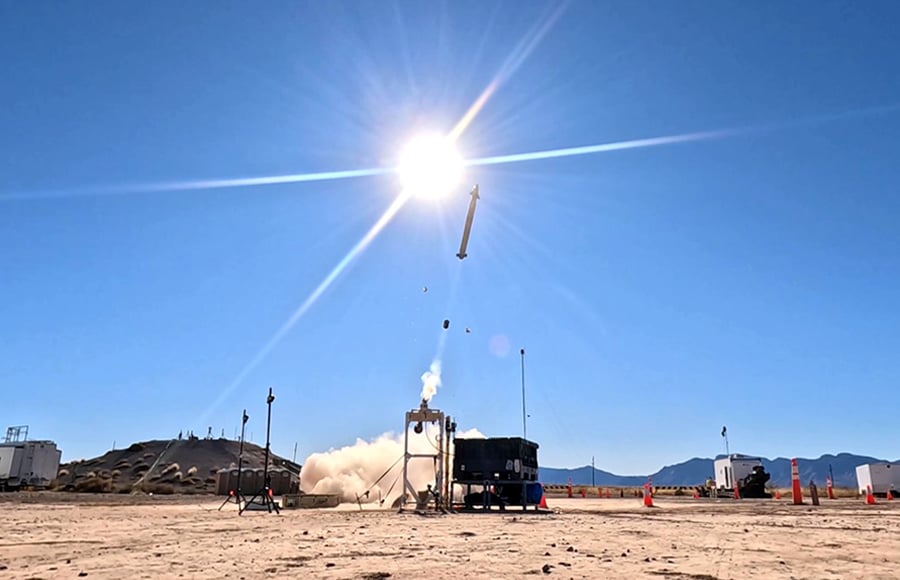
Lockheed Martin has marked a significant milestone with the successful first flight test of its Next-Gen Short-Range Interceptor (NGSRI), designed to replace the legacy Stinger missile system. This critical test took place at the White Sands Missile Range in New Mexico, where the newly developed interceptor demonstrated its capabilities and confirmed that its key subsystems have achieved full maturity.
The NGSRI is engineered to counter a wide range of aerial threats, including drones, helicopters, and fixed-wing aircraft. During the test, the missile reportedly surpassed the performance levels of the existing Stinger system in various scenarios. This promising development highlights Lockheed Martin’s commitment to enhancing air defense systems to meet modern threats.
The success of the NGSRI test not only indicates a leap forward in missile technology but also signals Lockheed Martin’s sustained efforts in providing advanced solutions for military engagements where air superiority is increasingly challenged by emerging threats. As military operations evolve, the integration of such advanced interceptors will be crucial for maintaining effective defense capabilities.
More details on this development can be found through various defense news platforms, underscoring the importance of the NGSRI in the future arsenal of air defense systems.