




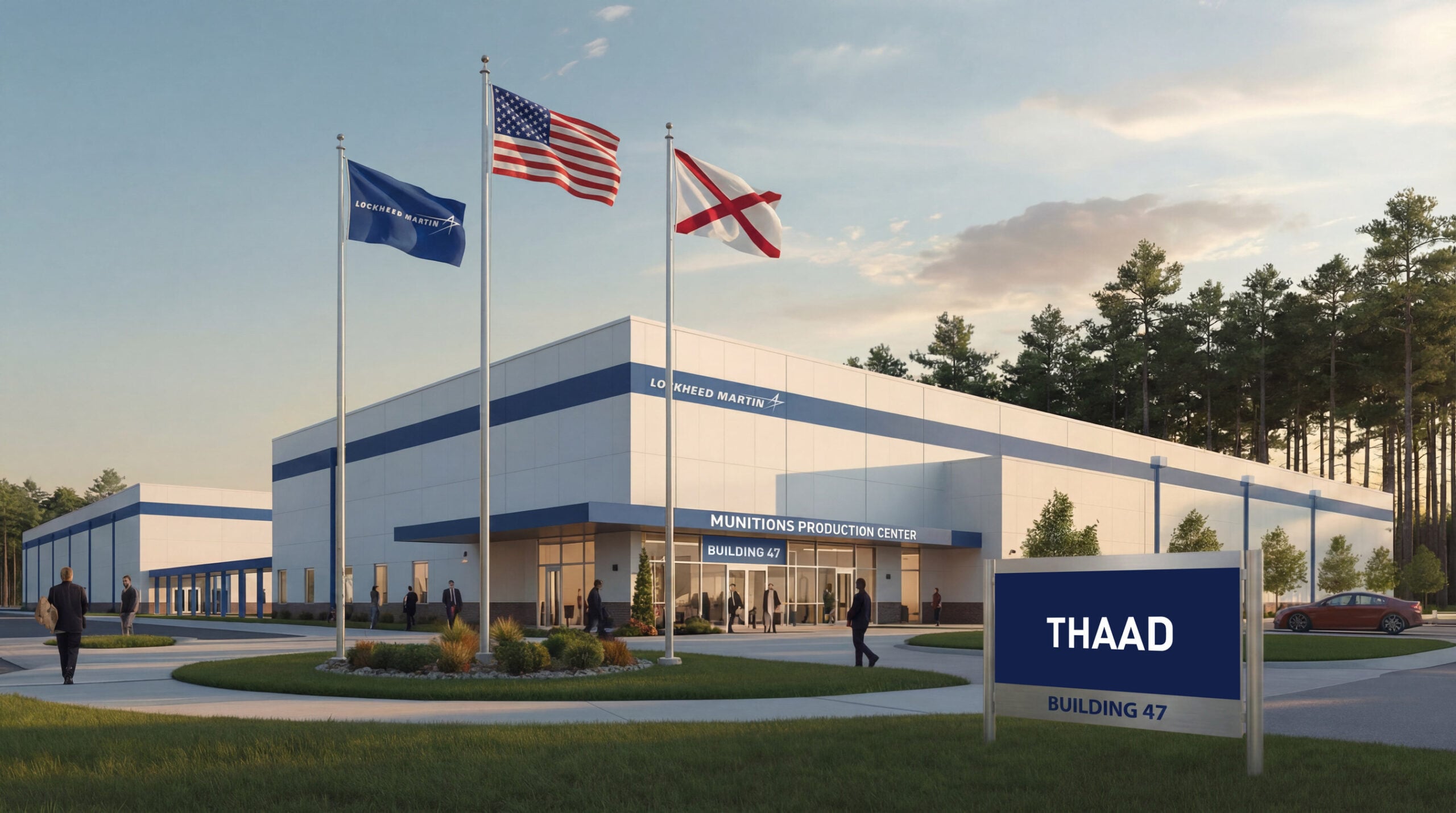
Lockheed Martin has officially commenced construction on a state-of-the-art missile production facility in Troy, Alabama, aimed at boosting the production capacity of Terminal High Altitude Area Defense (THAAD) interceptors. This move comes in response to the increasing global demand for advanced air and missile defense systems.
The THAAD system, recognized for its capability to intercept ballistic missile threats both inside and outside the Earth’s atmosphere, is currently in operation by the United States, Saudi Arabia, and the United Arab Emirates. The new facility, referred to as the Munitions Production Center or Building 47, will expand the existing THAAD manufacturing space by 87,000 square feet (approximately 8,083 square meters). The expansion not only enhances production capabilities for THAAD but also supports upcoming projects linked to the Next Generation Interceptor initiative.
This strategic expansion effectively doubles the manufacturing space at the Troy site and is projected to create new job opportunities over the next three years, supplementing the current workforce of around 4,000 employees in Alabama.
Lockheed Martin’s plans for this facility are part of a broader $9-billion investment strategy aimed at enhancing munitions production and modernizing over 20 facilities throughout the continental United States by the end of the decade.
During the groundbreaking ceremony, U.S. Under Secretary of War Michael Duffey emphasized the significance of this partnership between the government and Lockheed Martin in scaling up munitions capacity. “Today is a testament to that partnership and that progress,” Duffey remarked.
Lockheed Martin’s CEO and President, Jim Taiclet, also addressed attendees, noting that the company has already invested more than $1 billion to increase missile manufacturing capabilities. “Lockheed Martin is ready now to meet the urgent demand to expand production capacity,” he asserted.
This initiative signals not only a commitment to enhancing national security but also reflects the growing demand for effective defense solutions in an increasingly complex global landscape.


