




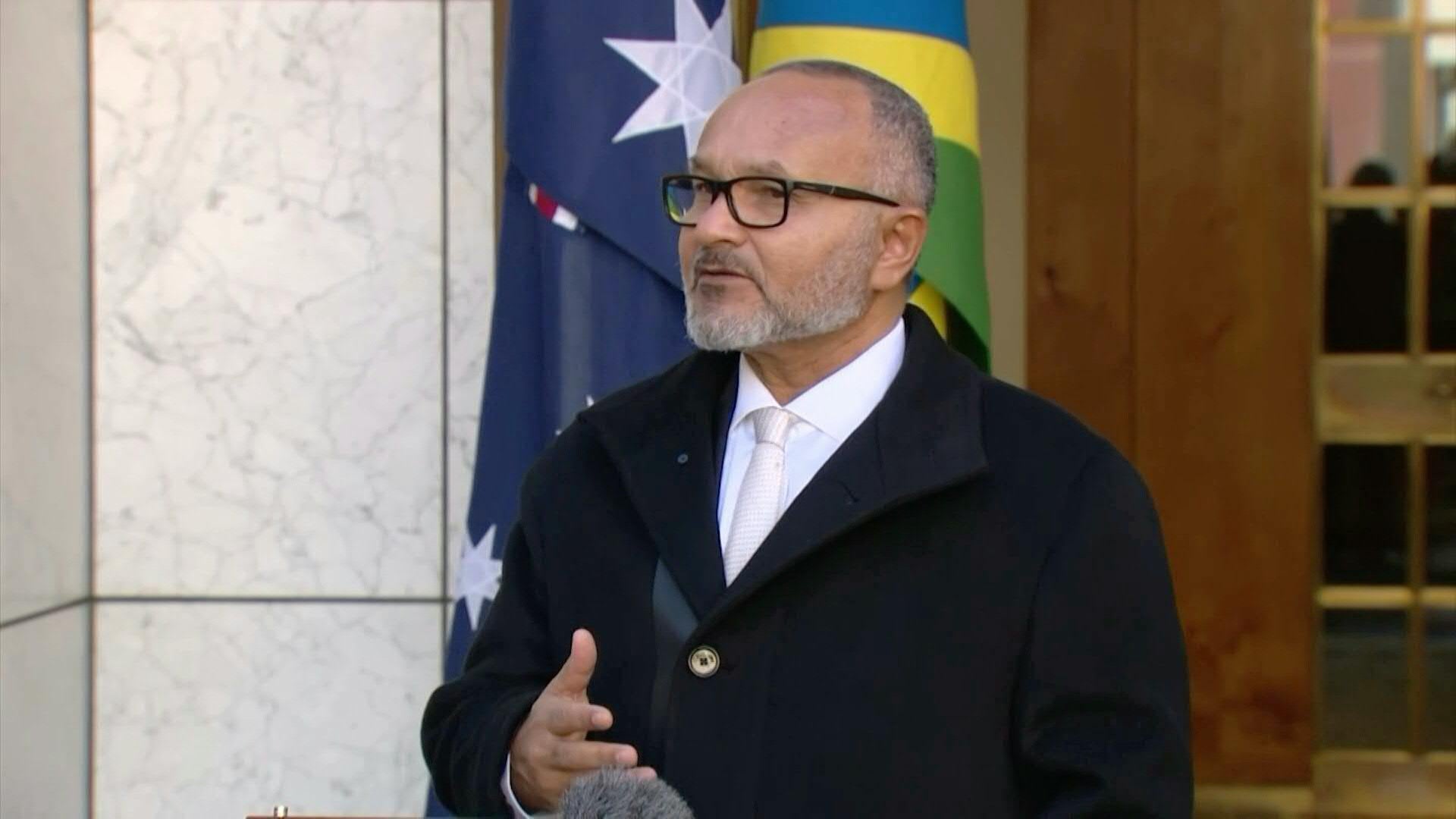
The newly elected Prime Minister of the Solomon Islands, Matthew Wale, announced plans to reassess a controversial security agreement made with China in 2022. This pact has raised alarms in both Australian and U.S. circles, as it potentially paves the way for a Chinese military presence in the South Pacific region.
During a joint press conference in Canberra alongside Australian Prime Minister Anthony Albanese, Wale revealed that he has been reflecting deeply on the deal, stating he had engaged in “praying and fasting” regarding the implications of the agreement. He indicated that the review would include not only the Chinese pact but also other security agreements the Solomon Islands holds with various countries.
The security agreement was finalized under the leadership of former Prime Minister Manasseh Sogavare, who maintained a close relationship with Beijing. Wale disclosed that he had limited access to the security pact, receiving a copy just before his visit to Australia, and expressed frustration over the non-disclosure terms of the deal. “I have had to remove certain people from key positions,” he noted, emphasizing the urgency and seriousness of the situation.
Australia, positioned as the largest aid donor to the island nation, has historical ties with the Solomon Islands, particularly in terms of police support during crises. The dynamic of these relations shifted after the Solomon Islands transitioned its diplomatic recognition from Taiwan to China in 2019 and entered into the security agreement. This decision led to growing tensions with both Australia and the United States, particularly as China emerged as the largest creditor for infrastructure projects in the islands, increasing Solomon Islands’ debt to Chinese banks significantly.
In a bid to reestablish relations and counteract China’s influence, Australia hosted Wale on his first international trip as Prime Minister. Albanese confirmed the intention to initiate a “comprehensive” new treaty to solidify bilateral ties, focusing on policing and security partnerships. He emphasized that this treaty would be built on the foundations of mutual trust, respect, and open dialogue.
During their discussions, Wale highlighted the importance of regional security, advocating for Pacific nations to look internally for their security needs rather than relying heavily on external powers. The two leaders also committed to advancing a police training agreement, a plan that had previously stagnated under the former administration, which had faced criticism for allowing Chinese police access to local communities for biometric data collection.
In addition to security concerns, Wale disclosed ongoing discussions with both Australia and the U.S. regarding funding for critical infrastructure projects, including ports. These negotiations continue to highlight a competitive atmosphere in the region, where Australia seeks to strengthen ties with Pacific nations while curbing expanding Chinese influence.
Australia has actively worked to fortify its relationships with other small island states in the South Pacific, such as Tuvalu, Nauru, and Papua New Guinea, offering economic assistance in exchange for reductions in security agreements with China. Reports suggest that Vanuatu and Fiji are also nearing similar agreements as regional dynamics shift in response to global power influences.


