




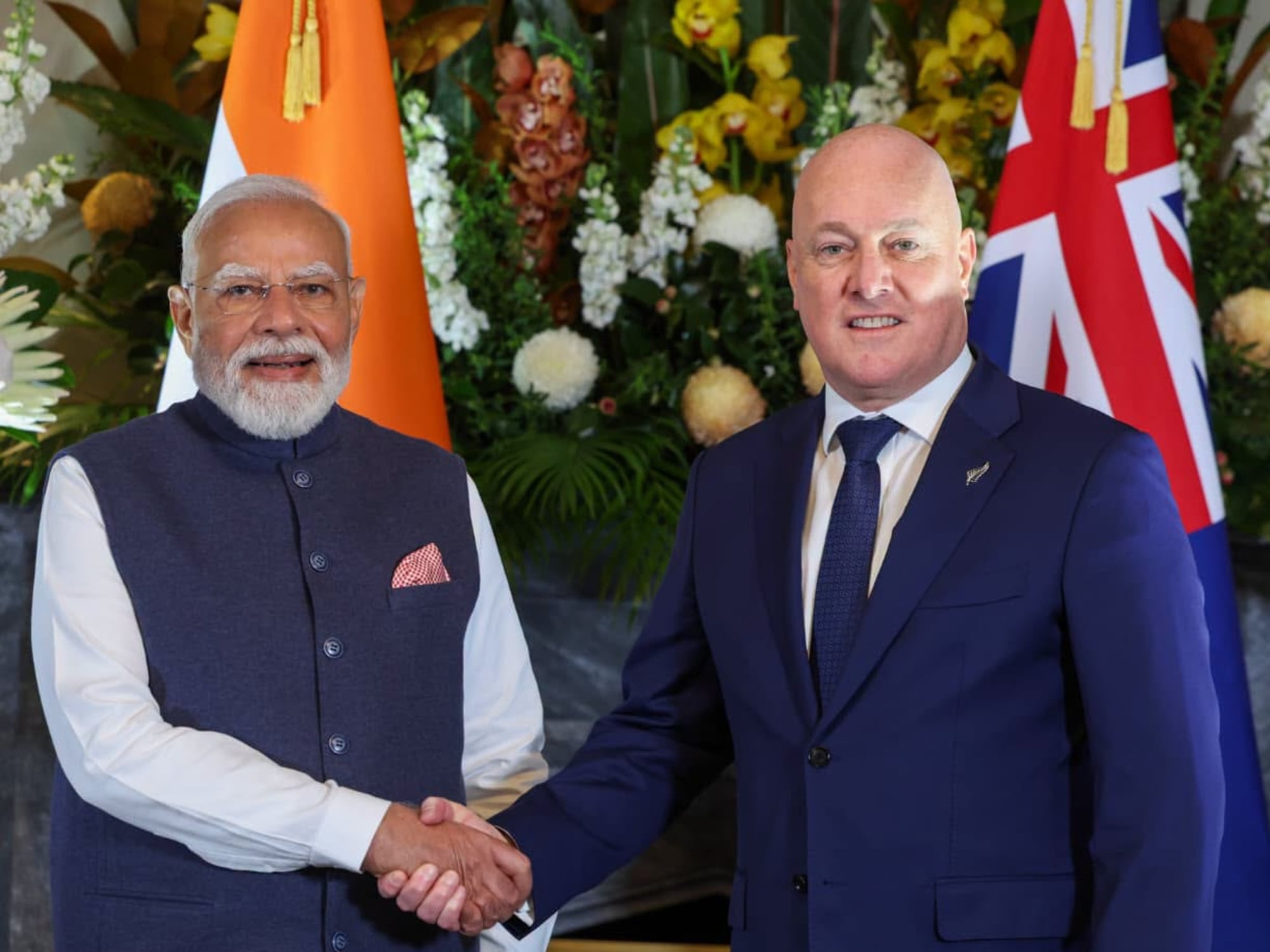
New Zealand and India have unveiled a significant “strategic partnership” focused on defense and security, coinciding with Prime Minister Narendra Modi’s historic visit to New Zealand, the first by an Indian prime minister in 40 years. This meeting represents a pivotal step in India’s efforts to deepen its diplomatic ties amid increasing Chinese influence in the Pacific region.
During a ceremonial welcome, Prime Minister Christopher Luxon greeted Modi with an indigenous Maori ceremony alongside a guard of honor, marking the occasion as a notable expansion of relations following the recent signing of a free-trade pact in April, which Luxon has hailed as a boon for the economy.
Modi’s visit comes on the heels of China’s recent test-fire of a ballistic missile into the Pacific, raising concerns about regional security. In their discussions, Modi highlighted the strategic partnership as a “milestone” that would enhance cooperation in various sectors, including defense, trade, diplomacy, culture, sports, and science. He stressed that shared democratic values position the two nations as natural allies.
Both leaders expressed a common commitment to fostering a “free, open, peaceful and prosperous Indo-Pacific.” In a press briefing after their talks, Luxon emphasized the need for a diverse array of relationships to bolster New Zealand’s security and economic opportunities, noting the mutual benefits of defense collaboration with India amid the evolving geopolitical landscape.
The visit also featured plans for Modi to address a large gathering of supporters from New Zealand’s Indian diaspora, reflecting the cultural ties that bind the two nations. This follows a successful event in Australia where Modi attracted substantial crowds, underscoring his popularity among expatriate communities.
However, the free trade agreement has faced criticism domestically, particularly regarding provisions that facilitate easier immigration for Indian students and workers. Some lawmakers from the coalition government, particularly from the populist New Zealand First party, have expressed opposition, framing it in terms of national integrity.
Controversy also arose when certain public figures made inflammatory remarks against Modi and the Indian community, which were condemned widely. New Zealand’s race relations commissioner described these comments as “utterly appalling,” emphasizing the necessity for tolerance and respect amidst rising tensions regarding immigration and cultural integration.
In contrast, Luxon remains optimistic about the potential benefits of enhanced ties with India, viewing the partnership as an opportunity to tap into upcoming economic growth in the subcontinent. He reiterated the strategic importance of Modi’s leadership in fostering a prosperous future for both nations, while acknowledging the complexities and challenges posed by existing political sentiments within New Zealand.


