




In Defence Current Affairs for 11 July 2026, we will see the latest national and international current affairs news. These important current affairs will be beneficial for your upcoming NDA, CDS, CDS OTA, AFCAT, TA, Agniveer Army, Agniveer Navy, Agniveer Air Force, Women Military Police, INET, MNS, ACC exams, SCO, PCSL, CAPF, and SSB interviews, and direct entries for Army, Navy, and Air Force like SSC Tech, TGC, JAG, NCC, TES, 10+2 Cadet. Download a PDF file about current events at the end of this article. Let us now see the Current Affairs.
Defence Current Affairs 11 July 2026
India, Australia ink Defence Pacts, Fast-track Trade Deal
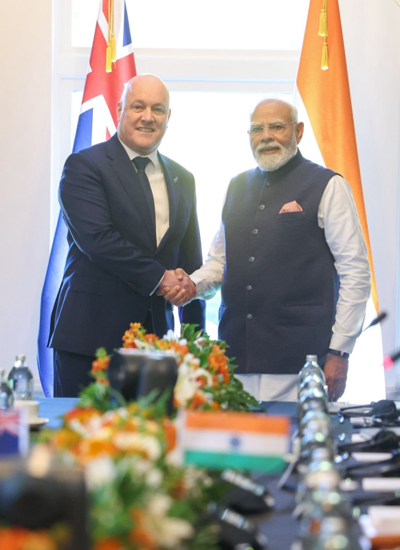
- India and New Zealand have taken a major step towards strengthening bilateral relations by launching the India–New Zealand Strategic Partnership during the meeting between Prime Minister Narendra Modi and New Zealand Prime Minister Christopher Luxon in Auckland on 11 July 2026. Along with the partnership, both leaders endorsed the Roadmap to 2030, a comprehensive framework designed to deepen cooperation across political, economic, defence, cultural, and technological sectors over the next four years.
- The Roadmap to 2030 aims to provide structured guidance for expanding bilateral engagement and enhancing collaboration on regional and global issues. It is based on six major pillars that outline shared priorities for the future.
- Strengthening Political and Diplomatic Engagement
- Under the first pillar, India and New Zealand agreed to maintain regular high-level political dialogue through meetings between Prime Ministers, Cabinet Ministers, and Foreign Ministers. The two countries will also encourage frequent parliamentary exchanges and official visits to strengthen mutual understanding.
- Both governments decided to institutionalise annual meetings between senior officials of their foreign ministries to review progress and ensure effective implementation of the Strategic Partnership and the Roadmap to 2030.
- Expanding Defence and Security Cooperation
- Defence and security cooperation forms a key pillar of the new partnership. Both nations will continue military exchanges through joint exercises, defence dialogues, personnel training programmes, and visits by naval, air, and land forces.
- India and New Zealand also committed to implementing the 2025 Memorandum of Understanding on Defence Cooperation and recently concluded agreements on maritime cooperation, hydrography, nautical cartography, and mutual logistics support.
- The two countries will conduct bilateral naval exercises and establish an Annual Maritime Security Dialogue to strengthen cooperation in the Indo-Pacific region.
- Recognising the importance of tackling emerging security challenges, both sides agreed to operationalise a Joint Working Group on Counter-Terrorism, enhance cooperation on cybersecurity, combat narcotics trafficking, and improve law enforcement coordination through closer collaboration between India’s National Investigation Agency (NIA) and the New Zealand Police.
- The partnership also includes stronger cooperation under the Coalition for Disaster Resilient Infrastructure (CDRI) to improve the resilience of critical infrastructure.
- Boosting Trade and Economic Relations
- India and New Zealand have set an ambitious target of doubling bilateral trade in goods and services to NZ$7 billion (approximately ₹35,000 crore) by 2030.
- Both countries will work towards the early implementation of the proposed India–New Zealand Free Trade Agreement (FTA) and simplify customs procedures through the Authorised Economic Operators Mutual Recognition Arrangement (AEO-MRA).
- Cooperation will also expand in agriculture and primary industries through agreements on horticulture, forestry, animal husbandry, and dairy development. These initiatives aim to promote research collaboration, technology exchange, sustainable farming practices, and market development.
- In the tourism sector, both governments will encourage direct air connectivity under the updated Air Services Agreement while promoting greater two-way tourism and industry cooperation.
- Promoting Cultural, Sports and People-to-People Ties
- The fourth pillar focuses on strengthening people-to-people relations. Both countries acknowledged the valuable role of the Indian diaspora in New Zealand and agreed to further encourage cultural exchanges.
- India and New Zealand will implement existing cooperation agreements in sports, traditional medicine, maritime heritage, and cultural preservation. Collaboration between local governments and maritime institutions will also be encouraged to strengthen long-term partnerships.
- Advancing Education, Science and Disaster Management
- Education and innovation remain central to the Strategic Partnership. The two countries will implement the 2025 Education Cooperation Arrangement to expand academic collaboration, institutional partnerships, and student exchanges.
- Both governments also agreed to deepen cooperation in research, science, technology, agriculture, digital transformation, climate action, and emerging technologies.
- India and New Zealand will work together under the International Solar Alliance and the Global Biofuels Alliance to promote clean energy, renewable technologies, and sustainable development.
- In disaster management, the National Disaster Management Authority (NDMA) of India and the National Emergency Management Agency (NEMA) of New Zealand will collaborate on disaster preparedness, emergency response, and capacity building.
- Enhancing Regional and Global Cooperation
- The final pillar focuses on cooperation in regional and multilateral institutions. Both countries reaffirmed their commitment to a free, open, inclusive, and rules-based Indo-Pacific and pledged to strengthen engagement through ASEAN-led mechanisms and the Indo-Pacific Oceans Initiative (IPOI).
- India and New Zealand also agreed to work more closely at the United Nations, support reforms of the UN system, and back India’s candidature for permanent membership of a reformed UN Security Council. The two nations will continue supporting each other’s candidatures in international organisations wherever possible.
- Nature of the Roadmap
- The India–New Zealand Strategic Partnership: Roadmap to 2030 serves as a policy framework for future cooperation. It does not create any legally binding obligations or financial commitments but provides a shared vision for expanding bilateral engagement across multiple sectors.
- The launch of this Strategic Partnership reflects the growing trust between India and New Zealand and marks a significant milestone in building a stronger, comprehensive, and future-oriented relationship. The roadmap is expected to strengthen cooperation in trade, security, education, technology, climate action, and regional stability, benefiting both countries in the years ahead.
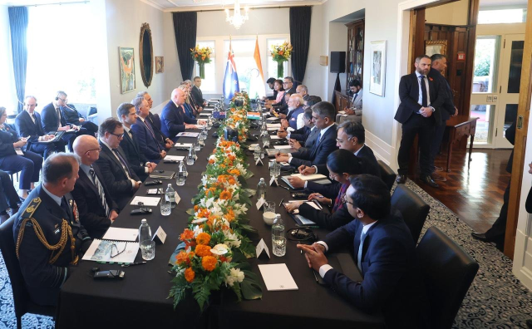
List of Outcomes: Official Visit of Prime Minister to New Zealand
| S. No. | Title | Brief description |
| 1 | Memorandum of Arrangement on Maritime Cooperation between the Ministry of Defence of India and the New Zealand Defence Force | Establishes a framework for enhanced maritime cooperation in the Indo-Pacific through dialogue, coordination, information exchange, and joint activities. |
| 2 | Implementation Arrangement concerning cooperation in matters of Hydrography and Nautical Cartography between India and New Zealand | Strengthens hydrographic cooperation through joint production of navigational charts, hydrographic data sharing, training, and capacity building. |
| 3 | Arrangement concerning the provision of Mutual Logistics Support between the Indian Navy and the New Zealand Defence Force | Facilitates reciprocal logistics support between the Indian Navy and the New Zealand Defence Force during approved activities and operations. |
| 4 | Arrangement on establishing a Joint Working Group on Counter-Terrorism between India and New Zealand | Establishes a Joint Working Group on Counter-Terrorism to strengthen cooperation, exchange information, and coordinate efforts to combat terrorism. |
| 5 | Memorandum of Cooperation between the National Disaster Management Authority of India and the National Emergency Management Agency (NEMA) of New Zealand | Promotes collaboration in disaster risk management, with emphasis on earthquake resilience, tsunami preparedness, coastal hazard mitigation, knowledge exchange, policy dialogue, and capacity building. |
| 6 | Memorandum of Cooperation in the fields of Animal Husbandry and Dairying between the Ministry of Fisheries, Animal Husbandry and Dairying of India and the Ministry of Primary Industries of New Zealand | Creates a framework for enhanced cooperation in animal husbandry and dairying through technical collaboration, knowledge exchange, and best practices. |
| 7 | Memorandum of Arrangement in the field of Tourism between the Ministry of Tourism of India and the Ministry of Business, Innovation and Employment of New Zealand | Promotes cooperation in tourism to strengthen economic ties, increase tourist flow, and enhance mutual understanding of each country’s culture. |
| 8 | India-New Zealand Joint Action Plan on Sport | Provides a framework for collaboration in sports, including high-performance sport, sports science, sports medicine and athlete development |
| 9 | Memorandum of Arrangement for development of National Maritime Heritage Complex (NMHC), Lothal at Gujarat between NMHC and New Zealand Maritime Museum | Provides a framework for cooperation in developing NMHC at Lothal through collaboration and mutually agreed projects. |
| 10 | Arrangement on Cultural Cooperation between Ministry of Culture of India and Ministry of Culture and Heritage of New Zealand | Promotes cultural cooperation through exchanges in arts, heritage, and cultural initiatives to strengthen mutual understanding and people-to-people ties. |
| S. No. | Title | Brief description |
| 1 | India-New Zealand Strategic Partnership and Roadmap to 2030 | India and New Zealand have elevated their relationship to a Strategic Partnership, strengthening cooperation in trade, defence, maritime security, tourism, culture, sports, agri-tech, people-to-people ties, as well as coordination on Indo-Pacific priorities and multilateral issues. The Roadmap to 2030 provides a strategic roadmap to guide structured implementation of the India–New Zealand Strategic Partnership across relevant ministries and stakeholders for the next four years. |
| 2 | Doubling Bilateral Trade to NZ$7 billion or ₹35,000 crore by 2030 | Both sides have set a target to double bilateral trade to NZ$7 billion (₹35,000 crore) by 2030 to boost economic ties and expand market access, in the context of the Free Trade Agreement. |
| 3 | Establishing Maritime Security Dialogue | India and New Zealand have agreed to establish a Maritime Security Dialogue to strengthen cooperation, coordination and information exchange. |
| 4 | New Zealand nominates Maritime Security as priority pillar under the Indo-Pacific Oceans Initiative (IPOI) | Under the seven pillars of the IPOI, New Zealand has joined the maritime security pillar to undertake specific cooperation activities focused on combating Illegal, Unreported and Unregulated (IUU) Fishing. |
| 5 | New Zealand Joining Global Biofuels Alliance | New Zealand’s joining of the Global Biofuels Alliance strengthens international cooperation to accelerate the development and adoption of sustainable biofuels for cleaner energy transition. |
| 6 | Launch of the Kiwifruit Action Plan and Establishment of 2 Centres of Excellence for Kiwifruit in Nagaland and Uttarakhand | Under the Agricultural Productivity Partnership under the Free Trade Agreement, a Kiwifruit Action Plan is being launched along with the establishment of two Centres of Excellence in Nagaland and Uttarakhand, supported by collaboration in education, skills development, and agricultural innovation to boost productivity. |
| 7 | MoU between the National Centre for Polar and Ocean Research (NCPOR), Goa and University of Canterbury, NZ | Establishes a framework for collaboration in Antarctic research. It aims to strengthen partnership by promoting joint research, academic exchange, capacity building, and other mutually beneficial scientific and educational activities. |
| 8 | MoU between National Institute of Food Technology, Entrepreneurship and Management, Kundli (NIFTEM-K) & Massey University, New Zealand | Establishes a framework for cooperation in research, academic exchange, student mobility, and other mutually agreed educational activities. |
Indian Navy To Induct Indigenous Stealth Frigate Mahendragiri
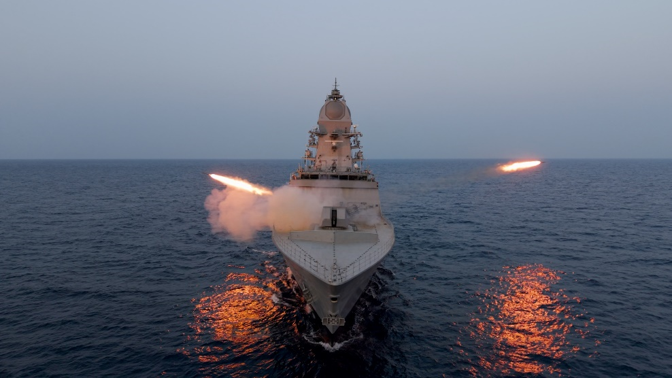
- The Indian Navy has commissioned INS Mahendragiri (F38), the sixth Project 17A stealth frigate, into its Eastern Fleet at Visakhapatnam on 11 July 2026. The commissioning ceremony was presided over by Defence Minister Rajnath Singh, marking another major milestone in India’s drive towards self-reliance in defence manufacturing and indigenous warship construction.
- A New Generation of Indigenous Stealth Frigates
- INS Mahendragiri has been designed by the Indian Navy’s Warship Design Bureau (WDB) and constructed by Mazagon Dock Shipbuilders Limited (MDL), Mumbai. It represents the latest generation of India’s advanced stealth frigates, developed to meet the Navy’s evolving operational requirements.
- The warship incorporates cutting-edge stealth technology, improved survivability, reduced radar visibility, and a high level of automation. These features enable it to perform effectively across the entire spectrum of naval warfare while enhancing operational efficiency.
- Major Boost to Aatmanirbhar Bharat
- One of the most significant achievements of INS Mahendragiri is its more than 75% indigenous content, reflecting the success of the Aatmanirbhar Bharat initiative in the defence sector.
- The construction of the frigate involved the participation of numerous Indian companies, including a large number of Micro, Small and Medium Enterprises (MSMEs). This has strengthened India’s defence manufacturing ecosystem, promoted domestic technological capabilities, and generated employment opportunities across the country.
- Equipped for Multi-Dimensional Naval Operations
- INS Mahendragiri is fitted with an advanced combination of modern weapons, sensors, and electronic warfare systems. These capabilities allow the ship to undertake a wide range of missions, including:
- Anti-air warfare
- Anti-surface warfare
- Anti-submarine warfare
- Maritime security operations
- Search and Rescue (SAR) missions
- Humanitarian Assistance and Disaster Relief (HADR)
- Long-duration deployments across the Indian Ocean Region (IOR) and beyond
- Its versatile design makes it a highly capable frontline combat platform capable of responding to both conventional and non-traditional maritime challenges.
- Symbol of Strength and National Service
- The frigate derives its name from the Mahendragiri mountain range in the Eastern Ghats, symbolising strength, endurance, and unwavering determination. It is the first warship in the Indian Navy to bear the name Mahendragiri, carrying forward a legacy of courage and dedication.
- The ship enters service as a mission-ready combat platform, prepared to contribute to the Indian Navy’s operational responsibilities from the very first day of its induction.
- Enhancing India’s Maritime Security
- The commissioning of INS Mahendragiri significantly strengthens the combat capability of the Indian Navy and further establishes India as one of the world’s leading indigenous warship-building nations.
- As India continues to expand its role as the Preferred Security Partner in the Indian Ocean Region and a key contributor to peace and stability in the Indo-Pacific, INS Mahendragiri will play an important role in safeguarding the country’s maritime interests, protecting sea lines of communication, and supporting regional security initiatives.
- Guided by its inspiring motto, “Mighty – Majestic – Matchless,” INS Mahendragiri is expected to serve the nation with distinction while adding another proud chapter to the Indian Navy’s history of professionalism, courage, and operational excellence.
Rajnath Singh Reaffirms India’s Leadership in the Indian Ocean Region
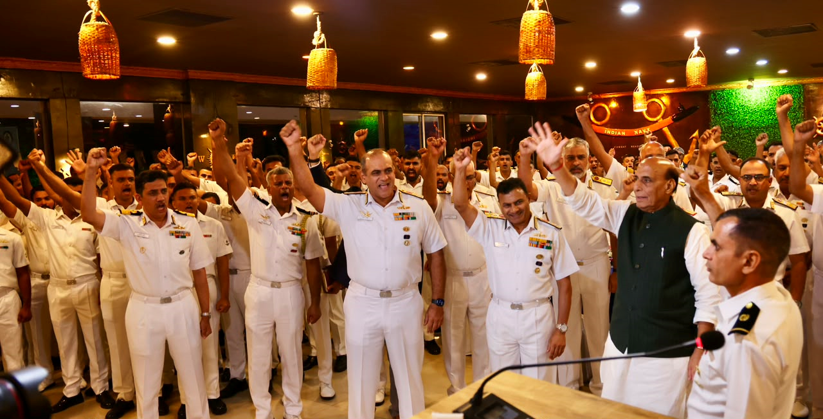
- Defence Minister Rajnath Singh reaffirmed India’s growing maritime role by stating that India is the primary guarantor of peace and stability in the Indian Ocean Region (IOR). He made these remarks while addressing Indian Navy personnel during the Barakhana ceremony in Visakhapatnam, Andhra Pradesh, on 10 July 2026, a day before the commissioning of INS Mahendragiri, the sixth indigenous Project 17A stealth frigate.
- Indian Ocean Region Central to India’s Security
- Highlighting the strategic importance of the Indian Ocean Region, the Defence Minister noted that more than 90% of India’s trade by volume is carried through sea routes. He explained that India’s maritime interests extend beyond trade and include energy security, protection of the Exclusive Economic Zone (EEZ), and the security of its island territories.He observed that increasing geopolitical competition and the expanding presence of extra-regional powers have made maritime security more important than ever. In this environment, the Indian Navy plays a crucial role in safeguarding India’s maritime boundaries, ensuring the safety of vital sea lanes, and protecting the nation’s strategic interests.
- India’s Responsibility in the Indian Ocean
- Describing India as the largest and most responsible stakeholder in the Indian Ocean Region, Rajnath Singh reiterated the country’s commitment to maintaining peace, stability, and a secure maritime environment.
- He remarked that the Indian Ocean is of immense strategic significance to India and emphasised that ensuring its security remains one of the nation’s foremost responsibilities. According to him, India’s approach is guided by the objective of maintaining a stable and rules-based maritime order across the region.
- INS Mahendragiri Reflects Aatmanirbhar Bharat
- The Defence Minister described the commissioning of INS Mahendragiri as another significant achievement under the Aatmanirbhar Bharat initiative. He stated that the indigenous stealth frigate showcases the rapid progress made by India in defence manufacturing and indigenous warship construction.
- He appreciated the dedication, professionalism, and patriotism of the Armed Forces, noting that their unwavering commitment continues to safeguard the nation against evolving security challenges.
- Preparing for the Future of Warfare
- Rajnath Singh emphasised that the character of warfare is changing rapidly due to technological advancements and emerging security threats. He cautioned that future conflicts may not always involve conventional battlefields or formal declarations of war.He urged military personnel to remain physically fit, mentally resilient, and technologically proficient to meet future challenges. Stressing the importance of continuous learning, he encouraged soldiers to develop expertise in advanced technologies and modern combat systems.
- The Defence Minister assured the Armed Forces that the Government remains committed to equipping them with world-class weapons, modern technology, and the necessary resources. However, he underlined that military success ultimately depends not only on advanced equipment but also on the courage, skill, discipline, and determination of the personnel operating them.
- Strengthening India’s Maritime Future
- The address highlighted India’s vision of becoming a strong maritime nation capable of ensuring stability across the Indian Ocean Region. With the induction of indigenous platforms such as INS Mahendragiri and continued investment in modern naval capabilities, India is steadily enhancing its ability to protect national interests, secure maritime trade routes, and contribute to peace and security in the Indo-Pacific.
Government Reviews Establishment of Bureau of Port Security
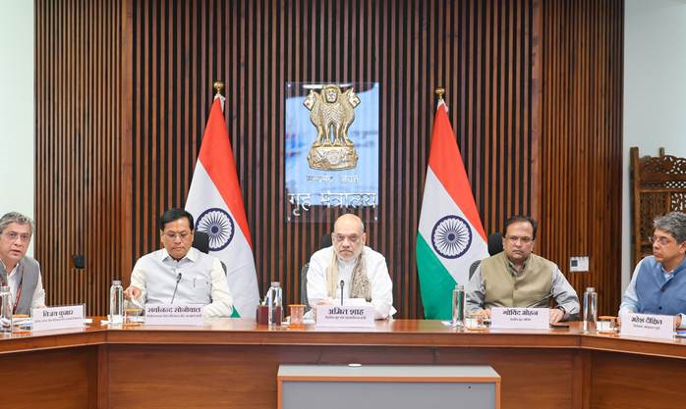
- The Government of India has accelerated efforts to enhance maritime and coastal security with the establishment of the Bureau of Port Security (BoPS). Union Home Minister Amit Shah and Union Minister for Ports, Shipping and Waterways Sarbananda Sonowal jointly reviewed the progress of the new security framework during a high-level meeting attended by senior officials from the Ministry of Home Affairs, Ministry of Ports, Intelligence Bureau, Central Industrial Security Force (CISF), Department of Fisheries, and other key agencies.
- Stronger Security Framework for Indian PortsDuring the meeting, Amit Shah stressed that only licensed private security agencies should be entrusted with port security responsibilities. He directed that security personnel deployed at ports must undergo specialised training conducted by the Central Industrial Security Force (CISF) to ensure uniform security standards across the country.The Home Minister also instructed officials to begin training activities for the Port Security Training Institute (PSTI) at the earliest by making use of the existing infrastructure.
- He further directed the creation of a centralised database of all security personnel working under the Bureau of Port Security to improve monitoring and coordination.Modern Security Measures at PortsTo strengthen surveillance and cargo security, Amit Shah instructed that container scanning facilities should be installed at all ports covered under the Bureau of Port Security framework.He also directed the CISF to conduct trial runs of the proposed security arrangements at major Indian ports, including Visakhapatnam Port, Jawaharlal Nehru Port, and Mundra Port, before the complete implementation of the new system.Reaffirming the government’s commitment to national security, the Home Minister stated that under the leadership of Prime Minister Narendra Modi, India is determined to build an unbreachable coastal security architecture.Bureau of Port Security (BoPS)The Bureau of Port Security (BoPS) is being established as a statutory body under Section 13 of the Merchant Shipping Act, 2025.
- It will function under the Ministry of Ports, Shipping and Waterways and will be headed by a Director General.The Bureau will serve as the country’s primary regulatory authority for port and ship security. Its major responsibilities will include:Conducting inspections of ships and port facilities.Monitoring compliance with national and international maritime security standards.Collecting, analysing, and sharing security-related intelligence.Strengthening cyber security measures at ports.Protecting critical port IT infrastructure against cyber threats through a dedicated cyber security division.Focus on Security of Fishing Harbours
- The Home Minister also reviewed security arrangements for fishing harbours and fish landing centres with officials of the Department of Fisheries.He directed greater promotion of the ‘Nabhmitra’ mobile application, developed by ISRO, so that more fishermen can use it for communication, navigation, and safety-related services while at sea.To improve monitoring of coastal activities, Amit Shah instructed the Department of Fisheries to request District Magistrates (DMs) and Superintendents of Police (SPs) across the country to submit updated lists of all fish landing centres within their respective districts.He also called for simplifying the registration process for fishermen to ensure greater participation in government security initiatives.
- Enhancing Coastal Surveillance
- Recognising the strategic importance of fishing harbours in coastal security, the Home Minister directed district police authorities to ensure adequate security arrangements at all fish landing centres. He also instructed that permanent police personnel, rather than temporary deployments, should be posted at these locations to strengthen surveillance and maintain continuous security.Strengthening India’s Maritime Security
- The proposed Bureau of Port Security represents a significant step towards creating a modern and integrated maritime security system. By combining trained personnel, advanced technology, cyber security capabilities, and improved coordination among agencies, the initiative is expected to enhance the protection of India’s ports, coastal infrastructure, and maritime trade while reinforcing the country’s overall national security.
Review Questions
- The India–New Zealand Strategic Partnership and the Roadmap to 2030 were
announced during the meeting held in which city?
A) Wellington
B) Christchurch
C) Auckland
D) Hamilton
Answer: C) Auckland - India and New Zealand have set a target to increase their bilateral trade in goods
and services to what amount by 2030?
A) NZ$5 billion
B) NZ$6 billion
C) NZ$7 billion
D) NZ$10 billion
Answer: C) NZ$7 billion - Under the Roadmap to 2030, India and New Zealand agreed to establish an Annual
Maritime Security Dialogue led by which ministries?
A) Defence Ministries of both countries
B) Home Ministries of both countries
C) Ministry of External Affairs of India and Ministry of Foreign Affairs and Trade of
New Zealand
D) Ministries of Commerce of both countries
Answer: C) Ministry of External Affairs of India and Ministry of Foreign Affairs and
Trade of New Zealand - Which international alliance mentioned in the Roadmap focuses on promoting
solar energy deployment and clean energy cooperation?
A) International Energy Agency (IEA)
B) Global Green Growth Institute (GGGI)
C) International Solar Alliance (ISA)
D) International Renewable Energy Agency (IRENA)
Answer: C) International Solar Alliance (ISA) - Which of the following statements about the India–New Zealand Strategic
Partnership: Roadmap to 2030 is correct?
A) It is a legally binding defence treaty.
B) It creates mandatory financial obligations for both countries.
C) It replaces all previous bilateral agreements.
D) It is a non-legally binding framework that creates no financial commitments.
Answer: D) It is a non-legally binding framework that creates no financial
commitments. - The Bureau of Port Security (BoPS) is being established under which Act?
A) Major Port Authorities Act, 2021
B) Indian Ports Act, 1908
C) Merchant Shipping Act, 2025
D) Coastal Regulation Zone Act, 2019
Answer: C) Merchant Shipping Act, 2025 - The Bureau of Port Security (BoPS) will function under which ministry?
A) Ministry of Home Affairs
B) Ministry of Defence
C) Ministry of Fisheries, Animal Husbandry and Dairying
D) Ministry of Ports, Shipping and Waterways
Answer: D) Ministry of Ports, Shipping and Waterways - Which ISRO-developed mobile application did Union Home Minister Amit Shah
direct to be promoted among fishermen?
A) Bhuvan
B) NavIC
C) Nabhmitra
D) Sagar Mitra
Answer: C) Nabhmitra - INS Mahendragiri (F38), commissioned into the Indian Navy on 11 July 2026,
belongs to which class of warships?
A) Project 15B Destroyer
B) Project 75 Submarine
C) Project 28 Corvette
D) Project 17A Stealth Frigate
Answer: D) Project 17A Stealth Frigate - INS Mahendragiri has been designed by which organisation?
A) Defence Research and Development Organisation (DRDO)
B) Garden Reach Shipbuilders & Engineers (GRSE)
C) Indian Navy’s Warship Design Bureau (WDB)
D) Cochin Shipyard Limited (CSL)
Answer: C) Indian Navy’s Warship Design Bureau (WDB) - Which of the following statements about INS Mahendragiri is correct?
A) It has less than 50% indigenous content.
B) It is the first Project 15B destroyer commissioned by the Indian Navy.
C) It has over 75% indigenous content and is capable of anti-air, anti-surface, and
anti-submarine warfare.
D) It is designed exclusively for humanitarian assistance and disaster relief operations.
Answer: C) It has over 75% indigenous content and is capable of anti-air, anti
surface, and anti-submarine warfare. - Ilyushin Il-38 Is A
A. Maritime patrol Aircraft
B. Ship
C. Tank
D. Anti Tank Missile
ANSWER: A - The Chief of Naval Staff Is A
A. One Star Admiral
B. Two Star Admiral
C. Three Star Admiral
D. Four Star Admiral
ANSWER: D - Ex ‘BLUE FLAG’ conducted b/w India &
A. Qatar
B. Oman
C. UAE
D. Israel
ANSWER: D - President’s Bodyguard Motto Is
A. Jai Hind
B. Sarvda Shaktishali
C. Bharat Mata Ki Jai
D. Rashtra Pratham
ANSWER: C - Military College of Electronics and Mechanical Engineering Is At
A. Imphal
B. Mhow
C. Secunderabad
D. Vairengte
ANSWER: C - ‘Translating Myself and Others’ Book Is Written By
A. Jhumpa Lahiri
B. Dr. Prabhleen Singh
C. Chetan Bhagat
D. Nirupama Rao
ANSWER: A - Muscat Is The Capital Of
A. Oman
B. Qatar
C. UAE
D. Maldives
ANSWER: A - Where Is The Hq Of The Southern Western Air Command of The IAF?
A. Gandhinagar
B. Vishakhapatnam
C. Pune
D. Mumbai
ANSWER: A - Current DG Of ICG Is
A. MM Naravane
B. Rakesh Pal
C. Paramesh Sivamani
D. Vivek Jacob
ANSWER: C
ALSO READ:
- Latest Daily Current Affairs and Defence Updates
- Latest Daily Current Affairs June 2026[DOWNLOAD PDF]
- Latest Daily Current Affairs May 2026[DOWNLOAD PDF]
- Latest Daily Current Affairs April 2026[DOWNLOAD PDF]
- Latest Daily Current Affairs March 2026[DOWNLOAD PDF]
- Latest Daily Current Affairs February 2026[DOWNLOAD PDF]
- Latest Daily Current Affairs January 2026[DOWNLOAD PDF]
- Latest Daily Current Affairs November 2025[DOWNLOAD PDF]
- Latest Daily Current Affairs October 2025[DOWNLOAD PDF]
- Latest Daily Current Affairs August 2025[DOWNLOAD PDF]
- Latest Daily Current Affairs July 2025[DOWNLOAD PDF]
- Monthly Defence Current Affairs June 2025 [DOWNLOAD PDF]
- Monthly Defence Current Affairs May 2025 [DOWNLOAD PDF]


