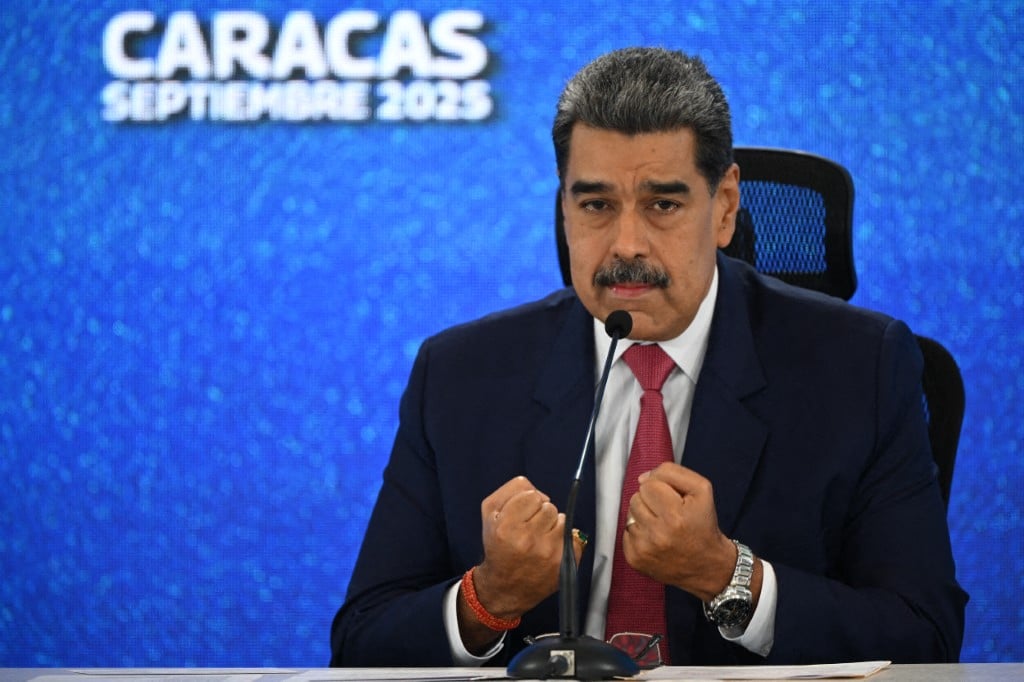
In a dramatic turn of events, former Venezuelan president Nicolás Maduro arrived at a New York court on Monday following his capture during a U.S. military operation in Caracas. The operation, which transpired over the weekend, involved commandos executing a swift assault with helicopters, fighter jets, and naval forces to apprehend Maduro and his wife, Cilia Flores, on charges of narcotrafficking.
Maduro, 63, was escorted into the courthouse under tight security measures, including a helicopter and armored vehicle transport that emphasized the high-profile nature of the case. His arrival and subsequent proceedings have reignited international attention on Venezuela and its turbulent political landscape.
Meanwhile, Venezuela’s interim leader, Delcy Rodriguez, who initially adopted a defiant stance, extended an olive branch to the U.S. government, expressing a willingness to collaborate on a cooperative agenda. This shift marks a notable change in tone amid the chaos, as approximately 2,000 of Maduro’s supporters rallied in Caracas, displaying fervent loyalty through flags and demonstrations that included armed men on motorcycles.
Defense Minister Vladimir Padrino Lopez disclosed that a significant portion of Maduro’s security team had been killed during the assault, prompting concerns over potential casualties within the military and civilian populations. As tensions mount, President Trump stated that the U.S. is “in charge” of Venezuela, signaling a major shift in geopolitical dynamics.
The situation is particularly nuanced given Venezuela’s substantial oil reserves, which the U.S. seeks access to for potential economic rebuilding efforts. Trump’s comments indicated an urgent need for “total access” to the nation’s resources, a sentiment echoed by U.S. Secretary of State Marco Rubio, who deemed any potential discussions about elections “premature.”
Despite the immediate military operation’s implications, experts caution that reviving Venezuela’s oil production will be neither swift nor straightforward. The commodity’s global market is in flux, and the potential increase in Venezuelan crude output raises concerns about oversupply.
After Maduro’s capture, it remains unclear how the interim Venezuelan administration will function, given the remaining influence of Maduro’s allies, including powerful leaders such as Diosdado Cabello. There appears to be a delicate balance of power, with a diplomatic source in Caracas likening the situation to a “club of five” that retains significant sway over the nation’s future.
International reactions have been swift, with nations like China and Russia denouncing the U.S. operation as a breach of international law. China has called for the immediate release of Maduro, while Iranian officials reaffirmed their support for the former president. Colombian President Gustavo Petro criticized the military action as an infringement on Latin American sovereignty, warning of a potential humanitarian crisis as a result of increased tensions.
As the UN Security Council prepares for an emergency session at Venezuela’s request, the potential repercussions of this military operation continue to unfold both within the country and on a global scale, leaving many questions about Venezuela’s future governance and stability unanswered.