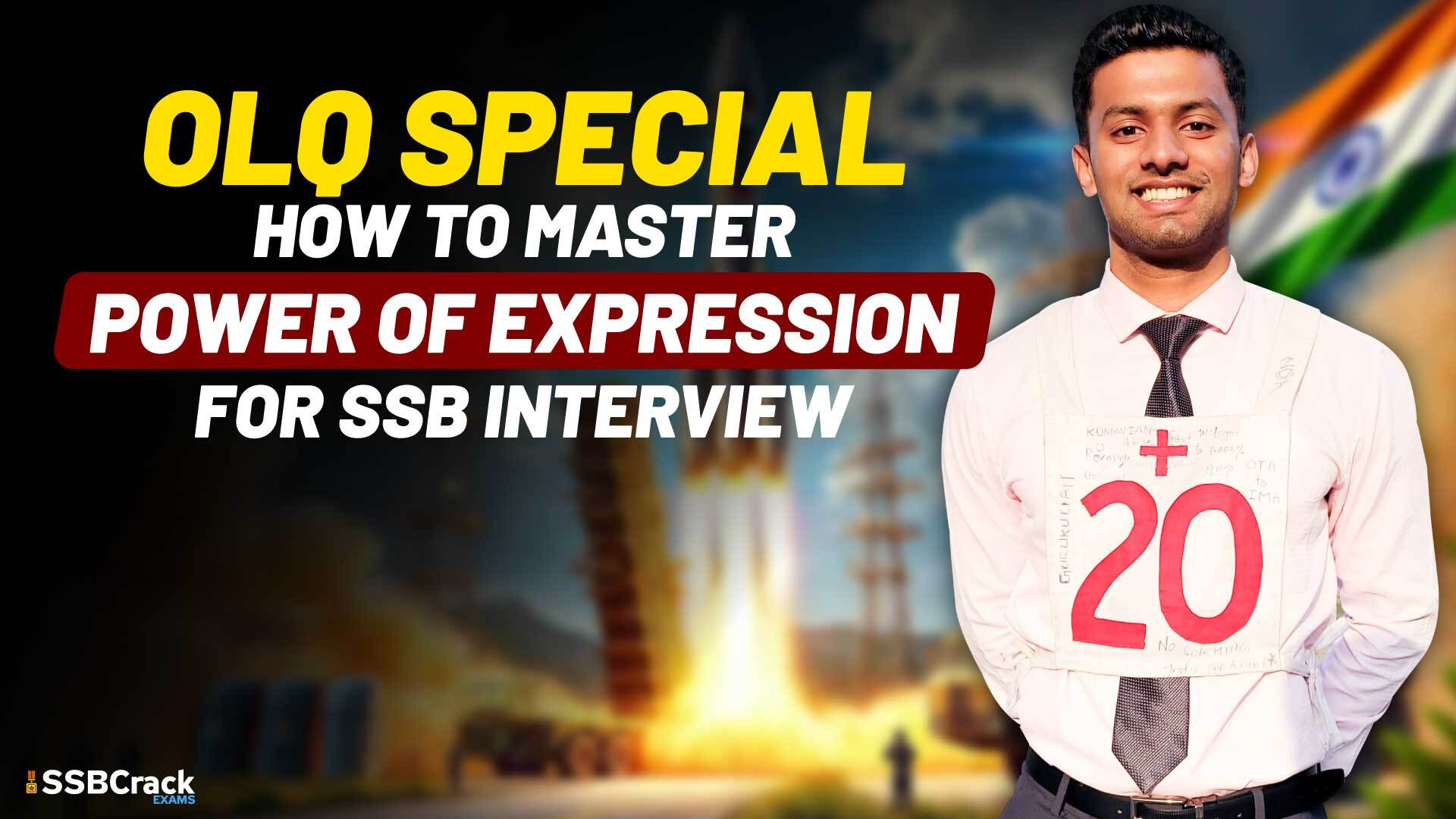
Among the 15 Officer Like Qualities (OLQs) evaluated at the SSB Interview, Power of Expression plays a vital and often underrated role. It is not just about speaking English fluently — it’s about conveying thoughts clearly, confidently, and convincingly under pressure, especially in a group. This OLQ becomes a bridge between your thought process and your ability to lead, inspire, and communicate effectively.
In this article, we’ll explore:
- What is Power of Expression
- Where and how it is assessed in the SSB
- How to showcase it in front of assessors
- Practical exercises to develop it at home, college, and the workplace
What is Power of Expression?
Power of Expression refers to:
“The ability to communicate one’s ideas and thoughts in a clear, concise, confident, and convincing manner, both in speaking and writing.”
It involves:
- Fluency in thought and language
- Command over vocabulary and structure
- Ability to remain coherent, logical, and assertive
- Confidence in public speaking, group discussion, and interviews
Remember: Power of Expression isn’t just about English fluency. It’s about clarity, structure, and impact.
Where Is Power of Expression Assessed in SSB Interview?
1. Screening Test
- PPDT (Picture Perception and Discussion Test):
- Narrating your story within 1 minute
- Participating in the group discussion confidently
2. GTO Tasks
- Group Discussion (GD):
- Expressing your opinions logically and convincingly
- Listening and responding to others intelligently
- Lecturette:
- 3-minute structured speech with confidence, clarity, and control over content
- Judged heavily on delivery and coherence
3. Psychological Tests
- Thematic Apperception Test (TAT), WAT, SRT, SDT:
- Written communication skills
- Clear, concise, and grammatically correct expressions
4. Personal Interview (PI)
- How fluently and confidently you express your life experiences, thoughts, goals, and decisions
How Is Power of Expression Evaluated?
Assessors look for:
- Clarity of thought in speech and writing
- Correct grammar, vocabulary, and sentence structure
- Logical flow in arguments or story narration
- Confidence and voice modulation during public speaking
- Ability to convey complex ideas simply
You’re evaluated not just on what you say, but also how you say it.
How Can Aspirants Showcase Power of Expression?
✔️ In PPDT & GD:
- Speak with clarity and volume
- Avoid repetition and filler words (e.g., “like,” “umm”)
- Enter the discussion confidently with a relevant point
- Maintain eye contact and speak with conviction
✔️ In Lecturette:
- Prepare 3 points quickly and deliver with confidence
- Use examples and statistics where appropriate
- Open strong and end with a powerful summary
✔️ In Psychology Tests:
- Keep written responses precise, structured, and grammatically correct
- In SDT, use positive tone and structured self-reflection
✔️ In Personal Interview:
- Use real-life examples to support your answers
- Maintain a logical flow: Past → Thought Process → Action → Result
- Stay calm, honest, and structured in longer responses
How to Develop Power of Expression at Home, College & Work
Here’s how you can enhance this OLQ in your daily environment:
At Home
- Daily Mirror Practice (3 minutes/day)
- Pick a random topic and speak to yourself
- Focus on clarity, hand gestures, and avoiding fillers
- Record Yourself
- Listen to your narration and correct tone, speed, and grammar
- Practice storytelling in your mother tongue and then in English
- Reading Aloud
- Read newspapers or books aloud for 15 minutes
- Focus on pronunciation, fluency, and voice modulation
At School/College/University
- Join Debates, MUNs, or Elocution Competitions
- Get comfortable speaking on stage or in front of groups
- Participate in Group Discussions & Study Circles
- Express your opinion regularly and get feedback
- Write Essays & Summaries
- Sharpen written communication with clarity and flow
- Use English in Daily Conversations
- Build comfort and fluency through natural practice
At Workplace/Internship
- Deliver Presentations or Lead Meetings
- Practice speaking formally and clearly in front of professionals
- Write Professional Emails and Reports
- Improve written structure, tone, and clarity
- Initiate Conversations with Seniors
- Sharpen interpersonal communication in formal settings
- Summarize Team Discussions
- Build skill in capturing thoughts and presenting them clearly
Final Thoughts
Power of Expression is not about speaking fancy English. It’s about thinking clearly, speaking confidently, and connecting logically with the group and assessors. This OLQ reveals your potential to be understood, to lead, and to inspire — all crucial traits for a future officer.
Whether it’s narrating a story, delivering a plan, or defending a decision, your ability to express with precision can leave a powerful impact on your SSB performance.